The film reveals the secret story behind one of the greatest intellectual feats of World War II, a feat that gave birth to the digital age. In 1943 Bill Tutte, a 24-year-old maths student and a GPO engineer called Tommy Flowers combined to hack into Hitler's personal super code machine - not Enigma but an even tougher system, which he called his 'secrets writer'. Their break turned the Battle of Kursk, powered the D-day landings and orchestrated the end of the conflict in Europe. But it was also to be used during the Cold War - which meant both men's achievements were hushed up and never officially recognised.
The film is focused on and celebrating the radical changes in postwar Britain under the Labour government of Clement Attlee, which came to power in 1945. Relying primarily on archive footage and interviews, and without a narrative voiceover, the documentary recounts the endemic poverty in prewar Britain, the sense of optimism that followed victory in World War II and the subsequent expansion of the welfare state, founding of the National Health Service and nationalisation of significant parts of the UK's economy. The film documents the extent to which these achievements, as the filmmaker Ken Loach sees them, have since been subject to attack in the decades that followed, particularly under the Conservative governments of Margaret Thatcher in the 1980s
Dr George McGavin and Dr Zoe Laughlin set up base camp at one of the UK's biggest sewage works to investigate the revolutionary science finding vital renewable resources and undiscovered life in human waste. Teaming up with world-class scientists, they search for biological entities in sewage with potentially lifesaving medical properties, find out how pee can generate electricity, how gas from poo can fuel a car and how nutrients in waste can help solve the soil crisis. They follow each stage of the sewage treatment process, revealing what the stuff we flush can tell us about how we live today, and the mind boggling biotechnology being harnessed to clean it, making the wastewater safe enough to return to the environment.
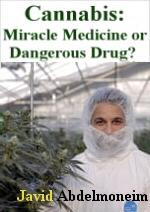
At an extraordinary moment in the history of one of the world’s oldest and most controversial drugs, Dr Javid Abdelmoneim investigates the very latest medical and scientific research into the effects of cannabis on the brain and the body, to find out whether it will help or harm patients. Javid meets the young epilepsy patient responsible for changing the law around medicinal cannabis in the UK and sees the remarkable effects it has on his condition. He visits a medicinal cannabis farm in Denmark to learn how a company known for growing the recreational drug are now producing medicinal cannabis to be exported all over Europe. He travels to Israel, to find out why they have been using cannabis as a medicine for over 20 years and meets the scientists studying the safety and effectiveness of cannabis in treating pain. And he meets the so-called godfather of cannabis, who at 88 years old is still an active research scientist and considered the world’s leading cannabis expert.
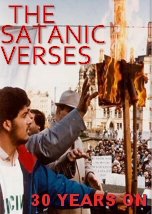
The publication of Salman Rushdie's novel The Satanic Verses in 1988 sparked a culture war in Britain between those in the Muslim community, who considered the book blasphemous and called for the book to be banned, and those defending it as an expression of freedom of speech. Protests, which began in the north of England, soon spread across the UK and to the rest of the Islamic world, culminating in February 1989 with Iran's Ayatollah Khomeini issuing a fatwa - a death sentence on the writer. Now, 30 years on, broadcaster and journalist Mobeen Azhar embarks on a journey, starting in his native Yorkshire where the protest first began, to examine the lasting effect the book has had on the Muslim community and how the events of 1989 continue to have an impact today.
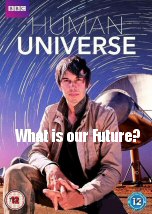
Professor Brian Cox concludes his exploration of our place in the universe by asking what next for the ape that went to space. Our future is far from certain. In Florida, Brian joins the latest efforts to protect Earth from potential catastrophic events. He joins a team of Nasa astronauts who are training for a future mission to an asteroid - should we ever discover one coming our way - under 30 feet of water in a submerged laboratory that simulates space. It is just one example of how, for our long-term survival, space exploration may well be vital. It is a view shared by Apollo 16 astronaut Charlie Duke, who tells Brian what it was like to escape the confines of the planet. It is a dream that both Nasa and now commercial companies share as they race to get humans back into deep space. But space travel, like every leap our civilisation has ever made, requires energy. Here too, scientists are hard at work attempting to safeguard our future. At the National Ignition Facility in California, Brian witnesses the world's most successful fusion experiment in action. He believes that if their mission succeeds, our civilisation will have unlocked a way to the stars that will not destroy the planet in the process. Brian concludes by returning to the top of the world in Svalbard, where he gains access to our civilisation's greatest treasure, locked away in a vault buried deep in the permafrost.





In 1943 Bill Tutte, a 24-year-old maths student and a GPO engineer called Tommy Flowers combined to hack into Hitler's personal super code machine - not Enigma but an even tougher system, which he called his 'secrets writer'. Their break turned the Battle of Kursk, powered the D-day landings and orchestrated the end of the conflict in Europe. But it was also to be used during the Cold War - which meant both men's achievements were hushed up and never officially recognised.