




Last Watched

"Ape"  Sort by

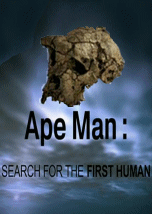
Ape Man: Search for the First Human

   2005    Science
After eight grueling years of hunting in the hot, wind-scoured desert of central Africa, an international team of researchers has uncovered one of the most sensational fossil finds in living memory: the well-preserved 7 million years old skull of a chimp-size animal, probably a male, that doesn't fit any known species. According to paleontologist Michel Brunet of the University of Poitiers in France, whose team reported the find in Nature last week, there is no way it could have been an ape of any kind. It was almost certainly a hominid — a member of a subdivision of the primate family whose only living representative is modern man.
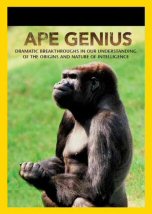
Ape Genius

   2008    Science
The great apes which include chimps, orangutans, gorillas and bonobos, seem to have rich emotional lives similar to our own. But just how smart are these animals? A new generation of investigators are converging on an explanation for why the non-human great apes never made the breakthrough into an accelerating human-style culture that builds on the achievements of previous generations.

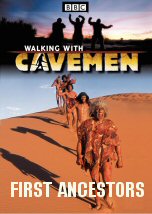
Walking with Cavemen: First Ancestors

   2003    History
It's 3.5 million years ago and in East Africa a remarkable species of ape roams the land. Australopithecus afarensis has taken the first tentative steps towards humanity by standing and walking on two legs. The rift valley was forming, and the rain forests dying as Africa dried out - turning the landscape into a mosaic of scattered trees and grass. In this new environment afarensis found it more efficient to move about on two legs rather than four.
Series: Walking with Cavemen

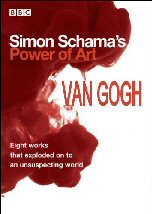
Van Gogh

   2006    Art
Born in Groot-Zundert, The Netherlands, Van Gogh spent his early life as an art dealer, teacher and preacher in England, Holland and Belgium. His period as an artist began in 1881 when he chose to study art in Brussels, starting with watercolours and moving quickly on to oils. The French countryside was a major influence on his life and his early work was dominated by sombre, earthy colours depicting peasant workers, the most famous of which is The Potato Eaters, 1885. It was during Van Gogh's studies in Paris (1886-8) that he developed the individual style of brushwork and use of colour that made his name. In 1888 he moved to Arles where the Provençal landscape provided his best-known subject matter. However, it also marked the start of his mental crisis following an argument with his contemporary Paul Gauguin. Van Gogh was committed to a mental asylum in 1889 where he continued to paint, but he committed suicide in 1890.
Series: Power of Art

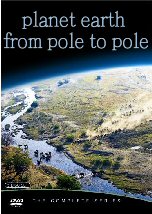
From Pole to Pole

   2007    Nature
Planet Earth is quite simply the greatest nature/wildlife series ever produced. The ultimate portrait of our planet looks at the key factors that shape our natural history. The sun and fresh water dominate the lives of all animals and plants on Earth and trigger seasonal migrations, small and large.
Series: Planet Earth

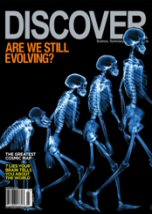
Are We Still Evolving

   2011    Science
Dr Alice Roberts asks one of the great questions about our species: are we still evolving? There's no doubt that we're a product of millions of years of evolution. But thanks to modern technology and medicine, did we escape Darwin's law of the survival of the fittest? Alice follows a trail of clues from ancient human bones to studies of remarkable people living in the most inhospitable parts of the planet and the frontiers of genetic research, to discover if we are still evolving - and where we might be heading.
Leaving Neverland

Leaving Neverland

2019  Culture
Reel Rock

Reel Rock

2014  Culture
Prehistoric Planet II

Prehistoric Planet II

2023  Science
Prehistoric Planet

Prehistoric Planet

2022  Science
The Crime of the Century

The Crime of the Century

2021  Medicine
Long Way Up

Long Way Up

2020  Culture
Kingdom

Kingdom

2025  Nature