





Last Watched

"Ara"  Sort by

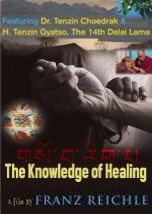
The Knowledge of Healing

   1998    Medicine
The documentary 'The Knowledge of Healing' is an illuminating examination of Tibetan medicine, a practice which has developed over two millennia into a modern day successful method of healing that rivals western medical practices. Unlike Western medicine, based on biochemistry, Tibetan medical thinking (which is strongly rooted in Buddhist principles) views the human body as governed by an elaborately organized system of energies flowing through a network of channels. In the 12th century, the Gyüshi (Knowledge of Healing) was created, a text codifying this intricate system. The medications used comprise herbs, roots, minerals, etc. After flourishing for centuries, most Tibetan medical schools were destroyed by the Chinese in the 1950's and 1960's, and many physicians were executed. Speaking from exile, the Dalai Lama argues for the value of Tibetan medicine, while his personal physician Dr. Tenzin Choedrak describes the principles behind it. We follow physicians in India and Siberia treating patients for a variety of ailments from paralysis to heart disease, and meet researchers in Israel and Switzerland to see how western clinical studies are testing the effectiveness of Tibetan medicine.
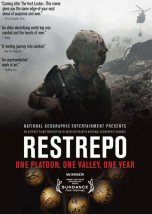

Restrepo

   2010    History
It is fairly extraordinary that this film exists. The level of access attained by Tim Hetherington and Sebastian Junger over their 15-month period embedded with the Second Platoon, Battle Company, 173rd Airborne Brigade allows for an incredibly unvarnished account -- including footage of deaths both civilian and military. It's perhaps the most intimate and unflinching examination yet of the processes of modern warfare -- and an exhilarating, heartrending, profoundly moving film in its own right.

How Small is the Universe

   2012    Science
The biggest rabbit-hole in history: the search of the smallest thing in the Universe. It is a journey where things don't just become smaller but also a whole lot weirder. Scientists hope to catch a glimpse of miniature black holes, multiple dimensions and even parallel Universes. As they start to explore this wonderland, where nothing is quite what it seems, they may have to rewrite the fundamental laws of time and space.

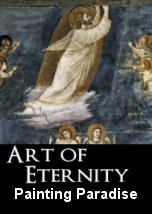
Art of Eternity: Painting Paradise

   2007    Art
How should art depict the relationship between man and God? How can art best express eternal values? Can you and should you portray the face of Christ? For over 1,000 years these were some of the questions which taxed the minds of the greatest artists of the early West. In this three-part series, art historian Andrew Graham-Dixon sets out to unravel the mysteries of art from the pre-perspective era". In the first episode, Andrew traces the beginnings of Christian art in the declining Roman Empire, Egypt and medieval France, and reveals the ideas which lay behind the transition
Series: Art of Eternity

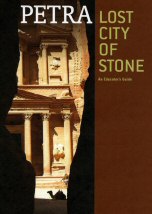
Petra: Lost City of Stone

   2015    History
More than 2,000 years ago, the thriving city of Petra rose up in the bone-dry desert of what is now Jordan. An oasis of culture and abundance, the city was built by wealthy merchants whose camel caravans transported incense and spices from the Arabian Gulf. They carved spectacular temple-tombs into its soaring cliffs, raised a monumental Great Temple at its heart, and devised an ingenious system that channeled water to vineyards, bathhouses, fountains, and pools. But following a catastrophic earthquake and a slump in its desert trade routes, Petra's unique culture faded and was lost to most of the world for nearly a thousand years. Now, in a daring experiment, an archaeologist and sculptors team up to carve an iconic temple-tomb to find out how the ancient people of Petra built their city of stone. Meanwhile, scientists using remote sensors and hydraulic flumes uncover the vast city and its sophisticated water system. The race is on to discover how these nomads created this oasis of culture in one of the harshest climates on Earth.

Maracana

   2014    Culture
It tells the story of FIFA World Cup of 1950, highlighting (but also showing other nations) the path of the two teams who played the final match: Uruguay and Brazil. The high quality of the footage is amazing, the text is smart and humorous, the music has been very well chosen in order to represent both the emotions involved in each moment and the contrast between the calmness of Uruguayan preparation and the crowded days of Brazilian team." The whole story shows not only one side. While Uruguayan team acquired confidence after an initial mistrust, Brazil was by far the best team in the competition but was heavily influenced by the environment in Brazilian society, the influence of politics and the pressure of the fans. While Uruguay overcame heroically all the constraints and, led by Obdulio Varela, won a title that few people believed, Brazilians got shocked because they considered themselves champions even before the final match, and their players became stigmatized until nowadays, not being celebrated as the fantastic team they were.
Sex Explained

Sex Explained

2020  Medicine
The Rehearsal

The Rehearsal

2022  Culture
X-Ray Earth

X-Ray Earth

2021  Science
Abraham Lincoln

Abraham Lincoln

2022  History
Dark Net

Dark Net

2016  Technology
The Universe

The Universe

2010  Science
Leaving Neverland

Leaving Neverland

2019  Culture