Magic mushrooms, long considered sacred by the Indigenous Mazatec in Mexico, become the subject of scientific studies measuring the intense effects of its Psilocybin and its potential therapeutic use. In the second episode, we are introduced to Ben, who’s battled with crippling Obsessive-Compulsive Disorder (OCD) his entire life. When he had his firstborn, Ben’s life became full of panic attacks regarding his son’s safety, and he knew something had to change. Ben signed up for a psilocybin-assisted therapy clinical trial which was testing whether the psychedelic could help people with severe OCD. In the session under the influence of psilocybin, Ben felt decomposed and eventually grew into a tree. While living as a tree, he saw his human self, playing with his child. Though this sounds scary, from Ben’s perspective, it was beautiful. He was one with the universe, seeing himself in the ultimate third-person perspective. Finally, he saw how it could be different if he didn’t let his OCD control him. And several months out, all the symptoms disappeared. Ben’s story is one of many told in this series, which gives hope that help is right around the corner for the millions who suffer —often in silence— with debilitating mental disorders. But Michael Pollan’s work is showcasing the success stories. Often, even in the most successful trials, psychedelic-assisted therapy only helps up to a third of people enter remission. More frequently, patients are helped —sometimes substantially— but they still suffer with their illnesses and some people aren’t helped at all.
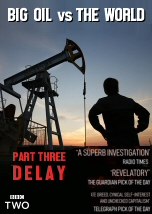
The last chapter explains how the 2010s became another lost decade in the fight against climate change – as the move to natural gas delayed a transition to more renewable sources of energy. Engineer Tony Ingraffea, in the 1980s, helped develop a new technique for extracting gas and oil from shale rock, which ultimately became known as 'Fracking'. It was to unleash vast new reserves of fossil fuels and was promoted as a cleaner energy source. But Ingraffea explains how he later came to regret his work when he realized that gas could be even worse for climate change than coal and oil. Dar-Lon Chang, a former ExxonMobil engineer, speaks for the first time on camera alleging that as the company increased its natural gas operations, it was not sufficiently monitoring methane leaks that were contributing to climate change. Now, after a year of unprecedented wildfires, drought and other climate-related disasters, multiple lawsuits are being brought in US courts in efforts to hold Big Oil legally accountable for the climate crisis.
What If we could talk to animals? For as long as we've shared our lives with pets, we've been seeking better ways to communicate with them. In Washington state, Alexis Devine and her sheepadoodle Bunny think they've found a way of making communication a reality. Alexis went further than most, with a set of communication buttons, each programmed with a pre-recorded word to help humans and animals speak the same language. She has 90 buttons with which to express herself and even seems to combine them into simple sentences. Bunny is paving the way in pet communication. The undisputed masters of verbal communication are our pet parrots. They have mastered the art of vocal expression. Some parrots have even learned to fool devices designed to recognize human voices.
All of our pets survived for thousands of years in the wild without any help from us, and this has led them to develop astonishing athletic abilities which we sometimes take for granted. As greyster dogs and endurance champ tortoises. Dog scootering uses one or more dogs to pull a human riding an unmotorized scooter. Greysters are a naturally-athletic breed that can run at 20 miles per hour for five miles while handling these carriages. No other animal can run at this speed, exerting this power, and expending this energy for so long. So, what's their secret? Greysters' stride length can be a staggering 16 feet and they are super efficient at absorbing and using oxygen. Greyster dogs have nearly twice mitochondria inside their cells than humans.
Chris turns to longevity doctor Peter Attia to find out how changing his eating habits can help his quest for longevity. Ironically, the answer is to eat no food at all for four long days. If he can bear the hunger, fasting will unlock his body’s own anti-aging powers and give Chris the edge he needs when he tries to hunt for his next meal … by spearfishing off the Great Barrier Reef.
As Chris bulks up for ‘Thor: Love and Thunder’ he needs to build a body that looks right for an immortal god. But, he also wants the kind of muscles that are scientifically proven to help him stay strong and healthy as he grows older in real life. Teaming up with extreme sports guru Ross Edgley, he trains for a grueling 100-foot rope climb challenge, changing him from an ornament into an instrument.

















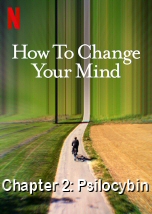










In the second episode, we are introduced to Ben, who’s battled with crippling Obsessive-Compulsive Disorder (OCD) his entire life. When he had his firstborn, Ben’s life became full of panic attacks regarding his son’s safety, and he knew something had to change. Ben signed up for a psilocybin-assisted therapy clinical trial which was testing whether the psychedelic could help people with severe OCD. In the session under the influence of psilocybin, Ben felt decomposed and eventually grew into a tree. While living as a tree, he saw his human self, playing with his child. Though this sounds scary, from Ben’s perspective, it was beautiful. He was one with the universe, seeing himself in the ultimate third-person perspective. Finally, he saw how it could be different if he didn’t let his OCD control him. And several months out, all the symptoms disappeared.
Ben’s story is one of many told in this series, which gives hope that help is right around the corner for the millions who suffer —often in silence— with debilitating mental disorders. But Michael Pollan’s work is showcasing the success stories. Often, even in the most successful trials, psychedelic-assisted therapy only helps up to a third of people enter remission. More frequently, patients are helped —sometimes substantially— but they still suffer with their illnesses and some people aren’t helped at all.