


Last Watched

"ISS"  Sort by

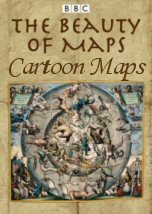
Cartoon Maps

   2010    Culture
The series concludes by delving into the world of satirical maps. How did maps take on a new form, not as geographical tools, but as devices for humour, satire or storytelling? Graphic Artist Fred Rose perfectly captured the public mood in 1880 with his General Election maps featuring Gladstone and Disraeli, using the maps to comment upon crucial election issues still familiar to us today. Technology was on the satirist's side with the advent of high-speed printing allowing for larger runs at lower cost. In 1877, when Rose produced his 'Serio Comic Map of Europe at War', maps began to take on a new direction and form, reflecting a changing world. Rose's map exploited these possibilities to the full using a combination of creatures and human figures to represent each European nation. The personification of Russia as a grotesque-looking octopus, extending its tentacles around the surrounding nations, perfectly symbolised the threat the country posed to its neighbours.
Series: The Beauty of Maps
Unafraid of the Dark

   2014    Science
Tyson describes the discovery of cosmic rays by Victor Hess through high-altitude balloon trips. Swiss Astronomer Fritz Zwicky, in studying supernovae, postulated that these cosmic rays originated from these events instead of electromagnetic radiation. Also tells how Vera Rubin observed that the rotation of stars at the edges of observable galaxies did not follow expected rotational behavior leading to consider the existence of dark matter. This further led to the discovery of dark energy to account for the increasing rate of expansion of the universe. Tyson then describes the interstellar travel of the two Voyager probes. Tyson tells the Carl Sagan's role in the Voyager program, including creating the Voyager Golden Record to encapsulate humanity and Earth's position in the universe. Tyson concludes the series by emphasizing Sagan's message on the human condition in the vastness of the cosmos, and to encourage viewers to continue to explore and discover what else the universe has to offer.
Series: Cosmos: A Spacetime Odyssey

Hiroshima 2 of 2

   2005    Technology
It was the defining moment of the 20th Century - the scientific, technological, military, and political gamble of the world's first atomic attack. This drama-documentary attempts to do what no other film has done before - to show what it is like to live through a nuclear explosion, millisecond by millisecond. Set in the three weeks from the first test explosion in New Mexico to the eventual dropping of the bomb, the action takes viewers into the room where the crucial political decisions are made; on board the Enola Gay on her fateful voyage; inside the bomb as it explodes; and on the streets of Hiroshima when disaster strikes. Parallel storylines interweave, unfolding the action from both US and Japanese perspectives, and revealing the tensions and conflicts in the actions and minds of people who were making history. Special effects recreate the reality of the mission - even going inside the workings of the bomb - and archive film replays the horrific aftermath.
Series: Hiroshima

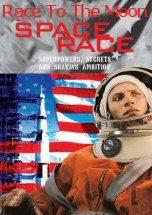
Race To The Moon

   2005    Technology
During 1964-1969 both sides now plan to put a man on the Moon - while the Soviets struggle, the Americans pull ahead in the space race with Project Gemini, but then suffer a disaster with the Apollo 1 fire. The Soviet space programme suffers its own blows: Sergei Korolev dies when his heart fails during an operation, Soyuz 1 crashes and kills cosmonaut Vladimir Komarov, and their planned moon rocket, the N-1 rocket, fails to successfully launch. In America, von Braun has difficulties with the Saturn V, but they are overcome, and the rocket successfully launches the first manned lunar mission, Apollo 8, and the first manned lunar landing, Apollo 11.
Series: Space Race

Travels with Vasari 1

   2009    Art
On a spectacular journey through Renaissance Italy, Andrew Graham-Dixon searches for the shadowy figure who wrote one of the most important books on art and looks at some dazzling works, including masterpieces of the early Renaissance by Giotto, Masaccio and Donatello. Giorgio Vasari was the grandaddy of all art critics, travelling Italy in the 16th century for his definitive Lives of the Artists. It was a time of miracles that he named 'the Renaissance'.
Series: Travels with Vasari