
Last Watched

"EU"  Sort by

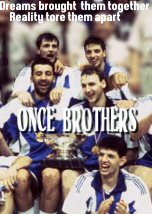
Once Brothers

   2010    Culture
Drazen Petrovic and Vlade Divac were two friends who grew up together sharing the common bond of basketball. Together, they lifted the Yugoslavian National team to unimaginable heights. After conquering Europe, they both went to America where they became the first two foreign players to attain NBA stardom. But with the fall of the Soviet Union on Christmas Day 1991, Yugoslavia split up. A war broke out between Petrovic's Croatia and Divac's Serbia. Long buried ethnic tensions surfaced. And these two men, once brothers, were now on opposite sides of a deadly civil war. As Petrovic and Divac continued to face each other on the basketball courts of the NBA, no words passed between the two. Then, on the fateful night of June 7, 1993, Drazen Petrovic was killed in an auto accident. "Once Brothers" will tell the gripping tale of these two men, how circumstances beyond their control tore apart their friendship, and whether Divac has ever come to terms with the death of a friend before they had a chance to reconcile.
Playing with Nuclear Fire

   2014    Technology
Playing with Nuclear Fire' - In March 2011, the Tohoku earthquake in Japan created a tsunami that killed some 16,000 people and crippled the Fukushima Daiichi nuclear power plant. In the aftermath, the government and TEPCO, the plant's operator, withheld information about the extent of the damage. Three years later, citizens and the international community are left wondering if Japan really does have the situation under control, as the government is insisting, or if the danger is far greater than anyone is willing to admit. 'No Man Left Behind' - It's estimated that over a quarter million vets from recent wars have sought treatment for PTSD. Despite these statistics, veterans often face an uphill battle to get treatment, receiving inadequate attention and, most dangerously, overprescribed narcotics and other pharmaceuticals. Ryan Duffy meets veterans struggling with mental illness and addiction.
Series: Vice

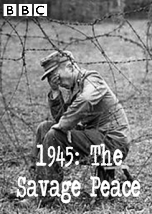
1945 The Savage Peace

   2015    History
When the Second World War ended, the people of liberated Europe celebrated their freedom from Nazi tyranny. Their years of suffering had ended, but for millions of Germans, the end of the conflict opened a new and terrible chapter. They suffered the appalling violence meted out to the defeated, especially to those ethnic Germans who had lived peacefully for centuries in neighbouring countries". Savage Peace uses rare and unseen archive film, the documentary tells a harrowing story of vengeance against German civilians, which mirrored some of the worst cruelty of the Nazi occupiers during the years of war. The Savage Peace includes the unique testimony of eyewitnesses and victims, who recall the horrors with searing clarity, their memories undimmed 70 years after the events took place. This a story that has, until now, been untold amidst the justified celebration of an end to an unspeakable tyranny. But as the writer George Orwell said, the treatment of the defeated Germans was a terrible crime that has gone unpunished.

What Makes Me

   2015    Medicine
'What Makes Me?', explores the question of how the brain gives rise to our thoughts, emotions, our memories and personality. Philosophers and great thinkers have for millennia pondered the question of how physical stuff can give rise to mental processes. Last century, the new field of neuroscience joined the discussion, and Dr David Eagleman explains that to a neuroscientist, the answers to such questions lie in a deep understanding of the brain.
Series: The Brain with David Eagleman

Why Do I Need You

   2015    Medicine
In ‘Why Do I Need You?’ Dr. David Eagleman explores how the human brain relies on other brains to thrive and survive. Our fundamentally social nature can hold the key to our sucdess as a species. Our brains are so fundamentally wired to interact that we are something more like a single vast super-organism. In this age of digital connection, we desperately need to understand how human brains interact if we want our civilization to have a future, if we want to avoid fanaticism and to embrace cooperation. This neural interdependence begins at birth. Dr. David Eagleman invites a group of babies to a puppet show to showcase their ability to discern who is trustworthy, and who isn’t.
Series: The Brain with David Eagleman

Flowering

   1995    Nature
The third episode is devoted to the ways in which plants reproduce. Pollen and a stigma are the two components needed for fertilisation. Most plants carry both these within their flowers and rely on animals to transport the pollen from one to the stigma of another. To do this, they attract their couriers with colour, scent and nectar. It isn't just birds that help pollination: some mammals and reptiles also do so. However, it is mostly insects that are recruited to carry out the task. To ensure that pollen is not wasted by being delivered to the wrong flower, some species of plant have developed exclusive relationships with their visitors, and the gentian and its attendant carpenter bees is one example. Since pollen can be expensive to produce in terms of calories, some plants, such as orchids, ration it by means of pollinia and a strategically placed landing platform. Other orchids offer no reward for pollination, but instead mislead their guests by mimicking their markings and aroma, thus enticing males to 'mate' with them (Pseudocopulation). The most extreme fertilisation method is one of imprisonment, and one plant that uses it is the dead horse arum. It is often found near gull colonies, and mimics the appearance and smell of rotting flesh. Blow-flies are attracted to it, and are forced to stay the night before being allowed to depart in the morning, laden with pollen. Finally, Attenborough introduces the world's largest inflorescence: that of the titan arum.
Series: The Private Life of Plants
Solar System

Solar System

2024  Science
Life in the Undergrowth

Life in the Undergrowth

2005  Nature
Reel Rock

Reel Rock

2014  Culture
The Story of China

The Story of China

2016  History
Coronavirus Special

Coronavirus Special

2020  Medicine
The Sky at Night

The Sky at Night

2015  Culture