

Last Watched

"ISS"  Sort by

Deliver Us from Drought

   2014    Nature
'Deliver Us from Drought' - Over the past years, Texas has experienced the worst drought in its recorded history. 97% of the scientific community agrees that human activity has contributed to extreme weather patterns around the world. But many Texans--legislators, community leaders and citizens--don't attribute their drought to humans, and have taken few if any initiatives to limit the state's CO2 emissions, currently the highest in the country. "The Resource Curse" - As humanity's appetite for energy grows exponentially, the extraction industry scrambles to the most remote regions on Earth. In the undeveloped Melanesian country of Papua New Guinea, America's Exxon Mobil has staked its claim to a $19 billion liquid natural-gas project. While some see Exxon's mammoth presence as the catalyst that will usher the underdeveloped country into the 21st Century, others predict the initiative could plunge its people into civil war.
Series: Vice
A Leap of Faith

   2013    History
With optional Hebrew subtitles. This episode explores how the spread of the Enlightenment brought ghetto walls around Europe crashing down and allowed Jews to join the wider fabric of modern life in Europe in unprecedented ways. This Jewish renaissance saw Giacomo Meyerbeer and Felix Mendelssohn to establish the enduring tradition for Jewish musical prodigies. However the integration of Jewish talent into the mainstream of European culture and commerce eventually stirred up ancient prejudice, expressed in the new fashion of Romantic nationalism and the pseudo-science of anti-semitism.
Series: The Story of the Jews

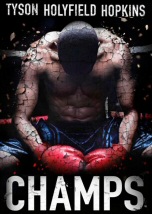
Champs

   2015    Culture
Boxing, 'the poor man's sport', has long given kids from America's roughest neighborhoods an opportunity to escape violence with violence. But with success in the ring comes new fights for which there is no training: champions are made and broken in the blink of an eye, and young men thrust into the spotlight are often ill-equipped for the fame, fortune, and hangers-on that accompany a title belt". And for many, the toughest bouts are fought during retirement, when health and financial issues begin to mount. Built around the stories of heavyweight legends as Mike Tyson, Evander Holyfield and Bernard Hopkins, We will examine their lives in and out of the ring.

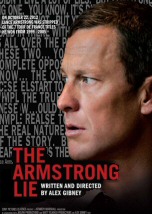
The Armstrong Lie

   2013    Culture
Academy Award-winning director Alex Gibney (Taxi to the Dark Side) masterfully explores the fall of the disgraced cycling champion following the 2009 Tour de France, making use of his extraordinary access to attain rare interviews with former teammates, alleged doping mastermind Dr. Michele Ferrari, and Armstrong himself. What was Lance Armstrong thinking? For years, after seizing international fame as the cancer survivor who won seven Tour de France titles, he fiercely denied accusations that he used performance-enhancing drugs. He used his power to aggressively litigate journalists and publicly humiliate former friends who claimed otherwise. His deceit finally cracked in January 2013, when he admitted guilt to Oprah Winfrey in a television interview that critics decried for only scratching the surface. Academy Award-winning director Alex Gibney approaches Armstrong with unique and extraordinary access. In 2009, Gibney was commissioned to make a film about Armstrong's return to the Tour de France, four years after the racing champion had declared retirement. That race would later stir up devastating evidence in the case against Armstrong. But Gibney came away from the experience unable to reconcile the discrepancy between doping allegations and Armstrong's emphatic denials. Then, post-Oprah, Gibney went back to Armstrong for new interviews to extract a more detailed account of his double life. In The Armstrong Lie, Gibney masterfully explores the complexities of the case, interweaving the dramatic action of the 2009 Tour de France, when Armstrong found himself unexpectedly competing against his own teammate Alberto Contador. Gibney attains rare interviews with Armstrong's former teammates and alleged doping mastermind Dr. Michele Ferrari. The film also raises troubling questions about the process of doping regulation. Recently, when asked to give advice to documentary filmmakers, Gibney responded with a motto exemplified by this film: "Embrace contradictions."

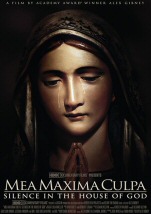
Mea Maxima Culpa: Silence in the House of God

   2012    Culture
Alex Gibney explores the charged issue of pedophilia in the Catholic Church, following a trail from the first known protest against clerical sexual abuse in the United States and all the way to the Vatican. The title is derived from the Latin phrase "mea maxima culpa". It is taken from the Confiteor that is part of the Roman Catholic Mass. It translates into English as "My most grievous fault" The film examines the abuse of power in the Catholic Church system through the story of four deaf men who set out to expose the priest who abused them during the mid-1960s. Each of the men brought forth the first known case of public protest against clerical sex abuse, which later lead to the sex scandal case known as the Lawrence Murphy case. Through their case the film follows a cover-up that winds its way from the row houses of Milwaukee, Wisconsin, through Ireland's churches, all the way to the highest office of the Vatican.

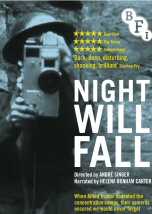
Night Will Fall

   2014    History
Researchers discover film footage from World War II that turns out to be a lost documentary shot by Alfred Hitchcock and Sidney Bernstein in 1945 about German concentration camps liberated by allied troops. When Allied forces liberated the Nazi concentration camps in 1944-45, their terrible discoveries were recorded by army and newsreel cameramen, revealing for the first time the full horror of what had happened. Making use of British, Soviet and American footage, the Ministry of Information’s Sidney Bernstein (later founder of Granada Television) aimed to create a documentary that would provide lasting, undeniable evidence of the Nazis’ unspeakable crimes. He commissioned a wealth of British talent, including editor Stewart McAllister, writer and future cabinet minister Richard Crossman – and, as treatment advisor, his friend Alfred Hitchcock. Yet, despite initial support from the British and US Governments, the film was shelved, and only now, 70 years on, has it been restored and completed by Imperial War Museums. This eloquent, lucid documentary by André Singer (executive producer of the award-winning The Act of Killing) tells the extraordinary story of the filming of the camps and the fate of Bernstein’s project, using original archive footage and eyewitness testimonies.