

Last Watched

"People"  Sort by

Living Together

   2006    Nature
The documentary deals with the future of conservation. It begins by looking at previous efforts. The 'Save The Whales' campaign, which started in the 1960s, is seen to have had a limited effect, as whaling continues and fish stocks also decline. In the 1990s, as head of the Kenya Wildlife Service, Richard Leakey took on the poachers by employing armed units. Although it was successful in saving elephants, the policy was detrimental to the Maasai people, who were forced from their land. The need for "fortress" areas is questioned, and the recently highlighted Raja Ampat coral reef in Indonesia is an example. The more tourism it generates, the greater the potential for damage — and inevitable coastal construction. Sustainable development is viewed as controversial, and one contributor perceives it to currently be a "contradiction in terms". Trophy hunting is also contentious. Those that support it argue that it generates wealth for local economies, while its opponents point to the reducing numbers of species such as the markhor. Ecotourism is shown to be beneficial, as it is in the interests of its providers to protect their environments. However, in some areas, such as the Borneo rainforests, the great diversity of species is being replaced by monocultures. The role of both religion and the media in conservation is argued to be extremely important. Contributors to the programme admit a degree of worry about the future, but also optimism.

Cannabis: The Evil Weed

   2009    Medicine
Cannabis is the world's favourite drug, but also one of the least understood. Can cannabis cause schizophrenia? Is it addictive? Can it lead you on to harder drugs? Or is it simply a herb, an undervalued medicine? Addiction specialist Dr John Marsden discovers that modern science is finally beginning to find answers to these questions. John traces the cannabis plants' birthplace in Kazakhstan; finds the origins of our sensitivity to cannabis in the simple sea squirt; and finds out just what it does to our brains. He meets people who have been changed by this drug in drastically different ways - from those whose lives have been shattered to those who lives have been revived.

Hiroshima 1 of 2

   2005    History
It was the defining moment of the 20th Century - the scientific, technological, military, and political gamble of the world's first atomic attack. This drama-documentary attempts to do what no other film has done before - to show what it is like to live through a nuclear explosion, millisecond by millisecond. Set in the three weeks from the first test explosion in New Mexico to the eventual dropping of the bomb, the action takes viewers into the room where the crucial political decisions are made; on board the Enola Gay on her fateful voyage; inside the bomb as it explodes; and on the streets of Hiroshima when disaster strikes. Parallel storylines interweave, unfolding the action from both US and Japanese perspectives, and revealing the tensions and conflicts in the actions and minds of people who were making history. Special effects recreate the reality of the mission - even going inside the workings of the bomb - and archive film replays the horrific aftermath.
Series: Hiroshima

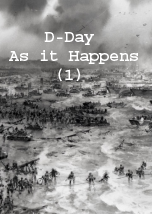
D-Day: As it Happens (1)

   2013    History
D-Day: As It Happens D-Day: As It Happens tells the story of this pivotal event in 20th-century history in a completely new way. Using newly-analysed archive footage, viewers can track the progress of seven people who were there on the day, each of them a real participant in the 1944 invasion. And they can do so moment by moment in real time, encountering the twists and turns of the fighting at the same time as the D-Day seven did, and learning their fate as the action unfolds in parallel with the present, Narrated by Peter Snow, with Channel 4 presenter and former marine Arthur Williams, and experts including former British Army officer Colonel Tim Collins and front-line journalist Lorna Ward. The first programme tells the back stories of the real people that the event is following in real time and sets out their missions over the following 24 hours. The D-Day seven include a paratrooper, a midget submariner, a nurse and a military cameraman.
Series: D-Day

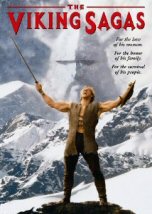
The Viking Sagas

   2011    History
Hundreds of years ago in faraway Iceland the Vikings began to write down dozens of stories called sagas - sweeping narratives based on real people and real events. But as Oxford University's Janina Ramirez discovers, these sagas are not just great works of art, they are also priceless historical documents which bring to life the Viking world. Dr Ramirez travels across glaciers and through the lava fields of Iceland to the far north west of the country to find out about one of the most compelling of these stories - the Laxdaela Saga.

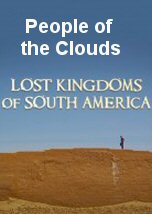
Lost Kingdoms of South America: People of the Clouds

   2013    History
Dr Jago Cooper reveals the history of some of South America's ancient civilisations. He begins with an epic journey into the remote Peruvian Andes in search of the mysterious Chachapoya people. Once numbering half a million, they were known as the 'People of the Clouds'. Dr Cooper reveals how they developed sophisticated methods of recording stories, traded in exotic goods found hundreds of miles from their territory, and had funeral traditions that challenge assumptions about ancient human behaviour. His search for evidence takes him to astonishing cliff tombs untouched for 500 years and one of the most spectacular fortresses in South America, where the fate of the Chachapoya is revealed.
Series: Lost Kingdoms of South America
The Hunt

The Hunt

2015  Nature
Leaving Neverland

Leaving Neverland

2019  Culture
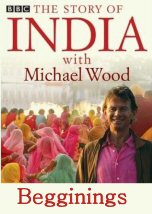
The Story of India

The Story of India

2007  History
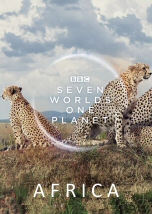
Seven Worlds One Planet

Seven Worlds One Planet

2019  Nature
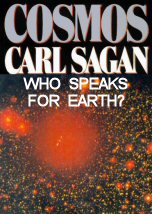
Cosmos

Cosmos

1980  Culture
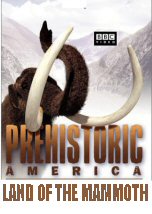
Prehistoric America

Prehistoric America

2003  Nature
The Cell

The Cell

  Science