Facebook is a company that has grown from nothing to be worth half a trillion dollars in just 15 years. Today nearly a third of all humans are using it, and yet we rarely get to see the people actually in charge of the biggest social network in the world. The company has suffered a series of deepening scandals and intense media scrutiny. In 2018, their mission - to connect everyone on the planet - seemed to be going dramatically wrong. Data leaks, fake news and hacks on user security were threatening to destroy everything Mark Zuckerberg had built. Yet throughout this difficult time, the company allowed the filmakers to follow key members of the team trying to fix the problems and secure the platform. This film goes behind the scenes and follows the teams inside Facebook. It tackles difficult questions, like how our data is used and what content should and shouldn’t be on the site, but also shows how Facebook works, what the teams are doing to secure it, and reveals a hidden technological playground, where some of the smartest engineers in the world are being hired to build systems and technology no one has built before.
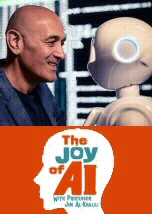
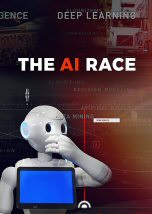
Explore how Artificial Intelligence will change your job as new research shows how much of what you do could be done by robots. From truckers to lawyers & doctors, we bring affected workers face to face with AI experts. How can we prepare for the coming changes to the world economy? We are on the precipice of another technological transformation. The last industrial revolution turned society upside down. It ultimately delivered greater prosperity and many more jobs, as well as the eight hour day and weekends.
But the transition was at times shocking and violent. The question is, can we do better this time? We don't realize that the future is not inevitable. The future is the result of the decisions we make today. These technologies are morally neutral, they can be used for good or for bad.
There's immense good things they can do, they can eliminate many disease,
they can help eliminate poverty, they can tackle climate change. Equally, the technology can be used for lots of bad. It can be used to increase inequality,it can be used to transform warfare. It can be used to make our lives much worse. We get to make those choices.
Black holes are the most enigmatic and exotic objects in the universe. They’re also the most powerful; with gravity so strong it can trap light. And they’re destructive, swallowing entire planets, even giant stars. Anything that falls into them vanishes... gone forever. Now, astrophysicists are realizing that black holes may be essential to how our universe evolved—their influence possibly leading to life on Earth and, ultimately, us. In this series, astrophysicist and author Janna Levin takes viewers on a journey to the frontiers of black hole science. Along the way, we meet leading astronomers and physicists on the verge of finding new answers to provocative questions about these shadowy monsters: Where do they come from? What’s inside? What happens if you fall into one? And what can they tell us about the nature of space, time, and gravity?
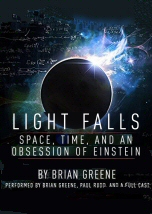
Brian Greene and an ensemble cast perform this theatrucak work tracing Albert Einstein's electrifying journey towards one of the most veautiful ideas ever conceived - the General Theory of Relativity. With state of the art animation and innovative projection techniques, Light Falls illuminates Einstein'sbreakthuroug moments, near misses, agonizing frustrations, and final emergence into the light, as one intrepid mind took on the universe... and won. Best-selling author, superstar physicist, and cofounder of the World Science Festival Brian Greene (The Elegant Universe, The Fabric of the Cosmos) and award-winning actor Paul Rudd (Ant-Man) perform this dramatic story. Featuring an original score by composer Jeff Beal, Einstein’s electrifying journey toward his greatest achievement is brought vividly to life.
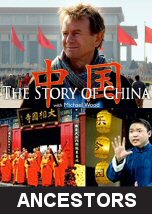
Michael Wood embarks on a great historical adventure, exploring the stories, people and landscapes that have helped create China's distinctive character and genius over four thousand years. Is the history of the world's newest superpower, from its ancient past to the present day. Starting in Wuxi, Michael joins the Qin family reunion, when 300 relatives gather to worship their ancestors on Tomb Sweeping Day. 'Like the nation, the family has been through so much,' one says. 'Now everyone wants to know - what are our roots?' Looking for the origins of the Chinese state, he visits the excavations at Erlitou and sees an exquisite turquoise dragon sceptre from 2000 BC. China's first writing is found on 'oracle bones' dug up from the Shang royal tombs at Anyang in the 1920s. At the Beijing Planetarium, Michael travels back in time as astronomers plot the planetary conjunction that the ancients believed foretold the overthrow of the Shang Dynasty. Next, the Age of Philosophers and Confucius, whose book Analects has had greater influence worldwide than even the Bible, according to some. In Xi'an, we hear how the First Emperor united China and created the authoritarian Qin state that gave us the word China. Finally, Michael returns to the temple fair in Henan for a dramatic night ceremony to give thanks to the ancestors. China, Michael concludes, is rising again, not just because of its economic strength, but because of the incredible solidarity of the Han Chinese view of their own civilisation, their sense of family and, of course, the presence of the ancestors.
The Apollo equipment has sat abandoned on the lunar surface for over 40 years. Now there is a renewed excitement and drive to return to the moon. This time, not to just plant a flag, but to colonize. How would we accomplish this? And why would we do it? The race is on to colonize the Moon, to uncover its hidden riches and discover if humanity can really survive on another world. The Moon is our gateway to our solar system, it's the stepping stone we have to become a multi-planetary species.












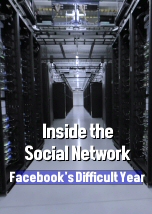





The company has suffered a series of deepening scandals and intense media scrutiny. In 2018, their mission - to connect everyone on the planet - seemed to be going dramatically wrong. Data leaks, fake news and hacks on user security were threatening to destroy everything Mark Zuckerberg had built.
Yet throughout this difficult time, the company allowed the filmakers to follow key members of the team trying to fix the problems and secure the platform. This film goes behind the scenes and follows the teams inside Facebook. It tackles difficult questions, like how our data is used and what content should and shouldn’t be on the site, but also shows how Facebook works, what the teams are doing to secure it, and reveals a hidden technological playground, where some of the smartest engineers in the world are being hired to build systems and technology no one has built before.