

Last Watched

What is the World Made of

   2010    History
In this episode, Michael demonstrates how our society is built on our search to find the answer to what makes up everything in the material world. This is a story that moves from the secret labs of the alchemists and their search for gold by the stone of the philosophers to the creation of the world's first synthetic dye - Purple - and onto the invention of the transistor. This quest may seem abstract and highly theoretical. Yet it has delivered the greatest impact on humanity. By trying to answer this question, scientists have created theories from elements to atoms, and the strange concepts of quantum physics that underpin our modern, technological world.
Series: The Story of Science
How Did We Get Here

   2010    Science
The question of our human origins is one of the most controversial science has wrestled with. This is the story of how scientists came to explain the beauty and diversity of life on earth, and reveal how its evolution is connected to the long and violent history of our planet. Featuring ocean adventurers, eccentric French aristocrats, mountain climbers, a secret Victorian publisher with 12 fingers, a ridiculed German meteorologist, and only a brief hint of Charles Darwin.
Series: The Story of Science

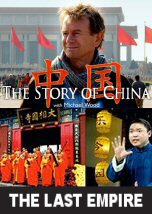
The Last Empire

   2016    History
China's last empire, the Qing, lasted from 1644 to 1912. It began in violence and war as the Manchus swept down from the north, but invaders became emperors, with three generations of one family ruling the country. Among them, Michael Wood argues, was China's greatest emperor - Kangxi. Under the Qing, China doubled in size to include Xinjiang in the far west, as well as Mongolia and Tibet, creating the essential shape of China today. The new dynasty tolerated a diversity of cultures and religions, including Islam. In Kaifeng, Michael visits a women's mosque with a female imam, a delightful scene that ends with laughter and selfies! The Qing also undertook huge cultural enterprises. At a traditional printing house where the wood blocks are hand-carved, we see how the Complete Tang Poems were reproduced - all 48,000 of them. We travel through the wintry countryside to a remote village where a hardy audience watch open-air opera in the snow and visit a painter's studio, and 'storytelling' houses in Yangzhou. In the 18th century, China was arguably the greatest economy in the world, and we get a fabulous sense of the rich culture that came with prosperity. But then came the clash with the British, in the first Opium War, when a British expedition destroyed the Qing navy and extracted territory and trading rights. We leave with a glimpse of the future. 'Every dynasty has risen and declined,' says Michael, 'and has needed new life to regenerate, and this time the catalyst was the British.' Among the ports China ceded was an almost uninhabited island, Hong Kong, one of today's greatest financial centres, and Shanghai, a small town then but now one of the greatest cities in world.
Series: The Story of China

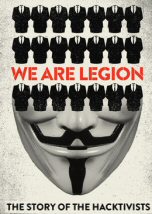
We Are Legion The Story of the Hacktivists

   2012    Culture
The film takes us inside the complex culture and history of Anonymous. The film explores early hacktivist groups like Cult of the Dead Cow and Electronic Disturbance Theater, and then moves to Anonymous’ own raucous and unruly beginnings on the website 4Chan. Through interviews with current members – some recently returned from prison, others still awaiting trial – as well as writers, academics and major players in various “raids,” WE ARE LEGION traces the collective’s breathtaking evolution from merry pranksters to a full-blown, global movement, one armed with new weapons of civil disobedience for an online world.

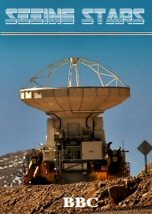
Seeing Stars

   2011    Science
Around the world, a new generation of astronomers are hunting for the most mysterious objects in the universe. Young stars, black holes, even other forms of life. They have created a dazzling new set of super-telescopes that promise to rewrite the story of the heavens. This film follows the men and women who are pushing the limits of science and engineering in some of the most extreme environments on earth. But most strikingly of all, no-one really knows what they will find out there.