






Last Watched

"ELA"  Sort by

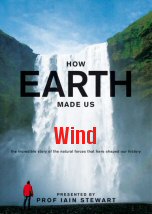
Wind

   2010    Science
Iain sets sail on one of the fastest racing boats ever built to explore the story of our turbulent relationship with the wind. Travelling to iconic locations including the Sahara desert, the coast of West Africa and the South Pacific, Iain discovers how people have exploited the power of the wind for thousands of years. The wind is a force which at first sight appears chaotic. But the patterns that lie within the atmosphere have shaped the destiny of continents, and lie at the heart of some of the greatest turning points in human history.
Series: How Earth Made Us
Human Planet: The Jungles

   2011    Culture
The rainforest is home to more species of plants and animals than any other habitat on the planet. But for humans, life there is not as easy as it looks. Life in the trees requires great skill, ingenuity and sheer bravery. The Matis of Brazil carve 4-metre-long blow-pipes to hunt monkeys - in near total silence. Deep in the Congo forests, Tete defies death by scaling a giant tree using nothing more than a liana vine, and he must then negotiate an angry swarm of bees - all to collect honey for his family. Three children from Venezuela's Piaroa tribe venture deep into the jungle to hunt tarantulas - to toast for lunch! In West Papua the Korowai tribe show-off their engineering skills by building a high-rise home 35 metres up in the tree tops. Most memorable of all, in Brazil we join a unique monitoring flight in search an un-contacted tribe...
Series: Human Planet

The Mountains

   2011    Culture
From lush cloud forests to bare summits that take your breath away, the higher you climb the tougher life gets on a mountain. Human Planet explores the extraordinary ways in which people survive at extreme altitudes where nature becomes utterly unforgiving. In the Altai Mountains in Western Mongolia the vast open spaces make hunting for animals almost impossible, so the locals have forged an astonishing partnership with golden eagles which can do the hunting for them. On the precipitous cliffs of the Simien Mountains of Ethiopia we join a young boy locked in a dramatic battle with fearsome gelada monkeys which are hell-bent on raiding his family's meagre grain harvest. In the Himalayan state of Nepal - the roof of the world - we witness a rarely seen ceremony: a sky burial. In a land where there is little wood to burn for cremation, and where burying the dead is virtually impossible, the dead are fed to vultures in the ultimate reverence of nature.
Series: Human Planet

Homo Interneticus

   2010    Technology
Dr Aleks Krotoski concludes her investigation of how the World Wide Web is transforming almost every aspect of our lives. Joined by Facebook founder Mark Zuckerberg, Bill Gates, Al Gore and the neuroscientist Susan Greenfield, Aleks examines the popularity of social networks such as Facebook and asks how they are changing our relationships. And, in a ground-breaking test at University College London, Aleks investigates how the Web may be distracting and overloading our brains.
Series: The Virtual Revolution

The Insatiable Appetite

   1998    Nature
The next instalment focuses on dietary needs and how different species have evolved beaks to suit their individual requirements. The latter come in a multitude of forms. Blue tits and goldfinches have beaks akin to tweezers, with which to extract seeds, while the hawfinch's razor-like bill can deal with a cherry-stone. However, the crossbill is the only finch that can twist its mandibles in opposite directions. Jays store acorns for winter by burying them in the ground, whereas woodpeckers can keep up to 60,000 of them in one tree trunk. Sap is also desirable, and there are a variety of methods used to obtain it. The hoatzin is the only specialised leaf-eater, and accordingly has a digestive system more akin to that of cattle. Plants recruit birds to aid pollination, and offer nectar as a reward. Hummingbirds eat little else, and the sword-bill's beak is the longest of any bird in relation to its body. Insects are also highly prized, and Galapagos finches are shown to possess some ingenuity as they not only strip bark, but also use 'tools' to reach their prey. Crows are hailed as being among the most intelligent birds, and one is shown using a twig to spear a grub within a fallen log. The robin is an opportunist, and Sir Attenborough observes one seizing morsels as he digs a patch of earth. In South America, a cattle tyrant sits atop an obliging capybara and uses its vantage point to spot passing food that may be dislodged by its grazing partner.
Series: The Life of Birds

Chased by Sea Monsters 3of3

   2003    Nature
The Basilosaurus, the first of the large whale species, is not a harmless plankton eater but a fearsome high speed hunter. And most frightening of all is the Megalodon, a gargantuan ancestor of the great white that makes its modern day relative look like a tuna.
Series: Chased by Sea Monsters