



Last Watched

"Han"  Sort by

Becoming Cousteau

   2021    History
A look at the life, passions, achievements and tragedies surrounding the famous Jacques Cousteau, featuring an archive of his newly restored footage. Its focus will be on the inventor-explorer-environmentalist-filmmaker revolution, i.e., giving mankind the resources to explore the ocean with the Aqua Lung, calling attention to ocean pollution, and his long-time collaboration.
The Machine That Feels

   2021    Technology
The film explores how artificial intelligence (AI) is catching up to us in ways once thought to be uniquely human: empathy, emotional intelligence and creativity. AI has the potential to reshape every aspect of our world – but most of us are unaware of what looms on the horizon. This documentary shows viewers what they need to know about a field that is advancing at a dizzying pace, often away from the public eye. Have AI the power to disconnect us from fellow humans? What does it mean when AI makes art? Can really AI interpret and understand human emotions? How is it possible that AI creates sophisticated neural networks that mimic the human brain?
The documentary includes interviews with global leaders, commentators and innovators from the AI field, including Geoff Hinton, Yoshua Bengio, Ray Kurzweil and Douglas Coupland, who highlight some of the innovative and cutting-edge AI technologies that are changing our world.

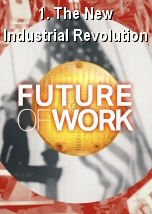
The New Industrial Revolution

   2021    Technology
This there-part series explores monumental changes in the workplace and the long-term impact on workers, employers, educators and communities. Employment is part of the American Dream. Will the future provide opportunities for jobs that sustain families and the nation?
The first episode illuminates disruptions to the world of work--AI, robotics, globalization and labor practices. The COVID-19 pandemic was a new driver of change; at the pandemic's height, unemployment flipped from its lowest rate in 50 years to its highest level in a century.
Series: Future of Work

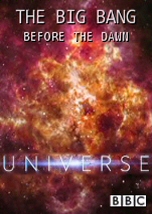
The Big Bang: Before the Dawn

   2021    Science
How did the universe come to be? Thanks to a series of discoveries, our most powerful space missions have unravelled 13.8 billion years of cosmic evolution and revealed the story of our universe from its birth all the way to the arrival of our nascent civilization. Our guide on this odyssey back to the dawn of time is light. Telescopes are time machines - by looking out into the distant universe, they open a window to the past. One telescope more than any other has helped us journey through the history of the universe: NASA’s Hubble Space Telescope. Remarkably, Hubble has even found one of the first galaxies ever to exist in the universe, which was born some 13.4 billion years ago. It's a discovery that hints at the beginnings of our own Milky Way. Vivid CGI brings this ancient galaxy to life, allowing us to witness for ourselves the first dawn. It was the beginning of a relationship between stars and planets that would, on a faraway world, lead to the origin of life - and ultimately to us.
Hubble’s incredible discoveries have allowed scientists to piece together much of our cosmic story, but it cannot take us back to the most important moment in history: the Big Bang. For decades, the moment the universe began was the subject of pure speculation, but by combining astronomy and cosmology, scientists have finally found a way to put their theories to the test and study the momentous events that took place during the Big Bang. They can do this because the European Space Agency’s Planck space telescope has seen the afterglow of the Big Bang itself – something we call the Cosmic Microwave Background. The unparalleled detail Planck gave us has helped confirm something remarkable: the Big Bang may not be the beginning. There was a time before the dawn – a place beyond anything we can comprehend. Professor Brian Cox transports us back to the fraction of a second before the Big Bang, when the seeds of our universe were planted.
Series: Universe

Four Hours at the Capitol

   2021    History
The film is an immersive chronicle of the insurrection at the U.S. Capitol on January 6, 2021, when thousands of Donald Trump's followers from across the country gathered in Washington D.C. to protest the results of the 2020 presidential election, many with the intent of disrupting the certification of Joe Biden’s presidency.
'Four Hours at the Capitol' features never-before-seen footage and vivid first-hand accounts from lawmakers, staffers, police officers, protesters, and rioters who stormed the Capitol building where the electoral votes were being counted. The film details how the violence quickly escalated, leaving Capitol security forces outnumbered and overwhelmed, and highlights the high-stakes standoff between police and rioters. The documentary presents a stark reminder of the wider ramifications of the events of that unprecedented day, which ended with the deaths of five people and more than 140 police officers injured.

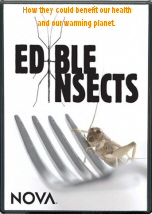
Edible Insects

   2021    Culture
From crunchy crickets to nutty fly grubs, the film takes a tasty look at insect foods and how they could benefit our health and our warming planet. From Thailand to Texas, insect farmers are showing how the tiny critters stack up as an environmentally friendly alternative to beef protein and can, pound for pound, deliver better nutritional value than the finest steak. But will western people overcome the 'ick' factor and share the appetite of many cultures around the world for insect feasts?
Generation Iron

Generation Iron

2018  History
Prehistoric America

Prehistoric America

2003  Nature
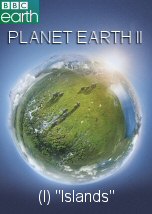
Planet Earth II

Planet Earth II

2016  Nature
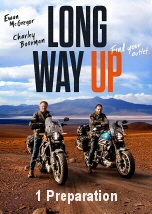
Long Way Up

Long Way Up

2020  Culture
Reel Rock

Reel Rock

2014  Culture
The Human Body

The Human Body

1998  Medicine