Nathan Fielder returns with a daring new season that elevates the concept of constructed reality to extraordinary extremes. This season dives even deeper into ethically charged scenarios, where real people rehearse life-altering choices inside meticulously engineered simulations. As the line between performance and authenticity dissolves, the series confronts our deepest questions about control, identity, and the limits of preparation. Disturbing, brilliant, and darkly hilarious—it’s an experience like no other. The opening three episodes raise the stakes immediately. A father struggles to reveal a devastating truth to his son—but the rehearsal begins to unravel his own sense of self. A woman prepares for a proposal that may never arrive, as emotional tension distorts her reality. And in a startling turn, Fielder inserts himself into the most personal rehearsal yet, facing consequences he may no longer be able to manage. With emotional weight, narrative twists, and biting satire, these episodes pull you in and don’t let go.
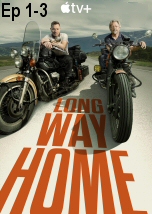
Two lifelong friends set out on an unforgettable journey across Europe like you've never seen before — not on modern machines, but on beautifully restored vintage motorbikes. From the rugged beauty of the Scottish Highlands to the icy reaches of the Arctic Circle, and down through the heart of the Baltics and continental Europe, they follow an unconventional path fueled by curiosity, friendship, and a passion for the open road. As they ride thousands of miles over two months, every detour reveals a new story, every breakdown sparks laughter, and every mile deepens their bond. This isn’t just a road trip — it’s a soulful ride through landscapes, memories, and the timeless joy of adventure. The first three episodes of this standout series follow Ewan and Charley as they set off across Europe — taking the longest, most adventurous way possible. After crossing the North Sea, they ride through the Netherlands and Germany, stopping in Charley’s mother’s hometown before continuing toward the Danish islands, where the sense of freedom begins to take hold. But the road soon turns unpredictable. In Sweden, Ewan’s bike breaks down, stranding him in unfamiliar territory. A group of local bikers steps in to help, showing that the journey is not just about distance, but about the people you meet along the way. With their support, he reaches iconic Scandinavian landmarks and new challenges, realizing that this ride is as much about resilience and friendship as it is about travel. These early episodes promise more than adventure — they deliver a soulful, cinematic ride into the heart of connection and discovery.
In episodes 15 and 16, the war begins to close in on the Axis powers not only across battlefields, but inside the societies that created it. Germany and Japan face the turning tide in radically different ways: Hitler’s regime tries to preserve the illusion of normal life while driving production through propaganda, forced labor and terror, while Japan demands sacrifice, austerity and total obedience from its people as American submarines cut the lifelines of empire. As bombing raids, shortages and fear shatter the home front, the documentary reveals how nations built on conquest begin to feel the terrible cost of the war they unleashed. The story then moves into one of the most powerful chapters of resistance in occupied Europe. As Allied armies advance from Normandy and Soviet forces push from the east, ordinary people and underground fighters rise against Nazi rule in France, Poland and even inside the machinery of extermination itself. From coded BBC messages and the liberation of Paris to the doomed Warsaw Uprising and the desperate courage of prisoners documenting the horrors of Auschwitz, these episodes show war at its most human and devastating: A struggle not only between armies, but between tyranny and the refusal to be erased.
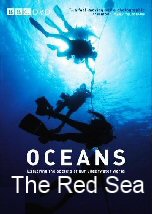
In episodes 7 and 8 of the series, the journey moves from the towering Andes to the tropical Caribbean, revealing two worlds where wildlife survives through astonishing specialization. In the Andes, spectacled bears guide their cubs down perilous cliffs, rare marvelous spatuletail hummingbirds fight and dance for mates, frogs endure freezing nights high beside retreating glaciers, torrent ducks master near-boiling mountain rivers, and thousands of flamingos gather at toxic high-altitude lakes in spectacular courtship displays. The Caribbean offers an entirely different struggle for survival. Sailfish coordinate high-speed attacks on sardine shoals, sperm whales dive into the deep around Dominica, millions of red crabs cross Cuba’s forests on their migration to the sea, and animals on isolated islands develop remarkable ways to exploit scarce resources. On Isla Jicarón, white-faced capuchins even learn to use stones as tools to crack nuts, showing how intelligence and adaptation can make the difference between survival and failure in paradise.
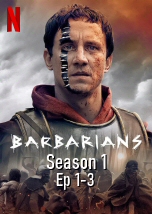
Click CC for subtitles. Torn between the Roman Empire that raised him and the Germanic people into which he was born, a Roman officer finds himself trapped between loyalty, identity and rebellion. As Rome tightens its grip over the tribes beyond the Rhine, resentment grows and old bonds are tested. At the center of the conflict stands Arminius, a man shaped by Roman discipline but increasingly confronted with the suffering of his own people, while Thusnelda and Folkwin become symbols of defiance against an empire that demands obedience at any cost. Based on real historical events and figures, the series reinforces its sense of authenticity by using Latin and Germanic dialogue, helping recreate the cultural and historical setting of the period as faithfully as possible. In the first three episodes, tensions erupt when the Cherusci are pushed beyond endurance by Governor Varus’s demands. Thusnelda and Folkwin strike a provocative blow against Roman authority by stealing the legion’s sacred eagle standard, triggering a brutal response. The crisis brings Arminius back face to face with his father Segimer and with the childhood friends he left behind. Ordered by Varus to hunt down Folkwin and return with his head, Arminius is forced into an impossible choice as Roman reprisals threaten Folkwin’s family, his village and the fragile loyalties that bind them all together.
In the first three episodes of Season 2, the uneasy peace after Rome’s defeat begins to unravel. Arminius suspects the Romans are rebuilding their strength and turns to Marbod, the powerful leader of the Marcomanni, hoping to forge a broader Germanic alliance before Rome can strike again. At the same time, his brother Flavus returns to Germania in Roman service, reopening old wounds and forcing Arminius to confront the family he left behind. Thusnelda takes dangerous risks of her own, infiltrating the Roman camp as tensions rise on both sides. The situation becomes even more explosive when Marbod secretly meets Tiberius in an attempt to secure peace with Rome, while Germanicus questions Flavus’s loyalty and the Romans exploit every division among the tribes. Arminius brings his son Gaius into the village, then turns against Marbod when he discovers the depth of his dealings with Rome, while Thusnelda reacts furiously to the secrets Arminius has kept from her. These opening episodes turn the struggle into a dangerous web of betrayal, family conflict and political ambition, where every alliance could decide the future of Germania.























The opening three episodes raise the stakes immediately. A father struggles to reveal a devastating truth to his son—but the rehearsal begins to unravel his own sense of self. A woman prepares for a proposal that may never arrive, as emotional tension distorts her reality. And in a startling turn, Fielder inserts himself into the most personal rehearsal yet, facing consequences he may no longer be able to manage. With emotional weight, narrative twists, and biting satire, these episodes pull you in and don’t let go.