





Last Watched

"Ara"  Sort by

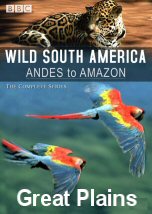
Great Plain

   2005    Nature
This edition explores the vast grasslands of the continent, hauntingly beautiful regions inhabited by strange creatures - giant anteaters, armadillos, maned wolves, capybara and jaguars.
Series: Wild South America
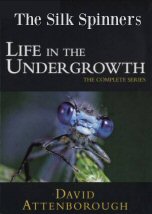
The Silk Spinners

   2005    Nature
Silk is the invertebrates' great invention, used in a range of ways from from the protective stalks of lacewing eggs to the amazing hanging threads of New Zealand's 'glow worms'. Spiders, though, have taken silk-spinning to extremes. The common wolf spider has no web, but the female is a gentle parent, encasing her eggs in silk and carrying the precious bundle wherever she goes. The bolas spider uses a ball of sticky silk soaked in a copy of moth pheromone to lure its prey. Millions of communal spiders live and feed together in a vast, towering web - an arachnophobe's nightmare.
Series: Life in the Undergrowth

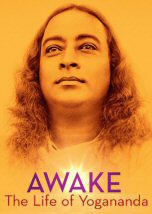
Awake The life of Yogananda

   2014    Culture
An unconventional biography about an Indian Swami who brought yoga and meditation to the West in the 1920s. This feature documentary explores the life and teachings of Paramahansa Yogananda, who authored the spiritual classic Autobiography of a Yogi, which has sold millions of copies worldwide and is a go-to book for seekers, philosophers and yoga enthusiasts today. It was the only book that Steve Jobs had on his iPad, and he arranged to give away 800 copies of it to the dignitaries who attended his memorial service. It was also a point of entry into Eastern mysticism for George Harrison, Russell Simmons and countless yogis. By personalizing his own quest for enlightenment and sharing his struggles along the path, Yogananda made ancient teachings accessible to a modern audience, attracting many followers and ultimately helping millions of seekers today to turn their attention inwards, bucking the temptations of the material world in pursuit of self-realization.

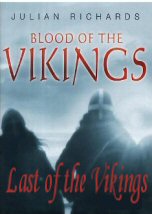
Blood Of The Vikings: Last of the Vikings

   2001    History
In the last of the series, Julian Richards uncovers new information from the battle in 1066 between Viking warlord Harald Hardrada and King Harold of England that marked the end of the Viking age in Britain. Results from a nationwide genetic survey show where in Britain the Vikings left a measurable contribution.
Series: Blood of the Vikings

Montezuma

   2009    History
Montezuma Dan Snow journeys to the ancient heart of Mexico in search of the lost civilisation of the Aztecs and their last and greatest ruler, Montezuma II (1502-1520). Montezuma inherited an empire of five million people, stretching from present-day Mexico to Nicaragua, from his uncle. His rule was marked by incessant warfare. Enemy states were growing more powerful and conquered tribes were becoming more rebellious. Within months of taking the throne in 1502, he went changed a man of good reason into a pitiless autocrat who declared himself a god, believing that fear and ruthlessness were the only ways to stop the empire falling apart. Yet it was at the hands of Cortes and the Spanish conquistadors that Montezuma met his downfall. But what was his relationship with Cortes, and why did such a ruthless leader submit to his captors with such relative ease? As Dan Snow visits the ruins and picks through current excavations, he pieces together the evidence of a gripping story: a divine tragedy of errors, the clash of civilisations, the end of a world - and a very human God.

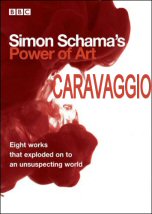
Caravaggio

   2006    Art
Caravaggio's approach to painting was unconventional. He avoided the standard method of making copies of old sculptures and instead took the more direct approach of painting directly onto canvas without drawing first. He also used people from the street as his models. His dramatic painting was enhanced with intense and theatrical lighting. Caravaggio's fate was sealed when he killed a man in a duel in 1606. He fled to Naples where he attempted to paint his way out of trouble, he became a Knight, but was then imprisoned in Malta and then finally moved to Sicily. He was pardoned for murder in 1610, but died of a fever when attempting to return to Rome. For me the power of Caravaggio's art is the power of truth, not least the truth about ourselves. If we are ever to hope for redemption we have to start from the recognition that the Goliath competes with the David in all of us."
Series: Power of Art