In the second episode, panic strikes the community as a full-blown catastrophe looms. Locals mobilize to confront the authorities and protest the nuclear power industry. Twenty-eight hours after the accident began, the lieutenant governor appeared at a news briefing to say that the plant's owner had assured the state that 'everything is under control'. Later that day, Scranton changed his statement, saying that the situation was 'more complex than the company first led us to believe'. There were conflicting statements about radioactivity releases. Schools were closed and residents were urged to stay indoors. Farmers were told to keep their animals under cover and on stored feed.
In the third episode, during cleanup at the plant, insiders claim that cost-cutting measures and intimidation tactics create a danger war force than the accident itself. Several state and federal government agencies mounted investigations into the crisis, the most prominent of which was the President's Commission on the Accident at Three Mile Island, headed by chairman John G. Kemeny. The investigation strongly criticized Babcock & Wilcox, Met Ed, Graphics processing unit, and the Nuclear Regulatory Commission for lapses in quality assurance and maintenance, inadequate operator training, lack of communication of important safety information, poor management, and complacency. Kemeny said that the procedures and that the control room were greatly inadequate for managing an accident.
Magic mushrooms, long considered sacred by the Indigenous Mazatec in Mexico, become the subject of scientific studies measuring the intense effects of its Psilocybin and its potential therapeutic use. In the second episode, we are introduced to Ben, who’s battled with crippling Obsessive-Compulsive Disorder (OCD) his entire life. When he had his firstborn, Ben’s life became full of panic attacks regarding his son’s safety, and he knew something had to change. Ben signed up for a psilocybin-assisted therapy clinical trial which was testing whether the psychedelic could help people with severe OCD. In the session under the influence of psilocybin, Ben felt decomposed and eventually grew into a tree. While living as a tree, he saw his human self, playing with his child. Though this sounds scary, from Ben’s perspective, it was beautiful. He was one with the universe, seeing himself in the ultimate third-person perspective. Finally, he saw how it could be different if he didn’t let his OCD control him. And several months out, all the symptoms disappeared. Ben’s story is one of many told in this series, which gives hope that help is right around the corner for the millions who suffer —often in silence— with debilitating mental disorders. But Michael Pollan’s work is showcasing the success stories. Often, even in the most successful trials, psychedelic-assisted therapy only helps up to a third of people enter remission. More frequently, patients are helped —sometimes substantially— but they still suffer with their illnesses and some people aren’t helped at all.
The last chapter explains how the 2010s became another lost decade in the fight against climate change – as the move to natural gas delayed a transition to more renewable sources of energy. Engineer Tony Ingraffea, in the 1980s, helped develop a new technique for extracting gas and oil from shale rock, which ultimately became known as 'Fracking'. It was to unleash vast new reserves of fossil fuels and was promoted as a cleaner energy source. But Ingraffea explains how he later came to regret his work when he realized that gas could be even worse for climate change than coal and oil. Dar-Lon Chang, a former ExxonMobil engineer, speaks for the first time on camera alleging that as the company increased its natural gas operations, it was not sufficiently monitoring methane leaks that were contributing to climate change. Now, after a year of unprecedented wildfires, drought and other climate-related disasters, multiple lawsuits are being brought in US courts in efforts to hold Big Oil legally accountable for the climate crisis.
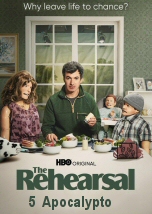
To recruit actors for his rehearsals, Nathan opens an acting studio in Los Angeles, teaching 'the Fielder Method', which involves covertly observing and imitating unaware subjects. Feeling insecure about his own performance, Nathan reenacts the class with actors and a fake Nathan as the teacher while the real Nathan plays the role of Thomas, a student. Nathan makes his students immerse themselves in other people's lives while he immerses himself in Thomas's life, even living in Thomas's home. Nathan returns to Oregon, where his 'son', Adam, is now a teenager. Nathan and Joshua, the actor playing Adam, decide that Adam should lash out due to resentment of his absentee father and develop a drug problem, a situation that mirrors Angela's own past. Adam suffers an overdose and is tended to by emergency responders played by Thomas and another Fielder Method graduate. After he runs away from home, the 15-year-old Adam reverts to a 6-year-old since Nathan plans to relive his son's earlier years.
Nathan decides to practice his own assertiveness in relationships by challenging Angela over their son's religious upbringing. Angela, a fervent Christian, refuses to allow Adam to be raised in Nathan's Jewish faith, so Nathan secretly brings his son to lessons with a tutor in Judaism under the pretense of swimming lessons. Seeking solace outside the house, Nathan opens his replica Alligator Lounge to the public under the name Nate's Lizard Lounge. The co-parents argue over a comedy skit featuring six-year-old Adam as 'Dr. Fart' and a joke about eating faeces, which Angela claims is a Satanic practice. Nathan rehearses the confrontations with a fake Angela, and in one scenario, she harshly criticizes Nathan's emotional detachment and questions the ethics of the entire production. However, in their real final confrontation, Angela simply decides to quit the rehearsal. Nathan continues to raise Adam, now as a single parent.

















Twenty-eight hours after the accident began, the lieutenant governor appeared at a news briefing to say that the plant's owner had assured the state that 'everything is under control'. Later that day, Scranton changed his statement, saying that the situation was 'more complex than the company first led us to believe'. There were conflicting statements about radioactivity releases. Schools were closed and residents were urged to stay indoors. Farmers were told to keep their animals under cover and on stored feed.