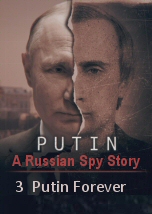
Putin returns to power under a storm after a four-year absence, but his attempts to improve his popularity are hobbled by accusations of corruption. The final part of this sinister history doesn’t quite come up to date with Vladimir Putin’s recent moves to 'reset' the Russian constitution so he can rule, theoretically, until at least 2036 – longer than Stalin. But it does walk us through some of his other moves to entrench power, including vote-rigging in parliamentary elections that was so brazen, his approval ratings fell amid mass street protests. Leading the protests was opposition leader Boris Nemtsov, who was then simply gunned down on a street near the Kremlin. These days, we are told, the world stage interests Putin more than the Russian one, and with various 'mini-Putins' installed around the world, his legacy looks safe.
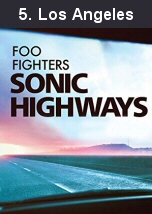
Los Angeles' highly influential position in rock history is examined. Pat Smear remembers the days of Germs, and visits legendary KROQ disc jockey Rodney Bingenheimer, owner of a 1970s Sunset Strip club that became the hub for the Los Angeles glam rock scene. Foo Fighters head to the desert to record their new song 'Outside', which features a solo from Eagles' guitarist Joe Walsh, at Rancho De La Luna, and in turn, Kyuss and the 1990s Palm Desert Scene is explored.
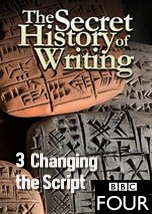
The written word is so important in everyday life that there can be few more radical acts than forcing an entire nation to learn a new script. Yet that is what happened in Turkey in 1928 when Mustafa Kemal decreed that the Arabic script would be replaced by the letters of the Latin alphabet. Communication with computers using human language is usually made with Latin letters. This is how most Chinese people interact with their computers and smart phones, using a Latin-based phonetic script called Pinyin. As a result, even highly educated Chinese are losing the ability to write using Chinese characters. Could what is happening in China be the future of writing everywhere?
Nicholas felt enormous pressure to continue the dynasty and expand the empire. He saw his opportunity in the Far East. This brought him into conflict with a rising power, Japan. Russia's disastrous war against Japan prompts civil unrest. The birth of Prince Alexei is incredibly important. He's the long-awaited son that they had hoped so much for. But when Alexei is diagnosed with haemophilia, Siberian mystic Rasputin steps in. He's very good at realizing when something is open that will enable him to increase his power and wealth. The pressure of keeping the secret of Alexei's illness affects the political decisions that Nicky and Alix made for the rest of their reign.
The Romanovs retreat into a bubble of luxury while the czar's forces brutally suppress protests by a starving populace. Rasputin's influence grows, never mind the rumors and scandals. Many people believe Prime minister Peter Stolypin is the last hope of the Romanov Dynasty as reformer-in-chief. He is horrified by the rise of Rasputin. The fight between Stolypin and Rasputin is a battle for influence over Nicholas II. But Stolypin is shot in the Kiev Opera in 1911.
In 1914, Russia entered World War I in response to Austria-Hungary's declaration of war on Russia's ally Serbia. This was fought across multiple fronts while isolated from its allies. The Battle of Tannenberg, where the entire Russian Second Army was annihilated, cast an ominous shadow over the empire's future. The already-existing public distrust of the regime was deepened by the rising costs of the war and rumours of corruption. World War I takes Nicholas to the front. Back home, outrage grows over high casualties and Alexandra and Rasputin's political intrigues.




These days, we are told, the world stage interests Putin more than the Russian one, and with various 'mini-Putins' installed around the world, his legacy looks safe.