An alarming decline in insect populations could devastate all life on earth. What's causing it, and can anything be done to stop it? Insects are disappearing across the world. If we lost our pollinators, we would lose 80 to 90% of the plants on the planet. That is not an option. It's the ecosystems on this planet that keep humans alive. Scientists warn us that the insect apocalypse is entirely possible.
Predictions underlie nearly every aspect of our lives, from sports, politics, and medical decisions to the morning commute. With the explosion of digital technology, the internet, and 'big data,' the science of forecasting is flourishing. But why do some predictions succeed spectacularly while others fail abysmally? And how can we find meaningful patterns amidst chaos and uncertainty? From the glitz of casinos and TV game shows to the life-and-death stakes of storm forecasts and the flaws of opinion polls that can swing an election, 'Prediction by the Numbers' explores stories of statistics in action. Yet advances in machine learning and big data models that increasingly rule our lives are also posing big, disturbing questions. How much should we trust predictions made by algorithms when we don't understand how they arrive at them? And how far ahead can we really forecast?
In these extraordinary times, there is one thing that can offer solace to everyone – the wonder of the natural world. In the most extreme of environments, from the hottest deserts to the freezing poles, from the highest mountains to underwater kingdoms, animals overcome adversity to survive and thrive, offering a message of hope to humanity. To raise our spirits, David Attenborough, Hans Zimmer and Dave unite for a special Natural History event – Planet Earth: A Celebration. The special one-hour programme brings together eight of the most extraordinary sequences from Planet Earth II and Blue Planet II including racer snakes vs iguana, surfing bottlenose dolphins and rare footage of the Himalayan snow leopard.
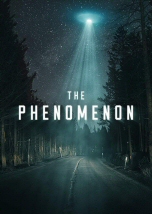
This explosive documentary is the most credible examination of the global mistery and cover-up of unidentified aerial phenomenon. With shocking testimony from high-ranking government officials and NASA Astronauts, Senator Harry Reid says it 'makes the incredible credible.' The same year that life-giving water was discovered on a distant planet, the US Navy made a startling announcement: Images captured by its pilots of objects exhibiting a vastly superior technology were authentic.
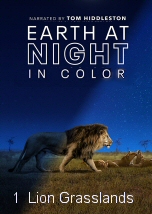
Filmed across six continents, this docuseries uses cutting-edge camera technology to capture animal's nocturnal lives revealing new behaviours filmed in full color like never before. In the first episode, we will see how after dark on Kenya's Maasai Mara grasslands, a lioness won't rest until she finds the young cubs she's lost.
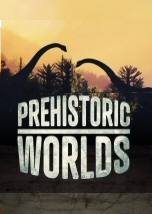
Five times, the Earth has faced apocalyptic events. Cataclysms that have swept away all life forms, or almost. Each time, a handful of species has survived, establishing a new world. What did these prehistoric worlds look like? What catastrophes led to their disappearance? How did our distant ancestors manage to survive the five mass extinctions that the Earth has suffered, finally giving rise to the world we know today? Combining CGI of ancient animal and plant life, VFX and filming, 'Prehistoric Worlds' looks back at the five mass extinctions of life on Earth that allowed the advent of the human race. On the brink of a sixth mass extinction that the scientific community considers imminent – this time caused by mankind – this film gives us an interesting and powerful look at Man's existence on the scale of the history of our planet.












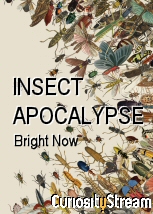









Insects are disappearing across the world. If we lost our pollinators, we would lose 80 to 90% of the plants on the planet. That is not an option. It's the ecosystems on this planet that keep humans alive. Scientists warn us that the insect apocalypse is entirely possible.