

Last Watched

"Orc"  Sort by

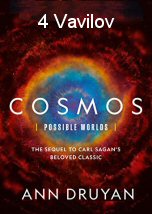
Vavilov

   2020    Nature
The fourth episode sees host Neil deGrasse Tyson exploring our eternal quest to end hunger and honoring Nikolai Ivanovic Vavilov, pioneer of modern plant breeding, who risked his life for a discovery that would change the history of science. Vavilov's story is marked by both the tenacity and creativity and is particularly tragic. Interwoven into Vavilov's somber narrative are warnings and treatments of science and its ethical implications, especially when science itself comes under attack from political forces.
Series: Cosmos: Possible Worlds
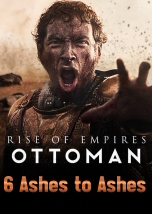
Ashes to Ashes

   2020    History
Hours before Mehmed II launches his final assault, an ominous sight shakes both sides. Rumors of a 40-ship fleet's imminent arrival have swirled for weeks, but it's exact whereabouts remained unknown. Ottoman cannons reduced the city walls to rubble, and Venetian reinforcements arrived too late. The conquest of Constantinople ushers in a new era for the Ottoman Empire, being a dominant force in world politics for 300 years. Mehmed II, in many senses, changed the nature of world history.
Series: Rise of Empires: Ottoman

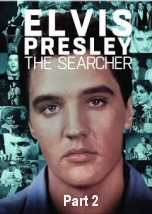
Elvis Presley: The Searcher Part Two

   2018    History
The second part of this series begins with his return home after his discharge from the army, and how he dealt with a rapidly changing pop scene.
The picture is more complicated than even a fairly serious Elvis fan may understand. Priscilla Presley, who made some appearances in the first part, offers much more here, helping us understand how being forced into making a string of lousy movies was one kind of artistic prison, and then being ensconced in casino hotels for his famous Las Vegas residency was another. The man who had so carefully created his original persona was now stuck in the shallow roles others forced him to play.
Series: Elvis Presley: The Searcher

Southern Patagonia

   2020    Culture
Episode 3 continues to show the obstacles faced with charging electric bikes in remote places, but Ewan McGregor and Charley Boorman start to learn and evolve their process. The risk of cold temperatures is high but they bravely do it anyway. The duo is having a hard time of it out there but, thankfully, the scenery is absolutely stunning. Heading through Patagonia, Ewan and Charley stay at an eco-lodge in one of the world’s remotest areas with people that live off the grid.
Series: Long Way Up

Words on a Page

   2020    History
Writing itself is 5,000 years old, and for most of that time words were written by hand using a variety of tools. The Romans were able to run an empire thanks to documents written on papyrus. Scroll books could be made quite cheaply and, as a result, ancient Rome had a thriving written culture. With the fall of the Roman Empire, papyrus became more difficult to obtain. Europeans were forced to turn to a much more expensive surface on which to write: Parchment. Medieval handwritten books could cost as much as a house, they also represent a limitation on literacy and scholarship.
No such limitations were felt in China, where paper had been invented in the second century. Paper was the foundation of Chinese culture and power, and for centuries how to make it was kept secret. When the secret was out, paper mills soon sprang up across central Asia. The result was an intellectual flourishing known as the Islamic Golden Age. Muslim scholars made discoveries in biology, geology, astronomy and mathematics. By contrast, Europe was an intellectual backwater.
That changed with Gutenberg’s development of movable type printing. The letters of the Latin alphabet have very simple block-like shapes, which made it relatively simple to turn them into type pieces. When printers tried to use movable type to print Arabic texts, they found themselves hampered by the cursive nature of Arabic writing. The success of movable type printing in Europe led to a thousand-fold increase in the availability of information, which produced an explosion of ideas that led directly to the European Scientific Revolution and the Industrial Revolution that followed.
Series: The Secret History of Writing

Changing the Script

   2020    History
The written word is so important in everyday life that there can be few more radical acts than forcing an entire nation to learn a new script. Yet that is what happened in Turkey in 1928 when Mustafa Kemal decreed that the Arabic script would be replaced by the letters of the Latin alphabet. Communication with computers using human language is usually made with Latin letters. This is how most Chinese people interact with their computers and smart phones, using a Latin-based phonetic script called Pinyin. As a result, even highly educated Chinese are losing the ability to write using Chinese characters. Could what is happening in China be the future of writing everywhere?
Series: The Secret History of Writing
Senna

Senna

2010  Culture
Dynamic Genomes Series

Dynamic Genomes Series

2019  Medicine
Solar System

Solar System

2024  Science
Wild Russia

Wild Russia

2009  Nature
Chimp Empire

Chimp Empire

2023  Nature
Warrior Graveyard

Warrior Graveyard

  History