Human society is incredibly complex, and the duelling forces pushing us to conform and also to express our individuality are both necessary. Other people can influence us in good ways and in not-so-good ways. Michael Stevens takes a look into the human urge to conform and just how strong it is against our own beliefs and sense of selves.
Here's a growing trend in artificial intelligence. Dating video games and other applications let users carry on virtual relationships with computerized girlfriends ranging from career women to Japanese schoolgirls. There's even something for the ladies. How soon will there be artificial intelligence of such complexity that protecting its well-being and rights becomes a serious political and social concern? In what year will there be an app or computer program or a device that you not only love but that possibly, within the realm of believability might actually love you ...back?
We're going to see if forcing your facial expression can change the way you feel. If you remove the ability to make facial expressions with botox, will it affect how the people perceive emotions in them? How do facial expressions affect emotion, and how does emotion affect facial expressions? Michael Stevens finds out when he explores the face.
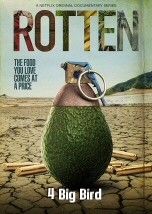
Today, worldwide, we each eat 27 pounds of chicken a year. Chicken's astonishing growth has been propelled and satisfied by a business that creates lives, and harvests them, at breathtaking speed and volume. But now the massive scale of production has exposed those in the chicken business to dangers large and small. The ruthlessly efficient world of chicken production pits vulnerable growers against each other and leaves them open to vicious acts of sabotage.
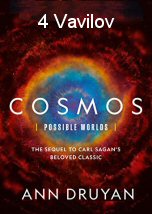
The fourth episode sees host Neil deGrasse Tyson exploring our eternal quest to end hunger and honoring Nikolai Ivanovic Vavilov, pioneer of modern plant breeding, who risked his life for a discovery that would change the history of science. Vavilov's story is marked by both the tenacity and creativity and is particularly tragic. Interwoven into Vavilov's somber narrative are warnings and treatments of science and its ethical implications, especially when science itself comes under attack from political forces.
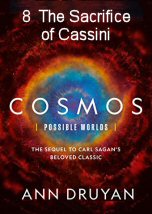
The 8th episode reviews Giovanni Cassini's life. His observations of Saturn and its moons would have an enduring effect on the scientific world. Neil deGrasse Tyson also narrates the mysterious untold story of the scientist who figured out how to go the Moon while fighting for his life in a WWI trench. Aleksandr Shargei changed his name to Yuri Kondratyuk out of fear for his life and wrote a manuscript on rocket motion and space colonization. This letter would end up capturing the attention of an engineer working on the Apollo program, John Houbolt, and would made the Apollo Mission possible. We will also know the saga of the twenty-year long odyssey of Cassini-Huygens spacecraft, a robotic explorer ordered to commit suicide on another world.





















Michael Stevens takes a look into the human urge to conform and just how strong it is against our own beliefs and sense of selves.