A single microscopic brain cell cannot think, is not conscious, but if you bring in a few more brain cells, and a few more, and connect them all, at a certain point, the group itself will be able to think and experience emotions and have opinions and a personality and know that it exists. How can such astonishing things be made from such simple ingredients? Well, answering that question means learning not only who we are but, more importantly, how we are. Today, using what neuroscientists know so far, we are going to make a town function like a brain, using people as neurons.
Who are you? Do you even know who you are? Are you your memories? Are you the choices you make? Are you you? Or are you someone else, but manipulated to be you? If you can lose track of your past and your memories can be altered or implanted, in the end, who are you really? Michael Stevens finds out as he explores what makes you you.
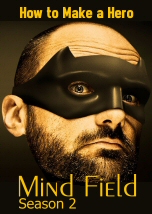
A hero is just someone who acts selflessly, out of concern for others, at personal risk and without the expectation of reward. In this episode, Michael Stevens asks employees to help him run a seemingly dangerous experiment, to see if they would blow the whistle to stop him.
The fourth episode sees host Neil deGrasse Tyson exploring our eternal quest to end hunger and honoring Nikolai Ivanovic Vavilov, pioneer of modern plant breeding, who risked his life for a discovery that would change the history of science. Vavilov's story is marked by both the tenacity and creativity and is particularly tragic. Interwoven into Vavilov's somber narrative are warnings and treatments of science and its ethical implications, especially when science itself comes under attack from political forces.
In the fifth episode Neil deGrasse Tyson explores questions that have baffled scientists for centuries. Can we know the universe? Are our brains capable of comprehending the cosmos in all of its complexity and splendor?. We don't yet know the answers because our brain remains almost as much of a mystery to that questions as the universe itself. An abandoned orphan's dream opened the way to understanding the architecture of thought.
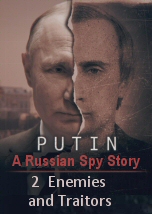
This second instalment looks at how Vladimir Putin arrived in the Kremlin as a vulnerable and unknown president, whom the Russian oligarchs expect to control. The programme reveals how he asserted his hold on power and ultimately surrounded himself with his KGB peers, as well as his philosophy as regards traitors and enemies. The film also examines the stories of businessman Boris Berezovsky and defector Alexander Litvinenko, who both stood up to Putin and wound up dead on British soil.








Today, using what neuroscientists know so far, we are going to make a town function like a brain, using people as neurons.