



Last Watched

"Star"  Sort by

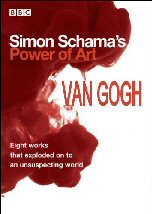
Van Gogh

   2006    Art
Born in Groot-Zundert, The Netherlands, Van Gogh spent his early life as an art dealer, teacher and preacher in England, Holland and Belgium. His period as an artist began in 1881 when he chose to study art in Brussels, starting with watercolours and moving quickly on to oils. The French countryside was a major influence on his life and his early work was dominated by sombre, earthy colours depicting peasant workers, the most famous of which is The Potato Eaters, 1885. It was during Van Gogh's studies in Paris (1886-8) that he developed the individual style of brushwork and use of colour that made his name. In 1888 he moved to Arles where the Provençal landscape provided his best-known subject matter. However, it also marked the start of his mental crisis following an argument with his contemporary Paul Gauguin. Van Gogh was committed to a mental asylum in 1889 where he continued to paint, but he committed suicide in 1890.
Series: Power of Art
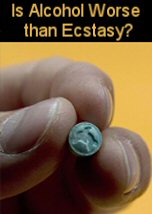
Is Alcohol Worse than Ecstasy

   2008    Medicine
The drug policies have remained unchanged over the last 40 years so should they be reformed in the light of new research? Recent research has analysed the link between the harmful effects of drugs relative to their current classification by law with some startling conclusions. Perhaps most startling of all is that alcohol, solvents and tobacco (all unclassified drugs) are rated more dangerous than ecstasy, 4-MTA and LSD (all class A drugs).

Can We Make a Star on Earth

   2009    Technology
Could nuclear fusion hold the answers to the energy crisis? It is the process that has forged all matter in the universe. It lights the stars and it is what transformed the lighter atoms that formed in the Big Bang into heavier atoms. In Can We Make a Star on Earth?, Brian Cox peers beyond the glare of our Sun to reveal the hidden forces that provide its power. He discovers how this fusion energy has kept our closest star burning for five billion years. Brian believes humanity must build a star on Earth to ensure survival. Will scientists be able to harness fusion power and achieve abundant, cheap, clean energy?

Nemesis The Sun Evil Twin

   2011    Science
The theory of Némesis, a star that orbits the Sun and causes catastrophic events is explored. Nemesis is a hypothetical red dwarf or brown dwarf, originally postulated in 1984 to be orbiting the Sun at a distance of about 95,000 AU (1.5 light-years) somewhat beyond the Oort cloud, to explain a perceived cycle of mass extinctions in the geological record, which seem to occur more often at intervals of 26 million years.
Series: The Universe

Moon

   2000    Science
The little known story of our quest to understand the origins of the Moon. Neil Armstrong's "giant leap for mankind" began a scientific journey of discovery that lead to one of the most startling conclusions in the history of astronomy. The Moon was born from Earth.
Series: The Planets

The story of Energy

   2012    Science
Professor Jim Al-Khalili discovers the intriguing story of how we discovered the rules that drive the universe. Energy is vital to us all, but what exactly is energy? In attempting to answer this question Jim investigates a strange set of laws that link together everything from engines to humans to stars. It turns out that energy, so critical to daily existence, actually helps us make sense of the entire universe.
Series: Order and Disorder