













Last Watched

"Ant "  Sort by

Canyonlands

   2003    Nature
Journey through the long-vanished corners of prehistoric North America, beginning when man first entered the vast, unspoiled continent some 14,000 years ago, in this appealing BBC documentary. Witness ancient beasts, mammoths, mastodons, giant bears, and sabre-toothed cats, and see the legacies each has passed to their modern successors. Computer animation and digital effects bring to life mammoths, saber-toothed cats, giant ground sloths, short-faced bears, glyptodonts, and a plethora of smaller animals in a lush Ice Age mosaic.
Series: Prehistoric America
American Serengeti

   2003    Nature
Journey through the long-vanished corners of prehistoric North America, beginning when man first entered the vast, unspoiled continent some 14,000 years ago, in this appealing BBC documentary. Witness ancient beasts, mammoths, mastodons, giant bears, and sabre-toothed cats, and see the legacies each has passed to their modern successors. Computer animation and digital effects bring to life mammoths, saber-toothed cats, giant ground sloths, short-faced bears, glyptodonts, and a plethora of smaller animals in a lush Ice Age mosaic. Discoveries from sites across America are the basis for the reconstructions.
Series: Prehistoric America

Walking with Cavemen: Blood Brothers

   2003    History
'Blood Brothers' follows the lives of two species, Paranthropus boisei and Homo habilis who embody two alternative ways of ape-man life. Although heavyset, with distinctive gorilla-like faces, the boisei are gentle characters. They live within a strict social structure and are led by a dominant male whose strength and power holds the group together. The habilis have taken a different approach to survival. They don't have the specialisms of the boisei but instead have developed into the archetypal jack-of-all-trades, inquisitive scavengers prepared to try almost anything to survive. Tough, active, gregarious and noisy, they are always on the move and always alert to the possibility of a meal. But in the near drought of the dry season the habilis are struggling. It seems as if their way of life cannot help them when conditions are tough.
Series: Walking with Cavemen

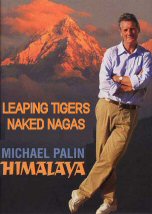
Leaping Tigers Naked Nagas

   2004    Culture
Following the Yangtze along Tiger Leaping Gorge into Yunnan in China, Palin reaches the easternmost end of the Himalayas. He gets a medical check-up before exploring medieval Lijiang with the director of the local orchestra. Heading over Myanmar to Nagaland in India he rides the steam train to Tipong Coalmine. In Assam he rides an elephant and then stays in a strange monastery.
Series: Himalaya with Michael Palin

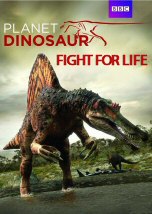
Fight for Life

   2011    Science
This episode focuses on the Jurassic period, a time when the first giant killers stalked the Earth and lurked in the seas; a time when the slightest advantage meant the difference between life and death. In North America the iconic allosaurus, an ambush hunter with a lethal bite, dominated. Not even the heavily-armoured stegosaurus was safe from this killer, and incredible evidence reveals a glimpse of a vicious battle between these two giants. Life in Jurassic oceans was no easier; in 2008, a fossil was dug out of a frozen island high in the Arctic. It was a colossal marine reptile, twice as big as most ocean predators, at 15 metres long and weighing about 45 tonnes. This was Predator X. Its skull alone was nearly twice the size of a tyrannosaurus rex's, and its bite force unmatched by anything in the Jurassic seas. The balance of power between predator and prey is a fine one, as prey continually evolves different ways to avoid predators. But for the most successful and enduring predators, the battle to survive has always been tipped in their favour
Series: Planet Dinosaur

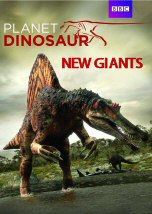
New Giants

   2011    History
This episode of the documentary series focuses on the new giants, the heavyweights of the dinosaur world. It is only in recent years that experts have unearthed the biggest dinosaurs that ever lived. One monster eclipsed all others; more than seven times as heavy as diplodocus was the immense argentinosaurus - a single backbone was bigger than a human. For years, these giants were considered immune to attack from any predator - until the discovery of mapusaurus, a new giant killer whose fate appeared to be inextricably linked to argentinosaurus
Series: Planet Dinosaur