









Last Watched

"Ape"  Sort by

Asteroid Attack

   2010    Science
What are the latest discoveries in the deadly world of asteroids? Will a recently returned Japanese spacecraft become the first to bring an asteroid sample back to our planet? What would happen to America's East Coast if the massive asteroid impact that helped form Chesapeake Bay 35 million years ago struck today? And why did President Barack Obama choose an asteroid as the destination for the next great manned mission into space? Learning about these huge space rocks isn't just about science, it's about survival.
Series: The Universe
Taking To The Air

   2005    Nature
As the early June sun begins to set over a calm river in Central Hungary, masses of ghostly shapes emerge from their larval cases to take to the air for the first time. They are mayflies and in a spectacular display, thousands of them demonstrate how the very first wings were used. From the stunning aerobatics of hoverflies in an English garden to the mass migration of purple crow butterflies in the valleys of Taiwan, this episode tells the tale of the first animals ever to take to the air. Unique footage reveals the lightning fast reactions of bluebottles and hoverflies, filmed with one of the world's fastest cameras, and Sir David Attenborough handles the world's largest (and perhaps most ferocious) insect - the Titan beetle.
Series: Life in the Undergrowth

Dino Turkey

   2008    Science
From small viscous meat eaters to vegetarian giants, dinosaurs came in all shapes and sizes. Remarkable new evidence suggests that one dinosaur did not become extinct but evolved into a new animal species we all know today. Discover the missing link between the velociraptor and modern day birds.
Series: Evolutions

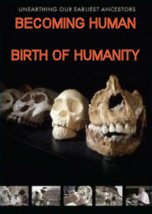
Birth of Humanity

   2010    History
We will nvestigate the first skeleton that really looks like us –Turkana Boy– an astonishingly complete specimen of Homo erectus found by the famous Leakey team in Kenya. These early humans are thought to have developed key innovations that helped them thrive, including hunting large prey, the use of fire, and extensive social bonds. The program examines an intriguing theory that long-distance running –our ability to jog– was crucial for the survival of these early hominids. Not only did running help them escape from vicious predators roaming the grasslands, but it also gave them a unique hunting strategy: chasing down prey animals such as deer and antelope to the point of exhaustion. Birth of Humanity also probes how, why, and when humans' uniquely long period of childhood and parenting began.
Series: Becoming Human

The Lost Worlds of Planet Earth

   2014    Science
This episode explores the palaeogeography of Earth over millions of years, and its impact on the development of life on the planet. Tyson starts by explaining that the lignin-rich trees evolved in the Carboniferous era about 300 million ago, then explains on the nature of plate tectonics that would shape the landmasses of the world and the asteroid impact that initiated the Cretaceous–Paleogene extinction event, leaving small mammals as the dominate species on earth. Earth's landmasses are expected to change in the future and postulates what may be the next great extinction event.
Series: Cosmos: A Spacetime Odyssey

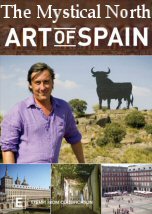
The Mystical North

   2008    Art
Graham-Dixon reveals how the north of the country has produced some of the most dazzling and iconic art of the modern age. Spain's turbulent history has shaped artists from Francisco Goya to Pablo Picasso. Graham-Dixon argues that Spanish architecture is the art form now taking the nation forward in the new millennium.
Series: Art of Spain