NASA's revolutionary Juno Probe had a goal visiting Jupiter -- to reveal the deepest mysteries of the Solar System. Everything we see in the our planetary system today is affected by Jupiter somehow in the past or now. So in many ways, Juno is actually giving us a view into the history of the Solar System. But there are many other questions. Does Jupiter have a core? Why it has a surprisingly warm atmosphere? What's driving Jupiter's storms? What is going on its weird cyclones, its gigantic swirls? The auroras of Jupiter are tremendously large, bigger than the planet itself. where are they coming from? What we're learning, what we're unlocking, it's mind-blowing.
The archaeological world is fooled for nearly half a century when an ape-like skull that's claimed as solid evidence for Darwin's theory of human evolution is proven fake. Using new research, experts investigate and uncover the identity of the forger. Locked away in a store room at London Science Museum is a genuine 19th century miracle machine, a 180-year-old mechanical engine that solves complex mathematical equations, more than 100 years before the first electronic computer.
An unassuming 80-year-old device that has the appearance of a typewriter could actually be one of the greatest secret weapons in history. Using cutting-edge digital technology, experts investigate the secrets of a revolutionary encryption machine. How could there be a carving of a modern helicopter on an ancient Egyptian inscription? can this 800-year-old device covered in strange sayings really predict the future?
To survive Mars, our species will need to evolve how we eat, drink, and build our homes. Will we need our genes to evolve as well? Sometime in the future humans will leave Earth to colonize Mars, and in doing so will begin to adapt to life on another planet in surprising ways. Evolutionary biologist Dr. Scott Solomon foresees a series of changes to our species from the size of our hearts and heads to the pigments in our skin.
Supermassive black holes are the engines that power our universe and one of the major players in the evolution of galaxies. They're in fact the driving force at the heart of nearly every galaxy in the cosmos. Now, a new mystery has emerged about the oldest supermassive black holes. We see supermassive black holes in the very early universe. And we don't understand how they grew so large so quickly. We have clues about their formation but, can we solve the mystery of this supermassive growth spurt?
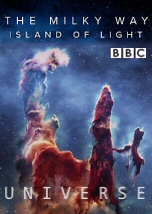
Professor Brian Cox continues his epic exploration of the cosmos by looking at the faint band of light that sweeps across the night sky - our own galaxy, the Milky Way. The Sun is just one of almost 400 billion stars that form this vast, majestic disk of light, our own home in the universe. Thanks to a cutting-edge space we’re finally able to reveal the Milky Way’s dramatic history and predict its cataclysmic future. Our galaxy started out a fraction of the size it is today, and Gaia telescope has revealed how it grew over the eons. Beautifully rendered VFX based on the very latest Gaia data has uncovered the remarkable story of our galaxy’s evolution. As our young galaxy encountered rival galaxies, it experienced a series of violent growth spurts and intense periods of cataclysmic change while battling to survive. Each time our galaxy feeds, a new era of star formation begins, fuelled by incoming torrents of fresh gas and energy. And there is another collision to come. Another, larger galaxy is coming our way. Andromeda is heading straight for us at a quarter of a million miles per hour. The Milky Way’s long-term fate is in the balance.

























But there are many other questions. Does Jupiter have a core? Why it has a surprisingly warm atmosphere? What's driving Jupiter's storms? What is going on its weird cyclones, its gigantic swirls? The auroras of Jupiter are tremendously large, bigger than the planet itself. where are they coming from? What we're learning, what we're unlocking, it's mind-blowing.