



Last Watched

"Light"  Sort by

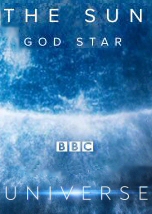
The Milky Way

   2007    Science
We used to think that Earth was at the centre of the universe, but now we know we're not even at the centre of our own galaxy. Countless wonders exist between where earth is situated and the massive black hole at the galactic centre of our galaxy. Within the Milky Way can be found the debris of old, dying stars fuelling the birth of new stars and at the galactic centre hypervelocity stars get catapulted clear beyond the Milky Way's outer rim at unimaginable speeds. Come along for a guided tour of 100,000 light-year-wide family of stars and stellar phenomena we call The Milky Way.
Series: The Universe
Supernovas

   2008    Science
A stellar explosion, the supernova is the sensational death of a star. It can shine as bright as 100 billion Suns and radiate as much energy as the Sun would emit over 10 billion years. Jets of high-energy light and matter are propelled into space and can cause massive Gamma Ray Bursts and emit intense X-ray radiation for thousands of years. Astronomers believe that this process creates the very building blocks of planets, people and plants. Meet the world's leading Supernova hunters, and take a look at recorded supernovas throughout history.
Series: The Universe

Nebulas

   2008    Science
Take a tour through the Art Gallery of the Galaxy and view what are considered the "crown jewels" of the heavens. Nebulas are mysterious clouds of gas that aren't classified as stars, planets, moons or asteroids. Astronomers use the most sophisticated techniques to view them since they are practically invisible to the naked eye. Nothing less than stunning, nebulas glow, reflect or obscure the galaxy's light with amazing swirls of color. Nebulas mark the regions where the nothingness of space first coalesces, where stars are born and where stars die. Cutting-edge computer graphics are used to bring the universe down to earth.
Series: The Universe

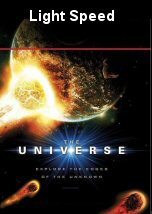
Light Speed

   2008    Science
According to the laws of physics we can never travel faster than the speed of light...or can we? Learn all about light speed, the ultimate constant in the universe.
Series: The Universe

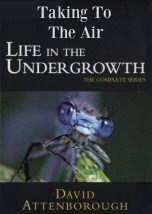
Taking To The Air

   2005    Nature
As the early June sun begins to set over a calm river in Central Hungary, masses of ghostly shapes emerge from their larval cases to take to the air for the first time. They are mayflies and in a spectacular display, thousands of them demonstrate how the very first wings were used. From the stunning aerobatics of hoverflies in an English garden to the mass migration of purple crow butterflies in the valleys of Taiwan, this episode tells the tale of the first animals ever to take to the air. Unique footage reveals the lightning fast reactions of bluebottles and hoverflies, filmed with one of the world's fastest cameras, and Sir David Attenborough handles the world's largest (and perhaps most ferocious) insect - the Titan beetle.
Series: Life in the Undergrowth

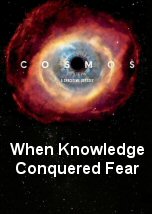
When Knowledge Conquered Fear

   2014    Science
The episode begins with Tyson describing how pattern recognition manifested in early civilization as using astronomy and astrology to predict the passing of the seasons, including how the passage of a comet was often taken as an omen. Tyson continues to explain that the origin of comets only became known in the 20th century due to the work of Jan Oort and his hypothesis of the Oort cloud. Tyson then continues to relate the collaboration between Edmond Halley and Isaac Newton in the last part of the 17th century in Cambridge. The collaboration would result in the publication of Philosophiæ Naturalis Principia Mathematica, the first major work to describe the laws of physics in mathematical terms, despite objections and claims of plagiarism from Robert Hooke and financial difficulties of the Royal Society of London. Tyson explains how this work challenged the prevailing notion that God had planned out the heavens, but would end up influencing many factors of modern life, including space flight. Tyson further describes Halley's contributions including determining Earth's distance to the sun, the motion of stars and predicting the orbit of then-unnamed Halley's Comet using Newton's laws. Tyson contrasts these scientific approaches to understanding the galaxy compared to what earlier civilizations had done, and considers this advancement as mankind's first steps into exploring the universe. The episode ends with an animation of the Milky Way and Andromeda galaxies' merging based on the principles of Newton's laws.
Series: Cosmos: A Spacetime Odyssey