Writing itself is 5,000 years old, and for most of that time words were written by hand using a variety of tools. The Romans were able to run an empire thanks to documents written on papyrus. Scroll books could be made quite cheaply and, as a result, ancient Rome had a thriving written culture. With the fall of the Roman Empire, papyrus became more difficult to obtain. Europeans were forced to turn to a much more expensive surface on which to write: Parchment. Medieval handwritten books could cost as much as a house, they also represent a limitation on literacy and scholarship. No such limitations were felt in China, where paper had been invented in the second century. Paper was the foundation of Chinese culture and power, and for centuries how to make it was kept secret. When the secret was out, paper mills soon sprang up across central Asia. The result was an intellectual flourishing known as the Islamic Golden Age. Muslim scholars made discoveries in biology, geology, astronomy and mathematics. By contrast, Europe was an intellectual backwater. That changed with Gutenberg’s development of movable type printing. The letters of the Latin alphabet have very simple block-like shapes, which made it relatively simple to turn them into type pieces. When printers tried to use movable type to print Arabic texts, they found themselves hampered by the cursive nature of Arabic writing. The success of movable type printing in Europe led to a thousand-fold increase in the availability of information, which produced an explosion of ideas that led directly to the European Scientific Revolution and the Industrial Revolution that followed.
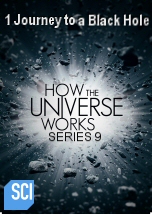
This remarkable science-history series investigates the blistering pace of human endeavour in space exploration, computing, energy, resources, Earth science and our understanding of the evolution of life itself. Across the last 50 years, humans have set a blistering pace and scientific discovery. We've crossed the boundaries of our solar system, made machines that can learn harnessed the power of the sun and built life from scratch. It's a period like no other in history, where human endeavour is changing everything: this is The Great Acceleration. As we race toward the future, we must examine the journey. In the first episode, Dr Shalin Naik explores the ambitious space shuttle mission that began in the '70s plus the future colonization of Mars. Over the past 50 years, space has become central to everything, from communications to entertainment to climate modelling. And as private enterprise enters space exploration, our understanding of the universe will only continue to expand. We will know if we can survive on other objects - the moon, maybe Mars, maybe even some of the moons of Jupiter and Saturn. Deep space is the last and infinite frontier. That's what we do as human beings. We explore, we learn, we make discoveries, from the moment we're born to the moment we die.
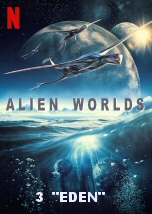
In the third episode, the discovery of extraterrestrial life might face an impossible challenge: the physics of the universe itself; but using cutting-edge tech, experts might be on the verge of a groundbreaking find -- and the evidence could already be in hand.
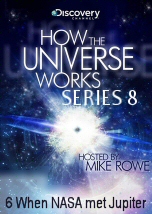
NASA's revolutionary Juno Probe had a goal visiting Jupiter -- to reveal the deepest mysteries of the Solar System. Everything we see in the our planetary system today is affected by Jupiter somehow in the past or now. So in many ways, Juno is actually giving us a view into the history of the Solar System. But there are many other questions. Does Jupiter have a core? Why it has a surprisingly warm atmosphere? What's driving Jupiter's storms? What is going on its weird cyclones, its gigantic swirls? The auroras of Jupiter are tremendously large, bigger than the planet itself. where are they coming from? What we're learning, what we're unlocking, it's mind-blowing.
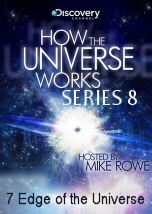
Does the universe, have a limit? Does the universe have an edge? Looking out to the edge of the universe is tremendously important to understand our place in the cosmos and to understand the universe itself. Inflation was a formative moment for our universe. By the time it stopped, the universe's basic characteristics were set. There could be regions of the greater universe where inflation didn't stop then. Occasionally a little region will stop inflating and just expand at the normal rate. We could imagine a super large-scale structure where there's different regions of the universe, domains, and each domain has different local constants and laws of physics.
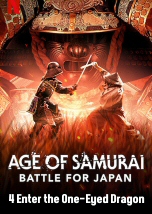
After unifying much of Japan, fearsome samurai Oda Nobunaga is dead. His loyal supporter Toyotomi Hideyoshi has launched a coup and seized power for himself. Enraged, powerful General Katsuie has launched his own bid to control the nation. After defeating Katsuie, Hideyoshi finally ascends to power as the de facto ruler of Japan. Still, Date Masamune, a young daimyo in the north, ignores his missives.






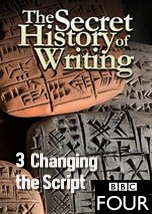











No such limitations were felt in China, where paper had been invented in the second century. Paper was the foundation of Chinese culture and power, and for centuries how to make it was kept secret. When the secret was out, paper mills soon sprang up across central Asia. The result was an intellectual flourishing known as the Islamic Golden Age. Muslim scholars made discoveries in biology, geology, astronomy and mathematics. By contrast, Europe was an intellectual backwater.
That changed with Gutenberg’s development of movable type printing. The letters of the Latin alphabet have very simple block-like shapes, which made it relatively simple to turn them into type pieces. When printers tried to use movable type to print Arabic texts, they found themselves hampered by the cursive nature of Arabic writing. The success of movable type printing in Europe led to a thousand-fold increase in the availability of information, which produced an explosion of ideas that led directly to the European Scientific Revolution and the Industrial Revolution that followed.