











Last Watched

"Ming"  Sort by

Life: Plants

   2009    Nature
Plants' solutions to life's challenges are as ingenious and manipulative as any animal's. Innovative time-lapse photography opens up a parallel world where plants act like fly-paper, or spring-loaded traps, to catch insects. Vines develop suckers and claws to haul themselves into the rainforest canopy. Every peculiar shape proves to have a clever purpose. The dragon's blood tree is like an upturned umbrella to capture mist and shade its roots. The seed of a Bornean tree has wings so aerodynamic they inspired the design of early gliders. The barrel-shaped desert rose is full of water. The heliconia plant even enslaves a humming bird and turns it into an addict for its nectar.
Series: Life
Ice Worlds

   2007    Nature
The Arctic and Antarctic experience the most extreme seasons on Earth. Time-lapse cameras watch a colony of emperor penguins, transforming them into a single organism. The film reveals new science about the dynamics of emperor penguin behaviour. In the north, unique aerial images show a polar bear swimming more than 100km. Diving for up to two minutes at a time. The exhausted polar bear later attacks a herd of walrus in a true clash of the Titans.
Series: Planet Earth

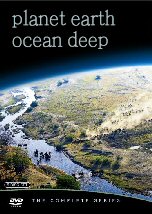
Ocean Deep

   2006    Nature
Life goes to extraordinary lengths to survive this immense realm. A 30 tonne whale shark gorges on a school of fish and the unique overhead heli-gimbal camera reveals common dolphins rocketing at more than 30km an hour. Descending into the abyss, deep sea octopus fly with wings and vampire squid use bioluminescence to create an extraordinary colour display. The first ever time-lapse footage taken from 2,000m down captures eels, crabs and giant isopods eating a carcass, completely consuming it within three hours.
Series: Planet Earth

Space Travel

   2008    Technology
When man finally broke free of the Earth's gravitational pull the dream of travelling to other planets became a reality. Today scientists are proposing a bizarre array of technologies in the hope of travelling faster through space: from space craft sporting sails that catch laser beams, to propulsion engines powered by a bizarre entity known as anti-matter. Finally explore the science behind the seemingly fanciful notion of warp-drive and a theoretical particle that can travel faster than light.
Series: The Universe

Wildest Weather in the Cosmos

   2008    Science
Imagine a tornado so powerful, it can form a planet, or winds sweeping across a planet but blowing at 6,000 miles per hour! How about rain....made of iron? Sounds like science fiction, but this type of weather is occurring daily in our solar system. Scientists are just beginning to unlock the secrets of these planets and their atmospheres. Can this research help scientists solve long unanswered questions that we have about Earth? As our own planet churns with the effects of global warming, it's natural to look into the heavens and wonder about the rest of the real estate.
Series: The Universe

Heaven and Hell

   1980    Science
Sagan discusses comets and asteroids as planetary impactors, giving recent examples of the Tunguska event and a lunar impact described by Canterbury monks in 1178. It moves to a description of the environment of Venus, from the previous fantastic theories of people such as Immanuel Velikovsky to the information gained by the Venera landers and its implications for Earth's greenhouse effect. The Cosmos Update highlights the connection to global warming.
Series: Cosmos