








Last Watched

"Pan"  Sort by

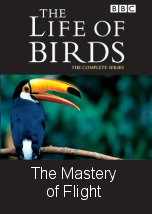
The Mastery of Flight

   1998    Nature
The second programme deals with the mechanics of flight. Getting into the air is by far the most exhausting of a bird's activities, and Sir Attenborough observes shearwaters in Japan that have taken to climbing trees to give them a good jumping-off point. The albatross is so large that it can only launch itself after a run-up to create a flow of air over its wings. A combination of aerodynamics and upward air currents (or thermals), together with the act of flapping or gliding is what keeps a bird aloft. Landing requires less energy but a greater degree of skill, particularly for a big bird, such as a swan. Weight is kept to a minimum by having a beak made of keratin instead of bone, a light frame, and a coat of feathers, which is maintained fastidiously. The peregrine falcon holds the record for being fastest in the air, diving at speeds of over 300 km/h. Conversely, the barn owl owes its predatory success to flying slowly, while the kestrel spots its quarry by hovering. However, the true specialists in this regard are the hummingbirds, whose wings beat at the rate of 25 times a second. The habits of migratory birds are explored. After stocking up with food during the brief summer of the north, such species will set off on huge journeys southwards. Some, such as snow geese, travel continuously, using both the stars and the sun for navigation. They are contrasted with hawks and vultures, which glide overland on warm air, and therefore have to stop overnight.
Series: The Life of Birds

Secretive Creatures

   2015    Nature
Take another walk on the wild side with our favourite pets. Extraordinary photography reveals their hidden senses and secret communication skills. Dogs take a car trip through Paris, using their legendary sense of smell to show us a very different city. A hamster uses his remarkable senses to stage a great escape and then deploys more navigational talents to find his way home. Cats become intoxicated on the scent of a plant and suffer the consequences. A budgie shows his hidden charms to his mate as, under UV light, his crown and cheeks positively glow. Goldfish reveal secret senses that can detect the slightest water movement. A guinea pig gives birth and the newborns receive surprising care from their father. In South America, where guinea pigs have lived with people for 7,000 years, they express the true meaning of their entertaining calls. When we groom a horse we speak their language, but horses use ears to communicate in ways that we are rarely aware of. In Japan cats show their secret messages and in Peru dogs reveal the hidden signs that allow them to communicate across a city. Packed with extraordinary facts and wild behaviour - you'll never look at your pet in the same way again
Series: Pets: Wild at Heart

Does the Ocean Think

   2014    Science
There could be an undiscovered species on Earth unlike anything we’ve ever known. Not in the ocean, but the ocean itself! Its body spans thousands of miles; its heart beats with a one-thousand-year pulse. It could even have an immune system capable of annihilating all other life on earth. Just as our bodies function through the interaction of water with individual cells, including bacteria and other microorganisms, the ocean’s residents might collectively form a super-organism. A recent discovery suggests the ocean is a living being capable of thought. If so, what is the ocean thinking about us?
Series: Through the Wormhole Season 5

Why Islamic State expands so quickly

   2015    Culture
The self-proclaimed 'Islamic State' is a jihadi militia active in the north and east of Syria, and in the west of Iraq, which has shocked the world with its cinematic staging of horrific acts of violence and its unexpected advances towards statehood. But why could IS expand so rapidly?

The Bomb

   2012    History
The series is a re-examination of some of the under-reported and darkest parts of American modern history using little known documents and newly uncovered archival material, looking beyond official versions of events to the deeper causes and implications and exploring how events from the past still have resonant themes for the present day. This episode addresses the historical backround, consequences and reasons behind the use of atomic bombs against the Japanese in the second world war.
Series: The Untold History of the United States

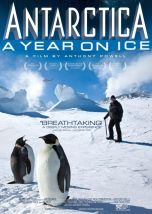
Antarctica: A Year on Ice

   2013    Nature
A visually stunning journey to the end of the world with the hardy and devoted people who live there year-round. The research stations scattered throughout the continent host a close-knit international population of scientists, technicians and craftsmen. Isolated from the rest of the world, enduring months of unending darkness followed by periods when the sun never sets, Antarctic residents experience firsthand the beauty and brutality of the most severe environment on Earth. Capturing epic battles against hellacious storms, quiet reveries of nature's grandeur, and everyday moments of work and laughter, this unique documentary shows a steadfast community thriving in a land few humans have experienced. Using specially modified cameras and spectacular time-lapse photography, filmmaker Anthony Powell captures the splendor of the region like no film before. ANTARCTICA: A YEAR ON ICE gives testament to the planet's natural wonders, humanity's thirst for adventure, and the emotional extremes that accompany a year within the last pristine wilderness on the planet.