




Last Watched

"Pan"  Sort by

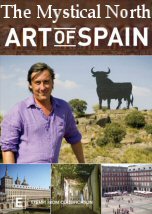
The Mystical North

   2008    Art
Graham-Dixon reveals how the north of the country has produced some of the most dazzling and iconic art of the modern age. Spain's turbulent history has shaped artists from Francisco Goya to Pablo Picasso. Graham-Dixon argues that Spanish architecture is the art form now taking the nation forward in the new millennium.
Series: Art of Spain
The Immortals

   2014    Science
This episode covers the nature of how life may have developed on Earth and the possibility of life on other planets. Tyson begins by explaining how the human development of writing systems enabled the transfer of information through generations, describing how Princess Enheduanna ca. 2280 BCE would be one of the first to sign her name to her works, and how Gilgamesh collected stories, including that of Utnapishtim documenting a great flood comparable to the story of Noah's Ark. Tyson explains how DNA similarly records information to propagate life, and postulates theories of how DNA originated on Earth, including evolution from a shallow tide pool, or from the ejecta of meteor collisions from other planets. In the latter case, Tyson explains how comparing the composition of the Nakhla meteorite in 1911 to results collected by the Viking program demonstrated that material from Mars could transit to Earth, and the ability of some microbes to survive the harsh conditions of space. With the motions of solar systems through the galaxy over billions of years, life could conceivably propagate from planet to planet in the same manner. Tyson then moves on to consider if life on other planets could exist. He explains how Project Diana performed in the 1960s showed that radio waves are able to travel in space, and that all of humanity's broadcast signals continue to radiate into space from our planet. Tyson notes that projects have since looked for similar signals potentially emanating from other solar systems. Tyson then explains that the development and lifespan of extraterrestrial civilizations must be considered for such detection to be realized. He notes that civilizations can be wiped out by cosmic events like supernovae, natural disasters such as the Toba disaster, or even self-destruct through war or other means, making probability estimates difficult. Tyson describes how elliptical galaxies, in which some of the oldest red dwarf stars exist, would offer the best chance of finding established civilizations. Tyson concludes that human intelligence properly applied should allow our species to avoid such disasters and enable us to migrate beyond the Earth before the Sun's eventual transformation into a red giant.
Series: Cosmos: A Spacetime Odyssey

A Savage Legacy

       History
Examines the impact of racism in the 20th century. By 1900 European colonial expansion had reached deep into the heart of Africa. Under the rule of King Leopold II, the Belgian Congo was turned into a vast rubber plantation. Men, women and children who failed to gather their latex quotas would have their limbs dismembered. The country became the scene of one of the century's greatest racial genocides, as an estimated 10 million Africans perished under colonial rule.
Series: Racism: A History

Lands of Gold

   2013    History
Through the mountains and jungles of Colombia, Cooper goes in search of the truth behind one of the greatest stories ever told - the legend of El Dorado. His journey takes him from Bogota to the Caribbean coast, through territories once dominated by two cultures, the Muisca and the Tairona, who flourished for centuries before the arrival of the Spanish in the 16th century. Cooper reveals forgotten peoples who valued gold in a way the Western world still struggles to understand, travelling to an astonishing lost city and meeting the last survivors of an ancient civilisation.
Series: Lost Kingdoms of South America

Ice

   2007    Nature
Our icy adventure begins with host Dr. Iain Stewart in the Alps, where he goes down an ice crevasse to show viewers how snowfall develops into expansive masses. Then, we see how ice can shape the earth's topography giving rise to features like Yosemite National Park and Manhattan Island, in NY. Finally, journey to Greenland and see how ice sheets and glaciers are melting at a phenomenal rate that is likely to accelerate over the coming years, changing the world as we know it.
Series: Earth, The Power of the Planet

D-Day: As it Happens (2)

   2013    History
D-Day: As It Happens is a 24-hour history event to be broadcast across TV, web, mobile devices and social media, telling the story of this pivotal event in 20th-century history in a completely new way. Using newly-analysed archive footage, viewers can track the progress of seven people who were there on the day, each of them a real participant in the 1944 invasion. And they can do so moment by moment in real time, encountering the twists and turns of the fighting at the same time as the D-Day seven did, and learning their fate as the action unfolds in parallel with the present, Narrated by Peter Snow, with Channel 4 presenter and former marine Arthur Williams, and experts including former British Army officer Colonel Tim Collins and front-line journalist Lorna Ward. The second programme reveals what happened to the seven real people the event is following in real time, and also rounds up the events of D-Day.
Series: D-Day
Leaving Neverland

Leaving Neverland

2019  Culture
The Hunt

The Hunt

2015  Nature
Kylie

Kylie

2026  Art
Rafa

Rafa

2026  History
Ancient Apocalypse

Ancient Apocalypse

2024  History