


Last Watched

"REM"  Sort by

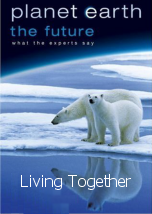
Living Together

   2006    Nature
The documentary deals with the future of conservation. It begins by looking at previous efforts. The 'Save The Whales' campaign, which started in the 1960s, is seen to have had a limited effect, as whaling continues and fish stocks also decline. In the 1990s, as head of the Kenya Wildlife Service, Richard Leakey took on the poachers by employing armed units. Although it was successful in saving elephants, the policy was detrimental to the Maasai people, who were forced from their land. The need for "fortress" areas is questioned, and the recently highlighted Raja Ampat coral reef in Indonesia is an example. The more tourism it generates, the greater the potential for damage — and inevitable coastal construction. Sustainable development is viewed as controversial, and one contributor perceives it to currently be a "contradiction in terms". Trophy hunting is also contentious. Those that support it argue that it generates wealth for local economies, while its opponents point to the reducing numbers of species such as the markhor. Ecotourism is shown to be beneficial, as it is in the interests of its providers to protect their environments. However, in some areas, such as the Borneo rainforests, the great diversity of species is being replaced by monocultures. The role of both religion and the media in conservation is argued to be extremely important. Contributors to the programme admit a degree of worry about the future, but also optimism.
The Birth of Israel

   2008    History
Jeremy Bowen presents a look back at the creation of the state of Israel, examining the the events leading up to the Israeli war of Independence in 1949, its impact on Arab/Israeli relations and the implications for the Middle East. It's a one hour crash course in some of the underlying causes of the current problems in the Middle East.

Lost Horizons: The Big Bang

   2008    Science
Professor Jim Al Khalili from the University of Surrey delves into over 50 years of the BBC science archive to tell the story behind the emergence of one of the greatest theories of modern science, the Big Bang. The remarkable idea that our universe simply began from nothing has not always been accepted with the conviction it is today and, from fiercely disputed leftfield beginnings, took the best part of the 20th century to emerge as the triumphant explanation of how the universe began. Using curious horn-shaped antennas, U-2 spy planes, satellites and particle accelerators, scientists have slowly pieced together the cosmological jigsaw, and this documentary charts the overwhelming evidence for a universe created by a Big Bang.

Earth, the Power of the Planet: Atmosphere

   2007    Nature
The series highlights the major events which have shaped the Earth's history and allowed life to flourish. Follow Dr Stewart's personal journey to some of the most remote places on the planet. The atmosphere is Earth’s protective layer, cloaking us in a warm, oxygen-rich embrace and shielding us from the cold hostility of space. It acts as a natural greenhouse, keeping the Earth 51 degrees Fahrenheit warmer than it would otherwise be. Yet the atmosphere is also full of contradictions. It’s immensely powerful but at the same time highly sensitive. It’s destructive, yet it shelters us. It was created in part by the planet’s first organisms, and it continues to be essential for life.
Series: Earth, the Power of the Planet

Lost Kingdoms of South America: People of the Clouds

   2013    History
Dr Jago Cooper reveals the history of some of South America's ancient civilisations. He begins with an epic journey into the remote Peruvian Andes in search of the mysterious Chachapoya people. Once numbering half a million, they were known as the 'People of the Clouds'. Dr Cooper reveals how they developed sophisticated methods of recording stories, traded in exotic goods found hundreds of miles from their territory, and had funeral traditions that challenge assumptions about ancient human behaviour. His search for evidence takes him to astonishing cliff tombs untouched for 500 years and one of the most spectacular fortresses in South America, where the fate of the Chachapoya is revealed.
Series: Lost Kingdoms of South America

The Beauty of Maps: Medieval Maps

   2010    Art
This documentary series charting the visual appeal and historical meaning of maps. The Hereford Mappa Mundi, the largest intact Medieval wall map in the world, its ambition to picture all of human knowledge in a single image is breathtaking. The work of a team of artists, the world it portrays is overflowing with life, featuring Classical and Biblical history, contemporary buildings and events, animals and plants from across the globe, and the infamous 'monstrous races' which were believed to inhabit the remotest corners of the Earth.
Series: The Beauty of Maps
Blue Planet II

Blue Planet II

2017  Nature
Vegan

Vegan

2020  Culture
Dynamic Genomes Series

Dynamic Genomes Series

2019  Medicine
Rise of Empires: Ottoman

Rise of Empires: Ottoman

2020  History
The Story of the Jews

The Story of the Jews

2013  History
History of the Eagles

History of the Eagles

2013  History
Rome

Rome

  History