



Last Watched

"Cat"  Sort by

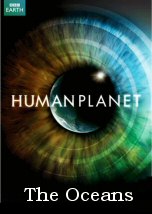
Human Planet: The Oceans

   2011    Culture
Human Planet is a majestic portrait of humankind and the power of nature in extraordinary symbiosis, struggle and strife. For the first time, the camera has turned on ourselves. In doing so, we see how amazing human beings can be and how we adapt to any habitat, anywhere. Human Planet is epic in ambition, extreme in content, intimate in effect. It explores how we have devised ways of surviving in every corner of Earth – from the remotest deserts to the busiest urban metropolis. Each episode focuses on an iconic environment and reveals how we have adapted to the challenges of the landscape and the endless diversity of animals and plants we live with. Discover how our remarkable intelligence, tool use, and close-knit social lives have enabled us to cope with just about anything nature can throw at us". As an air-breathing animal, the human is not built to survive in water. But people have found ways to live an almost aquatic life so they can exploit the sea's riches. From a 'shark-whisperer' in the Pacific to Brazilian fishermen collaborating with dolphins to catch mullet, this journey into the blue reveals astonishing tales of ingenuity and bravery. Daredevil Galician barnacle-collectors defy death on the rocks for a catch worth 200 pounds per kilo. In Indonesia an epic whale-hunt, using traditional hand-made boats and harpoons, brings in a sperm whale. The Bajau 'sea gypsies' of the Sulu Sea spend so much time on water they get 'land sick' when they set foot on the land! We dive 40 metres down to the dangerous world of the Pa-aling fishermen, where dozens of young men, breathing air through a tangled web of pipes attached to a diesel engine, capture thousands of fish in a vast net. We see how surfing has its origins in the ancient beliefs of the ocean-loving Polynesians, and we join a Borneo free-diving spear-fisherman on a breath-taking journey 20 metres down in search of supper.
Series: Human Planet

Is Everything We Know about the Universe Wrong

   2010    Science
There's something very odd going on in space - something that shouldn't be possible. It is as though vast swathes of the universe are being hoovered up by a vast and unseen celestial vacuum cleaner. Sasha Kaslinsky, the scientist who discovered the phenomenon, is understandably nervous: 'It left us quite unsettled and jittery' he says, 'because this is not something we planned to find'. The accidental discovery of what is ominously being called 'dark flow' not only has implications for the destinies of large numbers of galaxies - it also means that large numbers of scientists might have to find a new way of understanding the universe. Dark flow is the latest in a long line of phenomena that have threatened to rewrite the textbooks. Does it herald a new era of understanding, or does it simply mean that everything we know about the universe is wrong?

The Birth of Israel

   2008    History
Jeremy Bowen presents a look back at the creation of the state of Israel, examining the the events leading up to the Israeli war of Independence in 1949, its impact on Arab/Israeli relations and the implications for the Middle East. It's a one hour crash course in some of the underlying causes of the current problems in the Middle East.

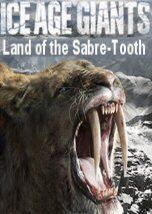
Ice Age Giants: Land of the Sabre-Tooth

   2013    Science
Professor Alice Roberts journeys 40,000 years back in time on the trail of the great beasts of the Ice Age. Drawing on the latest scientific detective work and a dash of graphic wizardry, we bring the Ice Age Giants back to life. The series begins in the 'land of the sabre-tooth'; North America, a continent that was half covered by ice that was up to two miles thick. Yet this frozen land also boasted the most impressive cast of Ice Age giants in the world. Across locations such as the Grand Canyon, the sands of Arizona and the coast of California, Alice traces the movements of Ice Age beasts like bear-sized sloths, vast mammoths and the strange beast known as the glyptodon. These leviathans all have one thing in common: they were stalked by the meanest big cat that ever prowled the Earth, armed with seven-inch teeth and hunting in packs - Smilodon fatalis, the sabre-toothed cat.
Series: Ice Age Giants

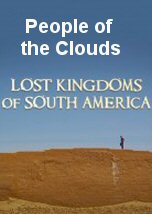
Lost Kingdoms of South America: People of the Clouds

   2013    History
Dr Jago Cooper reveals the history of some of South America's ancient civilisations. He begins with an epic journey into the remote Peruvian Andes in search of the mysterious Chachapoya people. Once numbering half a million, they were known as the 'People of the Clouds'. Dr Cooper reveals how they developed sophisticated methods of recording stories, traded in exotic goods found hundreds of miles from their territory, and had funeral traditions that challenge assumptions about ancient human behaviour. His search for evidence takes him to astonishing cliff tombs untouched for 500 years and one of the most spectacular fortresses in South America, where the fate of the Chachapoya is revealed.
Series: Lost Kingdoms of South America

Racism: A History. The Colour of Money

   2007    Culture
The series explores the impact of racism on a global scale and chronicles the shifts in the perception of race and the history of racism in Europe, the Americas, Australia and Asia. The first episode begins by assessing the implications of the relationship between Europe, Africa and the Americas in the 15th century. It considers how racist ideas and practices developed in key religious and secular institutions, and how they showed up in writings by European philosophers Aristotle and Immanuel Kant.
Series: Racism: A History