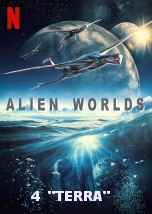
What sort of alien civilizations might exist in the vastness of space? Terra is the fictional world imagined in Episode 4, a planet nine billion years old, twice as old as Earth. Old enough that a truly advanced intelligence could evolve. It was once a fertile world, now it is barren. But life can still thrive here in artificial domes. Over time, they've evolved not to need their bodies. They exist only as neural tissue. They never age, they never die. They're monitored and maintained by robots. If alien civilizations are statistically so likely, why haven't astronomers found any sign of them? Where is everyone? Every time we look at an individual star, that's like dropping a bucket in the ocean. We're going to have to look at a lot of stars and to search through a lot of data until we find the clue that leads us to another civilization.
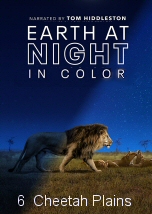
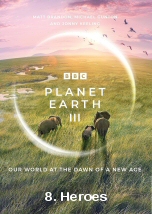
Sunset over the plains of Kenya's Maasai Mara, one of Africa's most protected wild spaces. And home to the fastest land animal on Earth, the cheetah. These agile cats have always been thought of as daylight hunters. They target prey from more than a kilometre away and chase it down at over 100 kilometres an hour. In one of these plains, two cheetah brothers attempt a high-speed night hunt with a gang of powerful hyenas on their trail.
NASA is on a mission to send humans to Mars within just 15 years, but to reach this next frontier of space exploration, experts must discover new technology and cutting-edge science that protects astronauts from the Red Planet's deadliest killers.
We're unlocking the secrets of our planet's voyage and discovering that earth's journey affects us all. The Earth is extremely dynamic. It is spinning on its axis, it's whirling about the sun and it's corkscrewing throughout the this galaxy. And there is the fact than Andromeda and the Milky Way are currently 2.5 million light-years apart, but they're hurtling towards each other at over 250,000 miles an hour. A collision is inevitable. As stars, dust, and gas swirl around each other, gravitational interactions could slingshot our solar system out into intergalactic space.
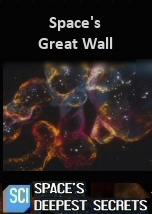
Astronomers make an extraordinary discovery out in deep space when they uncover a cosmic mega-structure that's one billion light-years long. Now, investigators race to decode the hidden forces that shape the most massive and mysterious structure known in the Universe. We dive into this space great wall's fiery birth and hunt for the weird cosmic glue that holds it together to reveal how this megastructure rewrites our understanding of the universe on an epic scale.
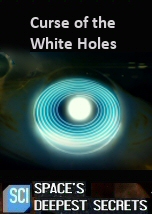
The white hole is a region of spacetime and that cannot be entered from the outside, although energy-matter, light and information can escape from it. In this sense, it is the reverse of a black hole. Einstein predicted strange cosmic phenomena known as white holes, but scientists have yet to prove they exist. Today, astronomers race to find the clues that can unlock the secrets of white holes. They investigate the tiny black holes that hide in the most ancient parts of the universe to finally find the smoking gun.





















If alien civilizations are statistically so likely, why haven't astronomers found any sign of them? Where is everyone? Every time we look at an individual star, that's like dropping a bucket in the ocean. We're going to have to look at a lot of stars and to search through a lot of data until we find the clue that leads us to another civilization.