




Last Watched

"Techno"  Sort by

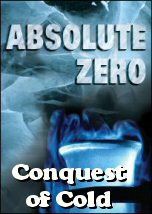
Absolute Zero Conquest of Cold

   2007    Technology
This scientific detective tale tells the story of a remarkable group of pioneers who wanted to reach the ultimate extreme: absolute zero, a place so cold that the physical world as we know it doesn't exist, electricity flows without resistance, fluids defy gravity and the speed of light can be reduced to 38 miles per hour. Absolute zero became the Holy Grail of temperature physicists and is considered the gateway to many new technologies, such as nano-construction, neurological networks and quantum computing. The possibilities, it seems, are limitless. The first episode Chronicles the major discoveries leading towards the mastery of cold, beginning with King James I's court magician, Cornelius Drebbel, who managed to air condition the largest interior space in the British Isles in 1620. Other stories will include the first "natural philosopher," Robert Boyle, a founder of the Royal Society in Great Britain; the Grand Duke Ferdinand II de Medici's involvement in the creation of the first thermometer; the establishment of the laws of thermodynamics by three young scientists, Sadi Carnot, James Joule and William Thomson; and Michael Faraday's critical achievement in liquefying several other gases which set the stage for the commercial application of cold to refrigeration and air conditioning.
Series: Absolute Zero
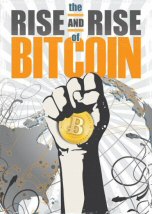
The Rise and Rise of Bitcoin

   2014    Technology
Bitcoin is a peer-to-peer monetary system in which all transaction records are public. Participants can use its open-source software to transfer virtual currency to one another as easily as they might send an email. Bitcoin opens an uncharted world of new possibilities to explore. We'll follow the stories of entrepreneurs and startups that are helping shape the new financial frontier. We'll look at the competitive mining market and the various subcultures within the Bitcoin community." You'll encounter a variety of characters and opinions as we examine the social and political impact of an open-source digital currency. Will the rise of Bitcoin bring a monetary paradigm shift that will forever change the world? Supposedly invented by a mysterious Japanese man named Satoshi Nakamoto (whose current whereabouts are unknown). Because it is designed to have an absolute ceiling of 21 million Bitcoins in circulation (not anticipated until 2040), and the system has no central depository or administrative authority, it has great appeal to libertarians and others who seek alternatives to a perceived corrupt, manipulative banking infrastructure and excessive government regulations. Its low processing fees compared with those of mainstream credit-card companies also hold considerable allure for merchants.

The Two Thousand Year Old Computer

   2012    History
In 1901, a group of divers excavating an ancient Roman shipwreck near the island of Antikythera, off the southern coast of Greece, found a mysterious object - a lump of calcified stone that contained within it several gearwheels welded together after years under the sea. The 2,000-year-old object, no bigger than a modern laptop, is now regarded as the world's oldest computer, devised to predict solar eclipses and, according to recent findings, calculate the timing of the ancient Olympics. Following the efforts of an international team of scientists, the mysteries of the Antikythera Mechanism are uncovered, revealing surprising and awe-inspiring details of the object that continues to mystify

Race For Rockets

   2005    Technology
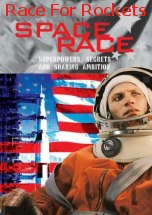
Space Race is a docu-drama chronicling the major events and characters in the American/Soviet space race. It focusses on Sergei Korolev, the Soviets' chief rocket designer, and Wernher von Braun, his American counterpart. The series was a joint effort between British, German, American and Russian production teams." In the first episode, 1944-1949, we see Wernher von Braun's work on the V-2 for the Nazis during the last years of the Second World War, his surrender to American troops and his move to the USA. We see Sergei Korolev's release from the Gulag, and how he is set to work on Soviet rockets, first attempting to copy the V-2, then building a more efficient rocket of his own.
Series: Space Race

Hiroshima 1 of 2

   2005    History
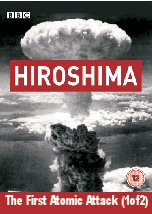
It was the defining moment of the 20th Century - the scientific, technological, military, and political gamble of the world's first atomic attack. This drama-documentary attempts to do what no other film has done before - to show what it is like to live through a nuclear explosion, millisecond by millisecond. Set in the three weeks from the first test explosion in New Mexico to the eventual dropping of the bomb, the action takes viewers into the room where the crucial political decisions are made; on board the Enola Gay on her fateful voyage; inside the bomb as it explodes; and on the streets of Hiroshima when disaster strikes. Parallel storylines interweave, unfolding the action from both US and Japanese perspectives, and revealing the tensions and conflicts in the actions and minds of people who were making history. Special effects recreate the reality of the mission - even going inside the workings of the bomb - and archive film replays the horrific aftermath.
Series: Hiroshima

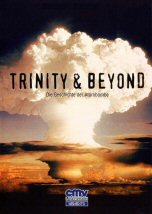
Trinity and Beyond: The Atomic Bomb Movie

   1995    Technology
An unsettling yet visually fascinating documentary presenting the history of nuclear weapons development and testing between 1945 until 1963. Narrated by William Shatner, features extremely rare film segments from top secret government archives and startling footage of nuclear bomb tests conducted by Great Britain and China, plus the largest atomic explosion ever created by Russia, and de-classified U.S. footage released to the public as recent as May, 2006. Whether being exploded under the ocean, suspended by a balloon, shot from a cannon or even detonated in space, these weapons are capable of devastating destruction - the quality of these images is as startling as are remarkable.