

Last Watched

"Cities"  Sort by

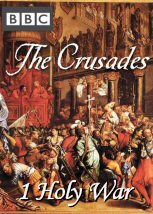
Holy War

   2012    History
Dr. Thomas Asbridge introduces the epic story of the Crusades – a tale of religious fanaticism and unspeakable brutality, of medieval knights and Jihadi warriors; of castles and kings; of heroism, betrayal, and sacrifice. He explains how, using fresh evidence, eye-witness testimonies and contemporary accounts – from both the Christian and Islamic worlds – we are able to re-examine this epic medieval drama, and how he has retraced the steps of the Crusaders from a small town in France to the magnificent cities of the Holy Land, bringing to life the human experience of the Crusades, and shedding new light on how it was that two of the world’s great religions waged war in the name of God.
Series: The Crusades
Dynamic Salt

   2016    Technology
Could we get all our energy needs from sea water and the salt it contains? Are we to witness a time when salt will power our engines and factories, and light up our cities? Could this be the final curtain not only for shale gas and oil, but also the burning of fossil fuels and the beginning of a gentler form of energy that is definitely renewable? This documentary explores the latest research on sea water and the way scientists all over the world are working on 'Blue Energy'. This research could bring about a major change in our time.

Waiting for Immortality

   2016    Medicine
Eternal life is humanity’s oldest dream. It may be finally coming true. Today, at least in the West, the quest for immortality has shifted from the metaphysical to the technical and the scientific. In this film we will investigate the advancement of this research in laboratories around the world. With cryonics technology improving, human cloning now possible, mind uploading and digital brain simulation thriving, reversing the aging of cells and organs feasible, immortality may seem right around the corner. In some countries, such as the US, Russia and Europe, private companies are financing and promoting the promise of immortality or at least a longer life expectancy. Are they selling a reality or utopia? We will meet scientists, neurophysiologists, computer specialists, geneticists, and biologists, and also hopefuls of immortal life, futurists, sociologists and businessmen. We will film different research laboratories and cities built for the aging; we will interview the experts as well as the anonymous men and women who speak about their relationship with life and death and those who simply embody it.

Creatures Of Light

   2016    Nature
In the dark depths of the oceans, nearly 90% of all species light up the darkness from within. These creatures flash, sparkle, shimmer, or simply glow. Whether it’s to scare off predators, fish for prey, or lure a mate, the language of light is everywhere in the ocean depths, and scientists are finally starting to decode it. Discover surprising ways to harness nature’s light—from tracking cancer cells to detecting pollution, lighting up cities, and even illuminating the inner workings of our brains.

The Joy of Mozart

   2015    Art
Tom Service plunges into the life and times of Mozart to try and rediscover the greatness and humanity of the living man in his moment. Mozart's prodigious output and untimely death have helped place him on a pedestal that can often blind us to the unique brilliance of his work in the context of his life and times. Service visits the key cities and rooms in which Mozart lived and worked, plays some of Mozart's original instruments and scores, and gradually uncovers the brilliance and originality of his work." There is the prodigious childhood when Mozart was feted as an infant phenomenon around Europe's most glittering courts, and his golden decade in Vienna in which masterpiece followed masterpiece - operas, symphonies, piano concertos, string quartets - as if this short, high-voiced man-child must have been taking dictation from some divine source, until his death at the age of just 35 in 1791. Even more than the music, Mozart's tragic demise sets the seal on his myth. The trajectory of Mozart's life sets the template for the romantic paradigm whose throes we are still in today, which requires our creative heroes to die young to prove that they were too good for this madding world, whether it be Wolfgang Amadeus or Jimi Hendrix. Service travels from London to Vienna and Salzberg, unpicking the living, breathing genius that was Mozart. With Sir John Eliot Gardiner, Nicola Benedetti, Paul Morley and others.

The Lost Pyramids of Caral

   2002    History
The magnificent ancient city of pyramids at Caral in Peru is a thousand years older than the earliest known civilisation in the Americas and, at 2,627 BC, is as old as the pyramids of Egypt. Many now believe it is the fabled missing link of archaeology - a 'mother city'. If so, then these extraordinary findings could finally answer one of the great questions of archaeology: why did humans become civilised?" For over a century, archaeologists have been searching for what they call a mother city. Civilisation began in only six areas of the world: Egypt, Mesopotamia, India, China, Peru and Central America. In each of these regions people moved from small family units to build cities of thousands of people. They crossed the historic divide, one of the great moments in human history. Why? To find the answer archaeologists needed to find a mother city - the first stage of city-building. Caral, is so much older than anything else in South America that it is a clear candidate to be the mother city. It also is in pristine condition. Nothing has been built on it at all. Instead laid out before the world is an elaborate complex of pyramids, temples, an amphitheatre and ordinary houses. Scientists developed a number of theories. Some said it was because of the development of trade, others that it was irrigation. Some even today believe it was all because of aliens. Gradually an uneasy consensus emerged. The key force common to all civilisations was warfare. Crucially, there is not the faintest trace of warfare at Caral; no battlements, no weapons, no mutilated bodies. Instead, Ruth's findings suggest it was a gentle society, built on commerce and pleasure. In one of the pyramids they uncovered beautiful flutes made from condor and pelican bones. They have also found evidence of a culture that took drugs and perhaps aphrodisiacs. Most stunning of all, they have found the remains of a baby, lovingly wrapped and buried with a precious necklace made of stone beads.
Wild Wild Country

Wild Wild Country

2018  Culture
Arnold

Arnold

2023  History
Dangerous knowledge

Dangerous knowledge

2007  Science
Building Giants

Building Giants

2019  Technology
Leaving Neverland

Leaving Neverland

2019  Culture
Worst Ex Ever

Worst Ex Ever

2024  Culture
Prehistoric Planet

Prehistoric Planet

2022  Science