





Last Watched

"Economy"  Sort by

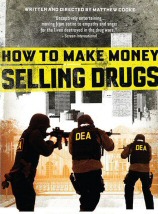
How to Make Money Selling Drugs

   2012    Culture
A shockingly candid examination of how a street dealer can rise to cartel lord with relative ease, How to Make Money Selling Drugs is an insider's guide to the violent but extremely lucrative drug industry. Told from the perspective of former drug dealers, and featuring interviews with rights advocates Russell Simmons, Susan Sarandon, and David Simon, the film gives you the lessons you need to start your own drug empire while exposing the corruption behind the "war on drugs".
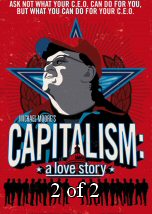
Capitalism A Love Story 2of 2

   2009    Culture
In February 2009, Michael Moore issued an appeal to people who worked for Wall Street or in the financial industry to share first hand information, requesting, 'Be a hero and help me expose the biggest swindle in American history'. He uncovers the social costs of corporate interests pursuing profits at the expense of the public good.
Series: Capitalism A Love Story

The Cost of Free

   2010    Technology
In the third programme of the series, Aleks gives the lowdown on how, for better and for worse, commerce has colonized the web - and reveals how web users are paying for what appear to be 'free' sites and services in hidden ways. Joined by some of the most influential business leaders of today's web, including Eric Schmidt (CEO of Google), Chad Hurley (CEO of YouTube), Bill Gates, Martha Lane Fox and Reed Hastings (CEO of Netflix), Aleks traces how business, with varying degrees of success, has attempted to make money on the web. She tells the inside story of the gold rush years of the dotcom bubble and reveals how retailers such as Amazon learned the lessons. She also charts how, out of the ashes, Google forged the business model that has come to dominate today's web, offering a plethora of highly attractive, overtly free web services, including search, maps and video, that are in fact funded through a sophisticated and highly lucrative advertising system which trades on what we users look for. Aleks explores how web advertising is evolving further to become more targeted and relevant to individual consumers. Recommendation engines, pioneered by retailers such as Amazon, are also breaking down the barriers between commerce and consumer by marketing future purchases to us based on our previous choices. On the surface, the web appears to have brought about a revolution in convenience. But, as companies start to build up databases on our online habits and preferences, Aleks questions what this may mean for our notions of privacy and personal space in the 21st century
Series: The Virtual Revolution

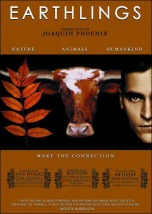
Earthlings

   2005    Nature
A feature length documentary about humanity's absolute dependence on animals (for pets, food, clothing, entertainment, and scientific research) but also illustrates our complete disrespect for these so-called 'non-human providers'. With an in-depth study into pet stores, puppy mills and animals shelters, as well as factory farms, the leather and fur trades, sports and entertainment industries, and finally the medical and scientific profession, the film uses hidden cameras and never before seen footage to chronicle the day-to-day practices of some of the largest industries in the world, all of which rely entirely on animals for profit. Powerful, informative and thought-provoking, EARTHLINGS is by far the most comprehensive documentary ever produced on the correlation between nature, animals, and human economic interests. There are many worthy animal rights films available, but this one transcends the setting.

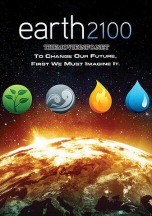
Earth 2100

   2009    Nature
Hosted by ABC journalist Bob Woodruff, this two-hour special explores what a worst-case future might look like if humans do not take action on current or impending problems that could threaten civilization. The problems addressed in the program include climate change, overpopulation, and misuse of energy resources. The events parallel the life of a fictitious storyteller, 'Lucy' as she describes how the events affect her life. The program included predictions of a dystopian Earth in the years 2030, 2050, 2085, and 2100 by scientists, historians, social anthropologists, and economists, including Jared Diamond, Thomas Homer-Dixon, Peter Gleick, James Howard Kunstler, Heidi Cullen, and Joseph Tainter. According to Executive Producer Michael Bicks, "this program was developed to show the worst-case scenario for human civilization. Again, we are not saying that these events will happen — rather, that if we fail to seriously address the complex problems of climate change, resource depletion and overpopulation, they are much more likely to happen.