An examination of the heavy metal music subculture that tries to explain why, despite the longevity and popularity of the genre, fans are marginalized and ridiculed for their passion. Sam Dunn is a anthropologist and a lifelong metal fan. After years of studying diverse cultures, Sam turns his academic eye a little closer to home and embarks on an epic journey into the heart of heavy metal. His mission: to figure out why metal music is consistently stereotyped, dismissed and condemned, even while the tribe that loves it stubbornly holds its ground -- spreading the word, keeping the faith and adopting styles and attitudes that go way beyond the music. Sam visits heavy metal landmarks as far flung as L.A.'s Sunset Strip, the dirty streets of Birmingham and the dark forests of Norway. Along the way, the two sides of Sam Dunn -- curious anthropologist and rabid fan -- collide, as Sam explores metal's obsession with sex, religion, violence and death, meets his heroes, and discovers some things about the culture that even he can't defend.
The Sundarbans mangrove forest, in Bangladesh near the Indian border, is a tidal jungle where Ganges and Brahmaputra enter the Indian Ocean. Its has some 400 Bengal tigers - the largest population in the world, and the only to be hardly scared of men. The downside is tigers kill up the 50 Bangladeshis a year, even from neighbouring villages, so keeping them inside the reserve is key to long-term survival. A recent project tries to train local mongrels, not pets but fiercely self-reliant dogs, to spot and even scare off tigers from villages. An individual tiger can turn into a man-eater in order to survive - this process may occur due to an injury or old age (and so cannot hunt agile prey) or even accidentally tasting human flesh.
You find fungi in Antarctica and in nuclear reactors. They live inside your lungs and your skin is covered with them. Fungi are the most under appreciated and unexplained organisms, yet they could cure you from smallpox and turn cardboard boxes into forests. They could even transform Mars into Eden. There are vastly more fungi species than plants and each and every one of them plays a crucial role in life’s support systems. Join us on a journey into the mysterious world of Fungi to witness their beauty, unravel their mysteries and discover how this secret kingdom is essential to life on Earth, and may in fact hold the key to our future.
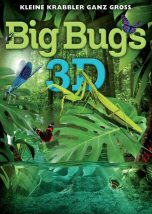
The world of bugs normally passes beneath our notice, yet shrink yourself to their size, see them in 3D and you’ll enter a world you’d never believe existed. Big Bugs in 3D uses specially developed 3D technology to take the viewer on a global journey, from Mexico and the rainforests of Asia to our own backyards. There are perhaps four and a half million different kinds of bugs sharing the planet with us. They exist in a bewildering variety of forms, some more like creatures from an alien world. Big Bugs asks how and why these creatures have become so successful.
Written and presented by David Attenborough, who said: 'One of the most wonderful things about filming plants is that you can reveal hidden aspects of their lives, you can capture the moment as one plant strangles another, and as they burst into flower. But whilst time-lapse photography allows you to see things that no human being has ever seen before". David begins his journey inside the magnificent Palm House, a unique global rainforest in London. Here, he explores the extraordinary plants that are so well adapted to wet and humid environments and unravels the intimate relationships between wet zone plants and the animals that depend on them. It was in the wet zones of the world that plants first moved on to land and in the Waterlily House David reveals how flowers first evolved some 140 million years ago. Watching a kaleidoscope of breath-taking time-lapses of these most primitive of flowers swelling and blooming in 3D, he is able to piece together the very first evolutionary steps that plants took to employ a wealth of insects to carry their precious pollen for the first time. David discovers clues to answer a question that even had Charles Darwin stumped: how did flowering plants evolve so fast to go on to colonise the entire planet so successfully?
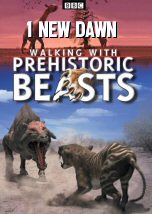
The series takes place after the extinction of the dinosaurs 65 million years ago and recreates animals of the Cenozoic with computer-generated imagery and animatronics. The first episode starts 49 million years ago, when Earth has fully recovered from the dinosaur extinction and is covered in a mysterious forest. This is a time that the world has almost forgotten - Germany was a hot sweaty jungle, birds ruled the earth and preyed on miniature horses and whales walked on land.
























Sam Dunn is a anthropologist and a lifelong metal fan. After years of studying diverse cultures, Sam turns his academic eye a little closer to home and embarks on an epic journey into the heart of heavy metal. His mission: to figure out why metal music is consistently stereotyped, dismissed and condemned, even while the tribe that loves it stubbornly holds its ground -- spreading the word, keeping the faith and adopting styles and attitudes that go way beyond the music.
Sam visits heavy metal landmarks as far flung as L.A.'s Sunset Strip, the dirty streets of Birmingham and the dark forests of Norway. Along the way, the two sides of Sam Dunn -- curious anthropologist and rabid fan -- collide, as Sam explores metal's obsession with sex, religion, violence and death, meets his heroes, and discovers some things about the culture that even he can't defend.