




Last Watched

"Grass"  Sort by

The Immortals

   2014    Science
This episode covers the nature of how life may have developed on Earth and the possibility of life on other planets. Tyson begins by explaining how the human development of writing systems enabled the transfer of information through generations, describing how Princess Enheduanna ca. 2280 BCE would be one of the first to sign her name to her works, and how Gilgamesh collected stories, including that of Utnapishtim documenting a great flood comparable to the story of Noah's Ark. Tyson explains how DNA similarly records information to propagate life, and postulates theories of how DNA originated on Earth, including evolution from a shallow tide pool, or from the ejecta of meteor collisions from other planets. In the latter case, Tyson explains how comparing the composition of the Nakhla meteorite in 1911 to results collected by the Viking program demonstrated that material from Mars could transit to Earth, and the ability of some microbes to survive the harsh conditions of space. With the motions of solar systems through the galaxy over billions of years, life could conceivably propagate from planet to planet in the same manner. Tyson then moves on to consider if life on other planets could exist. He explains how Project Diana performed in the 1960s showed that radio waves are able to travel in space, and that all of humanity's broadcast signals continue to radiate into space from our planet. Tyson notes that projects have since looked for similar signals potentially emanating from other solar systems. Tyson then explains that the development and lifespan of extraterrestrial civilizations must be considered for such detection to be realized. He notes that civilizations can be wiped out by cosmic events like supernovae, natural disasters such as the Toba disaster, or even self-destruct through war or other means, making probability estimates difficult. Tyson describes how elliptical galaxies, in which some of the oldest red dwarf stars exist, would offer the best chance of finding established civilizations. Tyson concludes that human intelligence properly applied should allow our species to avoid such disasters and enable us to migrate beyond the Earth before the Sun's eventual transformation into a red giant.
Series: Cosmos: A Spacetime Odyssey

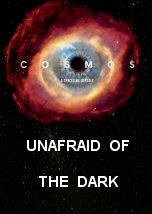
Unafraid of the Dark

   2014    Science
Tyson describes the discovery of cosmic rays by Victor Hess through high-altitude balloon trips. Swiss Astronomer Fritz Zwicky, in studying supernovae, postulated that these cosmic rays originated from these events instead of electromagnetic radiation. Also tells how Vera Rubin observed that the rotation of stars at the edges of observable galaxies did not follow expected rotational behavior leading to consider the existence of dark matter. This further led to the discovery of dark energy to account for the increasing rate of expansion of the universe. Tyson then describes the interstellar travel of the two Voyager probes. Tyson tells the Carl Sagan's role in the Voyager program, including creating the Voyager Golden Record to encapsulate humanity and Earth's position in the universe. Tyson concludes the series by emphasizing Sagan's message on the human condition in the vastness of the cosmos, and to encourage viewers to continue to explore and discover what else the universe has to offer.
Series: Cosmos: A Spacetime Odyssey

The Enemy of My Enemy

   2014    Culture
'Crude Awakening'- To combat the worst environmental disaster in American history, BP and the Coast Guard dumped nearly 2 million gallons of a chemical dispersant called Corexit into the Gulf. But instead of helping clean up the spill, Corexit made things worse. Shane Smith heads to Louisiana to report on the lasting effects of the BP oil spill. 'The Enemy of My Enemy' - Yemen, the fractured state in the Arabian peninsula, is at the top of the worry list for President Obama's national security team, and the rise of Al Qaeda there is only half the reason why. The real trouble is a current threat posed by the little-known Houthi rebel movement in the north of the country - a grassroots army, allegedly funded by Iran, that has never granted access to any other Western film crew before. Ben Anderson goes deep into Houthi-controlled territory to learn about the group that's fighting, and beating, Al Qaeda in the east, Saudi Arabia in the north, and Yemen's central government in the south.

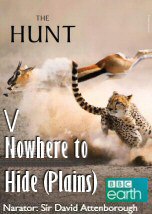
Nowhere to Hide

   2015    Nature
The open arenas of grassland and desert make up half of all land on our planet. In these exposed habitats, predators like cheetahs, bald eagles and lions can usually see their prey. But it works both ways: their prey can see them too. With nothing but open vistas, the element of surprise is hard-won, and predators must make their own opportunities.
Series: The Hunt

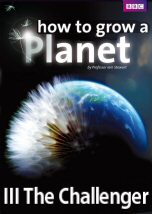
The Challenger

   2012    Science
In the last episode, Iain discovers the remarkable impact of just one plant: grass. On the savannah of South Africa he sees how grass unleashed a firestorm to fight its greatest enemy, the forests. He shows how cutting your finger on a blade of grass shows us how it transformed life in the oceans. In Senegal, he meets the cleverest chimps in the world. And, in the ruins of the oldest temple on Earth, he tells the extraordinary story of how grass triggered human civilisation.
Series: How to Grow a Planet

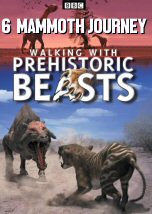
Mammoth Journey

       Science
Travelling forward in time to 30,000 years ago, it's the middle of an ice age. The landscape is dominated by mighty mammoths, living side-by-side with woolly rhinos, giant deer and two separate species of human. The programme follows the fate of a herd of mammoths in their annual struggle against the harsh ice-age conditions. Every summer they spend on the grassy plains of what will one day become the bottom of the North Sea, but every winter they are forced to head for the less exposed valleys further south. It is a journey fraught with danger: mammoths can get trapped in frozen bogs, and the herd must run the gauntlet of hunters like cave lions and the deadly Neanderthals.
Series: Walking with Prehistoric Beast
The Climate Wars

The Climate Wars

  Nature
Pets: Wild at Heart

Pets: Wild at Heart

2015  Nature
Life

Life

2009  Nature
Senna

Senna

2010  Culture
Clash of the Gods

Clash of the Gods

2009  History
Tiger

Tiger

2020  History