








Last Watched

"Nazi"  Sort by

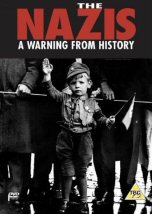
The Nazis, A Warning From History. Episode 4

   1997    History
The BBC's definitive television history of the rise and fall of the Nazis. The Nazis - A Warning From History exposes the popular myths surrounding the rise and fall of the Third Reich. The series explores how the Nazis came to power, how they ruled, how they treated their occupied territories and, above all, how a cultured nation could be responsible for such acts of inhumanity. How could a political party as fundamentally evil and overtly racist as the Nazis come to power? This remains one of the most enigmatic questions of the last century. Acclaimed historian Laurence Rees examines what led a cultured nation at the heart of Europe to commit the atrocities it did. In so doing, he exposes popular myths and encourages understanding of the real forces that led to one of the darkest chapters in modern history. Was it simply the hypnotic power of Hitler's rhetoric? Did the Gestapo really impose themselves by terror on an unwilling population? Through interviews with witnesses and perpetrators, along with archive film and records, this six-part series unveils a more chilling reality.
Series: The Nazis, A Warning From History
Corruption

   2005    History
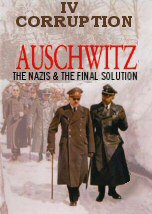
In the fourth episode of the series, eyewitnesses recall how those in power at Auschwitz lined their pockets with wealth stolen from Jewish inmates while also engaging in illicit affairs.
Series: Auschwitz The Nazis and the Final Solution

The Crimes

   2007    History
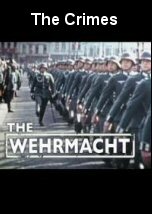
Soldiers and officers continually came into conflict with their consciences. How much freedom did individuals have? Were they executing Hitler's criminal plans, or was it the Wehrmacht's war? There were crimes against humanity, against civilians, prisoners of war, and there was the Holocaust itself. The Trent Park records discovered and analysed by historian Sönke Neitzel, author of Tapping Hitler's Generals, show that the 84 German generals who were interned at Trent Park were aware of the severity of the war crimes they had been involved in and that some discussed them almost compulsively. They included the Commissar Order, to kill any Soviet commissar, and Rathenau's order to kill the Jews, including children.
Series: The Wehrmacht

1945 The Savage Peace

   2015    History
When the Second World War ended, the people of liberated Europe celebrated their freedom from Nazi tyranny. Their years of suffering had ended, but for millions of Germans, the end of the conflict opened a new and terrible chapter. They suffered the appalling violence meted out to the defeated, especially to those ethnic Germans who had lived peacefully for centuries in neighbouring countries". Savage Peace uses rare and unseen archive film, the documentary tells a harrowing story of vengeance against German civilians, which mirrored some of the worst cruelty of the Nazi occupiers during the years of war. The Savage Peace includes the unique testimony of eyewitnesses and victims, who recall the horrors with searing clarity, their memories undimmed 70 years after the events took place. This a story that has, until now, been untold amidst the justified celebration of an end to an unspeakable tyranny. But as the writer George Orwell said, the treatment of the defeated Germans was a terrible crime that has gone unpunished.

Orders and Initiatives

   2005    History
Originally a Prisoner of War camp for Soviet soldiers, SS Commander Rudolf Hoss oversaw the transition of Auschwitz from a political camp to a place to murder thousands of people. In the Autumn of 1941,the Nazis were about to embark on the most crucial few months in the planning of what they called 'The Final Solution' - the extermination of the Jews.
Series: Auschwitz The Nazis and the Final Solution

Resistance

   2007    History
Among the ranks of the Wehrmacht there was limited opposition to Hitler. Most officers initially felt enthusiastic about the prospect of war and were grateful to Hitler whose war-mongering had furthered their personal careers. Furthermore all soldiers had to make an oath of allegiance to the Führer and, up until the very end, there were many who felt unable to break this pledge. There were, however, some officers who opposed Hitler. For some it was on moral grounds and for others because they thought that his military tactics would lose them the war. There were plots against Hitler and attempted coups, the best known being the July bomb plot led by Claus von Stauffenberg. Some soldiers refused to bear arms and were shot, others deserted, others still carried out quiet acts of sabotage and subversion. By and large, however, the Wehrmacht carried out the orders Hitler issued, even if it involved perpetrating acts of atrocity.
Series: The Wehrmacht
Leaving Neverland

Leaving Neverland

2019  Culture
The Mind Explained

The Mind Explained

2019  Medicine
Chef's Table

Chef's Table

2017  Art
Spectacular Earth

Spectacular Earth

2022  Nature
Kingdom of Plants

Kingdom of Plants

2012  Nature
Arnold

Arnold

2023  History