







Last Watched

"Plants"  Sort by

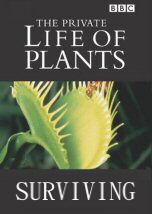
Surviving

   1995    Nature
the final episode deals with plants that live in hostile environments. Attenborough visits Ellesmere Island, north of the Arctic Circle, to demonstrate that even in a place that is unconducive to life, it can be found. Algae and lichens grow in or on rock, and during summer, when the ice melts, flowers are much more apparent. However, they must remain close to the ground to stay out of the chilling wind. In the Tasmanian mountains, plants conserve heat by growing into 'cushions' that act as solar panels, with as many as a million individual shoots grouped together as one. Others, such as the lobelia in Mount Kenya, have a 'fur coat' of dense hairs on their leaves. The saguaro cactus in the Sonoran Desert flourishes because of its ability to retain vast amounts of water, which can't be lost through leaves because it has none. Many desert dwellers benefit from an accelerated life cycle, blooming rapidly within weeks after rainfall. Conversely, Mount Roraima is one of the wettest places on Earth. It is a huge sandstone plateau with high waterfalls and nutrients are continuously washed away, so plants have to adapt their diet if they are to survive. A bladderwort is shown invading a bromeliad. Inhabitants of lakes have other problems to contend with: those that dominate the surface will proliferate, and the Amazon water lily provides an apt illustration. Attenborough ends the series with an entreaty for the conservation of plant species.
Series: The Private Life of Plants
Amazon Jungle

   2005    Nature
A visit to the Amazon jungle - the world's largest rainforest and home to the widest variety of plants and animals on Earth. he diversity of life in the jungle is so great that in just two square miles scientists have counted 3,000 varieties of ants, 530 types of birds and 11 species of monkey. But despite the huge range of life that flourishes here, survival is never easy.
Series: Wild South America

The Survival

   2012    Nature    3D    HD
David Attenborough discovers the plants that have evolved to shed their dependency on water enabling them to survive in the driest environments. The story begins at midnight in midsummer as David steps into the Princess of Wales Conservatory to witness the extraordinary nocturnal blooming of a cactus. The queen of the night, with its giant flowers, is the centre piece of a stunning symphony of cacti blooms that burst open in the desert (and at Kew) at night. In a mesmerizing 3D slow motion sequence, we discover the extraordinary connections between cacti and their natural pollinators: bats. As the sun rises, David meets other amazing plants. Species like the century plant, the Agave franzosini, which grows steadily for over 50 years, only to then flower itself to death with one mighty telegraph pole sized bloom which literally bursts out of the roof of Kew’s green house.
Series: Kingdom of Plants

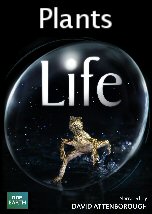
Life: Plants

   2009    Nature
Plants' solutions to life's challenges are as ingenious and manipulative as any animal's. Innovative time-lapse photography opens up a parallel world where plants act like fly-paper, or spring-loaded traps, to catch insects. Vines develop suckers and claws to haul themselves into the rainforest canopy. Every peculiar shape proves to have a clever purpose. The dragon's blood tree is like an upturned umbrella to capture mist and shade its roots. The seed of a Bornean tree has wings so aerodynamic they inspired the design of early gliders. The barrel-shaped desert rose is full of water. The heliconia plant even enslaves a humming bird and turns it into an addict for its nectar.
Series: Life

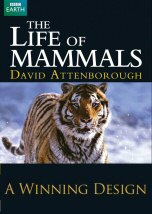
Plant Predators

   2002    Nature
The plant eaters take on the largely indigestible, spiny and poisonous defences of plants with some spectacular physical adaptations to diet. Plant Predators demonstrates the particular (and often peculiar) adaptations of herbivores
Series: The Life of Mammals

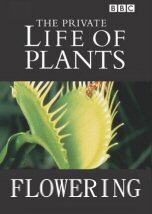
Flowering

   1995    Nature
The third episode is devoted to the ways in which plants reproduce. Pollen and a stigma are the two components needed for fertilisation. Most plants carry both these within their flowers and rely on animals to transport the pollen from one to the stigma of another. To do this, they attract their couriers with colour, scent and nectar. It isn't just birds that help pollination: some mammals and reptiles also do so. However, it is mostly insects that are recruited to carry out the task. To ensure that pollen is not wasted by being delivered to the wrong flower, some species of plant have developed exclusive relationships with their visitors, and the gentian and its attendant carpenter bees is one example. Since pollen can be expensive to produce in terms of calories, some plants, such as orchids, ration it by means of pollinia and a strategically placed landing platform. Other orchids offer no reward for pollination, but instead mislead their guests by mimicking their markings and aroma, thus enticing males to 'mate' with them (Pseudocopulation). The most extreme fertilisation method is one of imprisonment, and one plant that uses it is the dead horse arum. It is often found near gull colonies, and mimics the appearance and smell of rotting flesh. Blow-flies are attracted to it, and are forced to stay the night before being allowed to depart in the morning, laden with pollen. Finally, Attenborough introduces the world's largest inflorescence: that of the titan arum.
Series: The Private Life of Plants
Our Planet

Our Planet

2019  Nature
Life

Life

2009  Nature
Cosmos

Cosmos

1980  Culture
The Sky at Night

The Sky at Night

2020  Science
Our Planet Season 2

Our Planet Season 2

2023  Nature