





Last Watched

"Reason"  Sort by

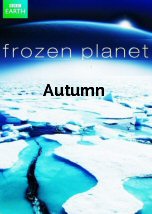
Frozen Planet: Autumn

   2011    Nature
For the animals in the polar regions, autumn means dramatic battles and epic journeys. Time is running out - the Arctic Ocean is freezing over and the sea ice is advancing at 2.5 miles per day around Antarctica. Polar bears gather in large numbers on the Arctic coast as they wait for the return of the ice. Soon, tempers fray and violent sparring contests break out. Meanwhile 2,000 beluga whales head for one special estuary, a gigantic 'whale spa' where they will thrash their snow-white bodies against the gravel and exfoliate. Inland, the tundra undergoes a dramatic transformation from green to fiery red. Here, musk ox males slam head-first into each other with the force of a 30mph car crash as they struggle to defend their harems. Frisky young caribou males play a game of 'grandma's footsteps' as they try to steal the boss's female. Down in Antarctica, Adelie penguin chicks huddle together in creches. When a parent returns from fishing, it leads its twins on a comical steeplechase - sadly there's only enough for one, so the winner gets the meal. Two months later and the chicks are fully feathered apart from downy Mohican hairdos - they're ready to take their first swim - reluctantly though, as it seems penguins are not born with a love of water! And with good reason - a leopard seal explodes from the sea and pulls one from an ice floe, a hunting manoeuvre that has never been filmed before. As winter approaches and everyone has left, the giant emperor penguin arrives and makes an epic trek inland to breed. The mothers soon return to the sea leaving the fathers to hold the eggs and endure the coldest winter on earth.
Series: Frozen Planet
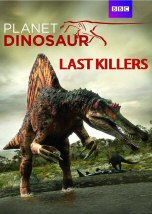

Last Killers

   2011    Science
In late Cretaceous Canada, in what will be known as Dinosaur Provincial Park, a Daspletosaurus stalks a Chasmosaurus in a forest, but loses the element of surprise and is forced to retreat. The Chasmosaurus comes across a younger Daspletosaurus, before being ambushed by a group of the tyrannosaurids. The episode then cuts to the high Arctic, where Edmontosaurus are hunted by a large species of Troodon. The theropods attack at night, separating a juvenile from the herd and severely wounding it, only to be driven away by an adult. In the morning, they return to eat the carcass of the juvenile, which died during the night. The episode returns to the Daspletosaurus, who chase and bring down the Chasmosaurus. The larger adults bully the youngsters off the carcass, forcing them to wait until they have finished. The episode then cuts to Madagascar, where a mother Majungasaurus (an Abelisaurid) and her two offspring chase a group of Rahonavis off a carcass. However, they are temporarily driven off themselves by a male Majungasaurus. But, after he steals some food from one of the young, the female attacks him, before she and her young cannibalise his body. The episode returns once again to North America, where the Daspletosaurus are waiting for the annual migration of Centrosaurus. They attack during a rainstorm, killing some of the ceratopsians. The Centrosaurus make it to a flooded river and begin to swim across, and although many make it to the other side, some are caught by giant crocodilians or are severely wounded by floating debris and thus drown, or drown for unseen reasons. In the morning, the carcasses attract scavengers, including the Daspletosaurus. A montage is then shown of Daspletosaurus and Majungasaurus, the narrator saying that together, the tyrannosaurids and abelisaurids were the last of the killer dinosaurs.
Series: Planet Dinosaur

The Bomb

   2012    History
The series is a re-examination of some of the under-reported and darkest parts of American modern history using little known documents and newly uncovered archival material, looking beyond official versions of events to the deeper causes and implications and exploring how events from the past still have resonant themes for the present day. This episode addresses the historical backround, consequences and reasons behind the use of atomic bombs against the Japanese in the second world war.
Series: The Untold History of the United States

How Do I Decide

   2015    Medicine
The human brain is the most complex object we’ve discovered in the universe, and every day much of its neural circuitry is taken up with the tens of thousands of decisions we need to make. ‘How do I decide?’ is a journey through the unseen world of decisions, and how they get made. Decisión-making is what allows us to navigate a course through life. Discover how important emotions are in making decissions and, as we learn more about our own brains, we can break away from slavery to our impulses. Neuroscience shows that you're made up of multiple competing drives and by understanding how choices battle it out in the brain, we can learn how to make better decisions.
Series: The Brain with David Eagleman

The Enemy of My Enemy

   2014    Culture
'Crude Awakening'- To combat the worst environmental disaster in American history, BP and the Coast Guard dumped nearly 2 million gallons of a chemical dispersant called Corexit into the Gulf. But instead of helping clean up the spill, Corexit made things worse. Shane Smith heads to Louisiana to report on the lasting effects of the BP oil spill. 'The Enemy of My Enemy' - Yemen, the fractured state in the Arabian peninsula, is at the top of the worry list for President Obama's national security team, and the rise of Al Qaeda there is only half the reason why. The real trouble is a current threat posed by the little-known Houthi rebel movement in the north of the country - a grassroots army, allegedly funded by Iran, that has never granted access to any other Western film crew before. Ben Anderson goes deep into Houthi-controlled territory to learn about the group that's fighting, and beating, Al Qaeda in the east, Saudi Arabia in the north, and Yemen's central government in the south.

The Most Dangerous Band in the World. The Story of Guns N Roses

   2016    Art
It was 1985. Guns N' Roses were soon to be known as the last mammoth rock entity to come out of LA after selling over 100 million albums. Jon Brewer brings alive never-before-seen video footage of Guns N' Roses in their earliest days as a fledgling band, filmed and meticulously archived over the years by their close friend. They became known as 'the most dangerous band in the world' and retained the title for reasons this film portrays, via interviews with band members and those who were there on, and off, tour. Venture down seedy Sunset Strip to the Whiskey, the Rainbow and the Roxy, all known as 'the Jungle'.