



Last Watched

"Touch"  Sort by

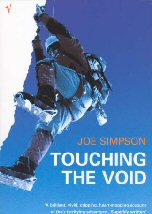
Touching the Void

   2003    Culture
In 1985, two adventurous young mountaineers, Joe Simpson and Simon Yates, set off to climb the treacherous west face of the Siula Grande in the Peruvian Andes. They were experienced climbers, and climbed "Alpine-style," climbing the mountain in "one great push," without setting up ropes or base camps ahead of time. After dealing with a snowstorm and some dangerous climbing over powder formations, they reached the summit (about 21,000 feet) on the third day. The climb down proved to be far more difficult. Simpson fell and broke his leg badly. Yates decided to try to lower Simpson down the mountain, one 300-foot section of rope at a time. The climbers had run out of gas to melt snow, so they couldn't risk stopping as night came, and a violent snowstorm began. Their plodding, painful journey hit a snag when Yates inadvertently lowered Simpson over the edge of a cliff. In the storm, the men couldn't hear each other's cries, and, Yates, uncertain as to Simpson's position, and gradually sliding down the slope himself, decided to cut the rope that connected them, sending Simpson plummeting to certain death. Miraculously, Simpson survived the fall, and was faced with the prospect of getting off the mountain alone with no food, no water, and a broken leg. In Touching the Void, filmmaker Kevin Macdonald (One Day in September) tells their story, based on Simpson's book, using contemporary interviews with the two men, and a reenactment of their climb and descent, featuring Brendan Mackey as Simpson and Nicholas Aaron as Yates
Is There a Shadow Universe

   2014    Science
When we look up into the sky it appears we live in a universe that is filled with light. But scientists are now certain there is far more matter in the dark portions of our universe that we can’t see or touch. There’s something hiding in the shadows. Cosmologists agree that 'dark matter' has helped shape our Universe, but now they need to figure out what dark matter is. What’s going on in this hidden world? Could it have formed its own dark stars, planets, and even life forms? Could this Shadow Universe threaten our world of light?
Series: Through the Wormhole Season 5

Growing

   1994    Nature
The second episode is about how plants gain their sustenance. Sunlight is one of the essential requirements if a seed is to germinate, and Attenborough highlights the cheese plant as an example whose young shoots head for the nearest tree trunk and then climb to the top of the forest canopy, developing its leaves en route. Using sunshine, air, water and a few minerals, the leaves are, in effect, the "factories" that produce food. However, some, such as the begonia, can thrive without much light. To gain moisture, plants typically use their roots to probe underground. Trees pump water up pipes that run inside their trunks, and Attenborough observes that a sycamore can do this at the rate of 450 litres an hour — in total silence. Too much rainfall can clog up a leaf's pores, and many have specially designed 'gutters' to cope with it. However, their biggest threat is from animals, and some require extreme methods of defence, such as spines, camouflage, or poison. Some can move quickly to deter predators: the mimosa can fold its leaves instantly when touched, and the Venus flytrap eats insects by closing its leaves around its prey when triggered. Another carnivorous plant is the trumpet pitcher that snares insects when they fall into its tubular leaves. Attenborough visits Borneo to see the largest pitcher of them all, Nepenthes rajah, whose traps contain up to two litres of water and have been known to kill small rodents.
Series: The Private Life of Plants

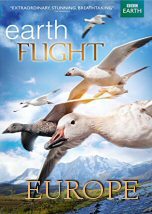
Earthflight Europe

   2012    Nature
Earthflight departs on its grand European tour, using a host of techniques including taking extraordinary footage from microlites as they fly alongside imprinted birds. Among other wonders, cameras soar with cranes and geese over Venice, the white cliffs of Dover and Edinburgh. White storks leave Africa and struggle to reach Istanbul, the gateway to Europe, while cranes take an easier route over the monkey-guarded Rock of Gibraltar. In France, the white horses of the Camargue make a splash around the new arrivals. In Rome, the heat of the city lures 20 million starlings that perform nature's greatest aerial display to outwit peregrines. In Hungary, sand martins grab mayflies from the air; and at Bass Rock, gannets create Britain's greatest natural spectacle as they dive in exquisite slow-motion. The story takes an emotional turn as storks and swallows wait for their partners to return and indulge in a spot of DIY to impress. Finally, geese touch down in Svalbard to raise a family. To protect their young, a squadron of birds assemble to see off polar bears. With views of birds flying over the Loire Valley, London docklands and the bulb fieds of Holland, this is Europe as never before.
Series: Earthflight

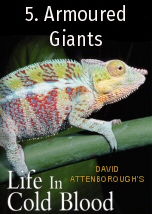
Armoured Giants

   2007    Nature
The world of the armoured creatures is equally fascinating and bizarre. Galapagos giant tortoises solve the problem of making love in a suit of armour; a heated sea turtle orgy leaves females in mortal danger and we witness the explosive arrival of a baby pig-nosed turtle. Giant salt-water crocodiles crowd a flooded river-run to fish for mullet and a caiman leads her brood in a touching trek to a communal crèche.
Series: Life In Cold Blood

The Ram Has Touched the Wall

       History
Caesar contemplates Pompey's counteroffer but Mark Anthony wishes the war. Vorenus continues to struggle as a businessman and must reevaluate his career choice. Atia schemes to come between Caesar and Servilia and Pullo seeks Octavian's help.
Series: Rome