Their quest is to discover whether the items we throw away today have any value for tomorrow's world. In a unique science experiment, Dr George McGavin and Dr Zoe Laughlin chronicle the history of rubbish and explore how what we throw away tells us about the way we live our lives. With unprecedented access to one of the UK's largest landfill sites, the team of experts spend three days carrying out tests all over the site, revealing the secret world of rubbish. They also carry out three other 'archaeological' digs into historic landfills to chart the evolution of our throwaway society. Is mining trash for something valuable really viable? McGavin concluded: 'The idea of landfill mining is a pretty compelling vision of the future.'
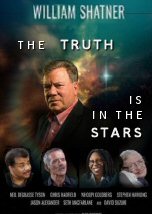
Join the original Captain Kirk, William Shatner, as he interviews renowned scientists and celebrities about the enduring influence of Star Trek on popular culture, innovation, and creativity. The film chronicles Shatner’s journey around the world interviewing scientists and film industry people about how Star Trek inspired them. Along the way he collects questions to ask and learns a bit about physics. Discover how Star Trek’s optimistic vision for the future has influenced leading minds including Prof. Stephen Hawking, Neil deGrasse Tyson, Chris Hadfield, David Suzuki, and many more.
Was the sacrifice of an entire generation worldwide an avoidable or a necessary tragedy? Are the roots of World War II to be found in the devastation of World War I? Drawing from over 300 hours of archival footage and tracing the journeys of the civilians and soldiers across the world, anonymous or well-known, who fought for survival in this unprecedented period in human history, both heroic and barbaric. On June 28th, 1914, the assassination of an obscure Austrian archduke in Sarajevo triggers the most disastrous conflict the world has ever known. Germany becomes an enemy to France, invades Belgium, and in September arrives at the gates of Paris.
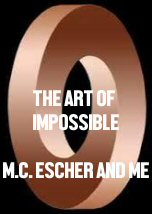
Sir Roger Penrose is more than just a fan of MC Escher's mind-bending art. During the course of a long creative collaboration, the British mathematician and the Dutch artist exchanged ideas and inspirations. Some of Escher's most iconic images have their origin in Penrose's mathematical sketches - while the artist's work has served as a starting point for the professor's own explorations of new scientific ideas". To coincide with the first ever Escher retrospective in the UK, Penrose takes us on a personal journey through Escher's greatest masterpieces - marvelling at his intuitive brilliance and the penetrating light it still sheds on complex mathematical concepts.
For centuries, the precise workings of gravity have confounded the greatest scientific minds - from Newton to Faraday and Einstein - and the idea of controlling gravity has been seen as little more than a fanciful dream. Yet in the mid 1990s, UK defence manufacturer BAE Systems began a ground-breaking project code-named Greenglow. Nasa was simultaneously running its own Breakthrough Propulsion Physics Project". It was concerned with potential space applications of new physics, including concepts like 'faster-than-light travel' and 'warp drives'. Looking into the past and projecting into the future, Horizon explores science's long-standing obsession with the idea of gravity control. It looks at recent breakthroughs in the search for loopholes in conventional physics and examines how the groundwork carried out by Project Greenglow has helped change our understanding of the universe. Gravity control may sound like science fiction, but the research that began with Project Greenglow is very much ongoing, and the dream of flying cars and journeys to the stars no longer seems quite so distant.
A celebration of the career of the musician, whose death from cancer was announced 11th Jan 2016. Bowie's work was the soundtrack to a generation and influenced countless musicians and this features memorable music videos and performances, as well as tributes from friends and fans around the world". Singer, songwriter, multi-instrumentalist, record producer, painter, and actor. He was a figure in popular music for over five decades, and was considered by critics and other musicians as an innovator, particularly for his work in the 1970s. Bowie's impact was enormous; he changed the nature of rock music, and changed his own approach repeatedly. During his career, he sold an estimated 140 million records worldwide. In the UK, he was awarded nine platinum album certifications, eleven gold and eight silver, and in the US received five platinum and seven gold certifications. He was inducted into the Rock and Roll Hall of Fame in 1996. Bowie stopped concert touring after 2004, and last performed live at a charity event in 2006. In 2013, he returned from a decade-long recording hiatus, remaining musically active until his death from liver cancer three years later.























Is mining trash for something valuable really viable? McGavin concluded: 'The idea of landfill mining is a pretty compelling vision of the future.'