The publication of Salman Rushdie's novel The Satanic Verses in 1988 sparked a culture war in Britain between those in the Muslim community, who considered the book blasphemous and called for the book to be banned, and those defending it as an expression of freedom of speech. Protests, which began in the north of England, soon spread across the UK and to the rest of the Islamic world, culminating in February 1989 with Iran's Ayatollah Khomeini issuing a fatwa - a death sentence on the writer. Now, 30 years on, broadcaster and journalist Mobeen Azhar embarks on a journey, starting in his native Yorkshire where the protest first began, to examine the lasting effect the book has had on the Muslim community and how the events of 1989 continue to have an impact today.
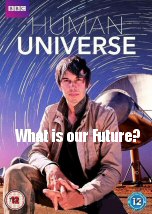
Professor Brian Cox concludes his exploration of our place in the universe by asking what next for the ape that went to space. Our future is far from certain. In Florida, Brian joins the latest efforts to protect Earth from potential catastrophic events. He joins a team of Nasa astronauts who are training for a future mission to an asteroid - should we ever discover one coming our way - under 30 feet of water in a submerged laboratory that simulates space. It is just one example of how, for our long-term survival, space exploration may well be vital. It is a view shared by Apollo 16 astronaut Charlie Duke, who tells Brian what it was like to escape the confines of the planet. It is a dream that both Nasa and now commercial companies share as they race to get humans back into deep space. But space travel, like every leap our civilisation has ever made, requires energy. Here too, scientists are hard at work attempting to safeguard our future. At the National Ignition Facility in California, Brian witnesses the world's most successful fusion experiment in action. He believes that if their mission succeeds, our civilisation will have unlocked a way to the stars that will not destroy the planet in the process. Brian concludes by returning to the top of the world in Svalbard, where he gains access to our civilisation's greatest treasure, locked away in a vault buried deep in the permafrost.
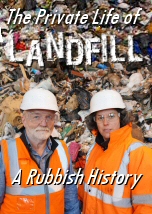
Their quest is to discover whether the items we throw away today have any value for tomorrow's world. In a unique science experiment, Dr George McGavin and Dr Zoe Laughlin chronicle the history of rubbish and explore how what we throw away tells us about the way we live our lives. With unprecedented access to one of the UK's largest landfill sites, the team of experts spend three days carrying out tests all over the site, revealing the secret world of rubbish. They also carry out three other 'archaeological' digs into historic landfills to chart the evolution of our throwaway society. Is mining trash for something valuable really viable? McGavin concluded: 'The idea of landfill mining is a pretty compelling vision of the future.'
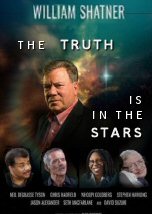
Join the original Captain Kirk, William Shatner, as he interviews renowned scientists and celebrities about the enduring influence of Star Trek on popular culture, innovation, and creativity. The film chronicles Shatner’s journey around the world interviewing scientists and film industry people about how Star Trek inspired them. Along the way he collects questions to ask and learns a bit about physics. Discover how Star Trek’s optimistic vision for the future has influenced leading minds including Prof. Stephen Hawking, Neil deGrasse Tyson, Chris Hadfield, David Suzuki, and many more.
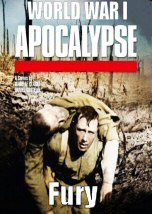
Was the sacrifice of an entire generation worldwide an avoidable or a necessary tragedy? Are the roots of World War II to be found in the devastation of World War I? Drawing from over 300 hours of archival footage and tracing the journeys of the civilians and soldiers across the world, anonymous or well-known, who fought for survival in this unprecedented period in human history, both heroic and barbaric. On June 28th, 1914, the assassination of an obscure Austrian archduke in Sarajevo triggers the most disastrous conflict the world has ever known. Germany becomes an enemy to France, invades Belgium, and in September arrives at the gates of Paris.
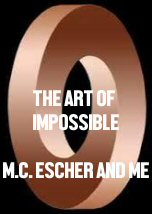
Sir Roger Penrose is more than just a fan of MC Escher's mind-bending art. During the course of a long creative collaboration, the British mathematician and the Dutch artist exchanged ideas and inspirations. Some of Escher's most iconic images have their origin in Penrose's mathematical sketches - while the artist's work has served as a starting point for the professor's own explorations of new scientific ideas". To coincide with the first ever Escher retrospective in the UK, Penrose takes us on a personal journey through Escher's greatest masterpieces - marvelling at his intuitive brilliance and the penetrating light it still sheds on complex mathematical concepts.






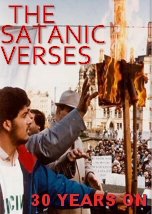


Now, 30 years on, broadcaster and journalist Mobeen Azhar embarks on a journey, starting in his native Yorkshire where the protest first began, to examine the lasting effect the book has had on the Muslim community and how the events of 1989 continue to have an impact today.