






Last Watched

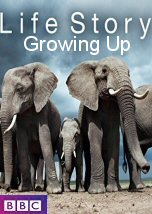
"Life "  Sort by

Growing Up

   2014    Nature
David Attenborough brings us the universal story that unites each of us with every animal on the planet, the story of the greatest of all adventures - the journey through life. For animals there is just one goal in life - to continue their bloodline in the form of offspring, the next best thing to immortality. The series shows how animals attempt to overcome the challenges that face them at each of the six crucial stages of life as they strive towards ultimate success." In the journey towards adulthood, a moment comes for all animals when they must strike out on their own. With their parents absent they must learn to survive in a dangerous world. At this stage of life every small success may mean the difference between life and death.
Series: Life Story
Stem Cell Universe with Stephen Hawking

   2014    Medicine
The use of embryonic stem cells has ignited fierce debate across the spiritual and political spectrum. But what if we could create manmade stem cells - or find super cells in adults that could forever replace embryonic cells and remove the controversy? Today, we are on the brink of a new era - an age where we may be able to cure our bodies of any illness. Stephen Hawking has spent his life exploring the mysteries of the cosmos, now there is another universe that fascinates him - the one hidden inside our bodies - our own personal galaxies of cells." Hawking takes us on a fascinating journey exploring what these wondrous and baffling mechanisms are capable of. He is joined by the scientists who are on the front lines of discovery in this field including Dr. Doris Taylor who is customizing a donor's heart with the recipient's stem cells - her goal is to revolutionize heart transplants, Dr. Paul Lu and Dr. Mark Tuszynski may have created a breakthrough that could cure paralysis, and Dr. Vincent Giampapa who believes that stem cells can be used to stem the tide of aging and create a fountain of youth.

History of the World: Survival

   2012    History
Andrew Marr sets off on an epic journey through 70,000 years of human history. Using dramatic reconstructions, documentary filming around the world and cutting-edge computer graphics, he reveals the decisive moments that shaped the world we live in today, telling stories we thought we knew and others we were never told." Starting with our earliest beginnings in Africa, Marr traces the story of our nomadic ancestors as they spread out around the world and settled down to become the first farmers and townspeople. He uncovers extraordinary hand-prints left in European caves nearly 30,000 years ago and shows how human ingenuity led to inventions which are still with us today. He also discovers how the first civilisations were driven to extremes to try to overcome the forces of nature, adapting and surviving against the odds, and reveals how everyday life in ancient Egypt had more in common with today's soap operas than might be imagined.
Series: History of the World

Evolution: Great Transformations

   2004    Science
What triggered the incredible diversity of life on Earth, and how have complex life forms, including humans, evolved? Is there direction to evolution? And is human intelligence inevitable? This program focuses on evolution's 'great transformations' —among them the development of a standard four-limbed body plan, the journey from water to land, the return of marine mammals to the sea, and the emergence of humans. Driven by a combination of opportunism and a genetic 'toolkit', these astounding leaps forward define the arc of evolution. And they suggest that every living creature on earth today, and every species that has ever existed, is a variation on a grand genetic theme—a member of one, and only one, tree of life
Series: Evolution

Chased by Sea Monsters 1of3

   2003    Science
If you're a paleontology buff, this series is for you. And the fun-loving Nigel Marvin provides a great narrative. Explore the prehistoric world in search of sea-based monsters. It focuses on life in ancient oceans during each prehistoric period. Nothing, not the carnivorous dinosaurs of the past, nor the imagined sea serpents and monsters of maritime history, nor the great white shark, salt water crocodile, killer whale and leopard seal of today can compare to the horrifying hunters of the prehistoric oceans.
Series: Chased by Sea Monsters

To Fly or Not to Fly

   1998    Nature
The first episode looks at how birds first took to the skies in the wake of the insects. It begins in Mexico, where Sir Attenborough observes bats being outmanoeuvred by a red-tailed hawk. Pterosaurs were the birds' forerunners, some 150 million years after dragonflies developed the means of flight, but eventually went extinct together with the dinosaurs. Birds had by then already evolved from early forms like archaeopteryx, the first creature to possess feathers. Its ancestry can be traced through reptiles, and some current species, such as the flying lizard, possibly show paths this evolution may have taken." One of the biggest birds to have ever existed was the terror bird, which proliferated after dinosaurs vanished and stood up to 2.5 metres tall. By comparison, the ostrich, while not closely related, is the largest and heaviest living bird. It was probably the evasion of predators that drove most birds into the air, so their flightless cousins evolved because they had few enemies. Accordingly, such species are more likely to be found on islands, and Sir Attenborough visits New Zealand to observe its great variety, most especially the kiwi. Also depicted is the moa, another huge creature that is now gone. The takahē is extremely rare, and high in the mountains of New Zealand, Sir Attenborough discovers one from a population of only 40 pairs. Finally, another example on the brink of extinction is the kakapo, which at one point numbered only 61 individuals. A male is heard calling — an immensely amplified deep note that can be heard at great distances from its nest.
Series: The Life of Birds