


Last Watched

"Life "  Sort by

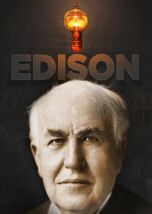
Edison

   2015    History
By the time he died in 1931, Thomas Alva Edison was one of the most famous men in the world. The holder of more patents than any other inventor in history, Edison had achieved glory as the genius behind such revolutionary inventions as sound recording, motion pictures, and electric light. Edison's curiosity led him to its cutting edge. With just three months of formal schooling, he took on one seemingly impossible technical challenge after another, and through intuition, persistence, and a unique team approach to innovation, invariably solved it." Driven and intensely competitive, Edison was often neglectful in his private life and could be ruthless in business. Challenged by competition in the industry he'd founded, Edison launched an ugly propaganda campaign against his rivals, and used his credibility as an electrical expert to help ensure that high-voltage electrocution became a form of capital punishment. Edison explores the complex alchemy that accounts for the enduring celebrity of America's most famous inventor, offering new perspectives on the man and his milieu, and illuminating not only the true nature of invention, but its role in turn-of-the-century America's rush into the future.
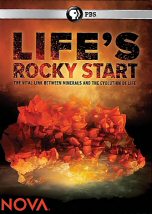
Life Rocky Start

   2016    Science
Four and a half billion years ago, the young Earth was a hellish place, a seething chaos of meteorite impacts, volcanoes belching noxious gases, and lightning flashing through a thin, torrid atmosphere. Then, in a process that has puzzled scientists for decades, life emerged. But how? Join mineralogist Robert Hazen as he journeys around the globe. From an ancient Moroccan market to the Australian Outback, he advances a startling and counterintuitive idea—that the rocks beneath our feet were not only essential to jump-starting life, but that microbial life helped give birth to hundreds of minerals we know and depend on today. It's a theory of the co-evolution of Earth and life that is reshaping the grand-narrative of our planet’s story.

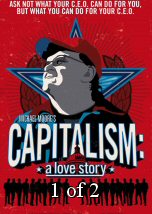
Capitalism A Love Story 1of2

   2009    Culture
Michael Moore returns to controversial territory with this documentary examining the events that led to the last global financial crisis, while putting forward an indictment of the current economic order in the United States and unfettered capitalism in general. Topics covered include Wall Street's "casino mentality", for-profit prisons, Goldman Sachs' influence in Washington, D.C., the poverty-level wages of many workers, the large wave of home foreclosures, corporate-owned life insurance, and the consequences of "runaway greed".
Series: Capitalism A Love Story

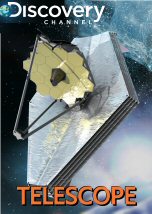
Telescope

   2016    Technology
A dynamic journey behind the scenes of the next step in the evolution of telescopes: NASA's James Webb Space Telescope. A new generation has been inspired to design and build this massive instrument, which is 100 times more powerful than the Hubble Space Telescope and will be a veritable time machine, capable of looking back on the origins of our universe and identifying signatures of potential life on planets far outside our solar system". With unprecedented access to the people and technologies that power its creation, including astrophysicists, engineers at Northrop Grumman, and personnel from NASA'S Goddard Space Flight Center and the Space Telescope Science Institute, the operations center for Hubble and Webb, Telescope spotlights the high-stakes mission of building this massive new scientific instrument. The film is a comprehensive look at the dynamic history of 400 years of telescopes starting with Galileo in 1609. The Webb is the next great telescope in society's ongoing mission to see farther into the universe and answer fundamental questions that have haunted mankind from the beginning of time. Directed by Oscar nominated filmmaker Nathaniel Kahn

Memory Hackers

   2016    Medicine
Memory is the glue that binds our mental lives. Without it, we’d be prisoners of the present, unable to use the lessons of the past to change our future. From our first kiss to where we put our keys, memory represents who we are and how we learn and navigate the world. But how does it work? Neuroscientists using cutting-edge techniques are exploring the precise molecular mechanisms of memory". By studying a range of individuals ranging —from an 11-year-old whiz-kid who remembers every detail of his life to a woman who had memories implanted— scientists have uncovered a provocative idea. For much of human history, memory has been seen as a tape recorder that faithfully registers information and replays intact. But now, researchers are discovering that memory is far more malleable, always being written and rewritten, not just by us but by others. We are discovering the precise mechanisms that can explain and even control our memories. The question is— are we ready?

Colours of Life

   2015    Science
Earth is the most colourful place we know of. But the colours we see are far more complex and fascinating than they appear. In this series, Dr Helen Czerski uncovers what colour is, how it works, and how it has written the story of our planet - from the colours that transformed a dull ball of rock into a vivid jewel to the colours that life has used to survive and thrive". But the story doesn't end there - there are also the colours that we can't see, the ones that lie beyond the rainbow. Each one has a fascinating story to tell. Early Earth was a canvas for the vast new palette of the colours of life, with the diversity of human skin tones telling the story of how humanity spread and ultimately conquered the planet. Dr Helen Czerski explores the true masters of colour - which are often the smallest and most elusive - travelling to the mountains of Tennessee to witness the colourful mating display of fireflies, and revealing the marine creatures that can change the colour of their skin in order to hide from the world.
Series: Colour The Spectrum of Science