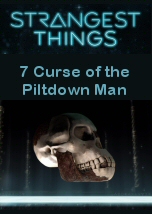
The archaeological world is fooled for nearly half a century when an ape-like skull that's claimed as solid evidence for Darwin's theory of human evolution is proven fake. Using new research, experts investigate and uncover the identity of the forger. Locked away in a store room at London Science Museum is a genuine 19th century miracle machine, a 180-year-old mechanical engine that solves complex mathematical equations, more than 100 years before the first electronic computer.
The jeweled-encrusted pectoral of King Tut is a hieroglyphic artefact of stunning craftsmanship and one of the greatest treasures of the pharaohs. Was this ancient glass scarab in Tutankhamun's tomb created by forces from beyond our world? Using new research and the latest tech, experts confront the ancient mystery of its flawless glass scarab. Is a 4,000 year old clay tablet the original instruction manual for Noah's ark? And how can a bizarre red moon rock contain signs of life?
After four decades of searching for him, they got a one hundred percent match to the Golden State Killer's DNA. As 72-year-old former police officer Joe DeAngelo's arrest unfolds in real time, chilling facts materialize that illuminate Michelle McNamara's prescience in her book's epilogue.
Edgar Davidson agrees to talk to investigators but tells a different story. Cathy’s sister Marilyn indicates her interest in solving the case. Tom Nugent casts doubt on Gerry Koob’s story about the night of Cathy’s disappearance. The search for the other man at Cathy’s apartment Pete McKeon may have information about Koob’s relationship. What Cathy’s roommate Sister Russell knew about the abuse and Cathy’s relationship comes into question. 'Jane Doe' and 'Jane Roe' meet for the first time and talk about the Keough. Abbie investigates Baltimore’s investigation into the abuse reports they received. Marilyn Cesnik Radakovic recalls receiving a mysterious letter from her sister after her death.
They're the cooling corpses of stars like our sun, but new research proves white dwarfs are one of the driving forces of our universe. And they can tell us literally about the nature of the cosmos itself. Have scientists finally discovered how these small stars could be such massive galactic players?
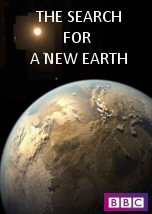
Humans have long gazed up at the night sky, wondering whether other lifeforms and intelligences could be thriving on worlds far beyond our own. But over the last few decades, ultra-sensitive telescopes and dogged detective work have transformed alien planet-hunting from science fiction into hard fact. We expected to find worlds similar to the planets in our own solar system, but we instead discovered a riot of exotic worlds. Vivid animation based on data from the most successful planet hunter of them all, the Kepler space telescope, brings these worlds into view: puffy planets with the density of polystyrene, unstable worlds orbiting two suns and 1,000-degree, broiling gas giants with skies whipped into titanic winds. But perhaps the most startling discovery was the number of worlds that may be contenders for a second Earth, at the right distance from their sun to have that ingredient so crucial for life as we know it, liquid water. Amongst them, we witness the most tantalizing discovery of all: a so-called ‘super-Earth’, situated in the Goldilocks zone - the area just the right distance from a sun to potentially support life - and with the faint signal of water in its atmosphere.






















Locked away in a store room at London Science Museum is a genuine 19th century miracle machine, a 180-year-old mechanical engine that solves complex mathematical equations, more than 100 years before the first electronic computer.