Located in Central America, Tikal is one of the largest of the ancient cities of the Mayan civilization. Occupied for more than a millennium, Tikal, founded in the 8th century BC and nestled in the jungle of Guatemala, will have up to 12,000 structures and reach over 2 million inhabitants. This episode shows its extraordinary pyramid-temples, designed with human power alone. Thanks to new technologies, the ancient Mayan city is revealed there, entirely reconstituted in 3D synthetic images.
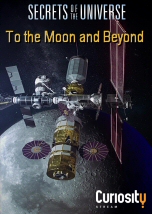
We’re going back to the moon. Plans are being made, hardware is being designed, built, and tested to return humans to the moon and beyond in a new era of American space exploration. This episode explores how we did it in the past, and how and why we will do it again. The moon is critical to future explorations: it will be where we learn to build sustainable colonies on other worlds.
The last episode explores Mescaline, the psychoactive molecule in San Pedro and peyote cacti, a sacred medicine that Native Americans have had to fight for the right to use. At the Indigenous practices there's always an elder, someone who knows the territory very well, who's presiding. There's usually a group, a community is involved, There's always an intention, a purpose to what you're doing, and you're treating it as sacred, in order to achieve altered states of consciousness, which contribute to worship in various ways, or celebration or healing. But maybe all this is not so new to Western culture after all. In the old Greek histories of Eleusis, people who were initiated there got the drink, the kykeon, and then they had the illumination. The precise recipe is a mystery, but we know that the kykeon was a psychoactive brew that was used at the Eleusinian mysteries, a sacred annual ritual of enlightenment practiced by some of the world's greatest minds including Socrates, Plato, and Aristotle. So why did this ritual come to an end more than 1,000 years ago? Was the possibility of illumination or achieving a higher consciousness considered threatening to the powers that be? Have the drug wars been merely an extension of that fear? Psychedelics has a major part in how we can heal as a community, how we can heal as a city, and how we can heal as a country. The current renaissance of psychedelics could not come at a better time as the world confronts a crisis in mental health. But psychedelics have much to offer. The psychedelic experience changes the mind in ways that will help scientists better understand how it works. All these altered states allow us to probe what is the greatest mystery in all of nature. The emergence from mere matter of something as miraculous as consciousness. But an even bigger question is whether psychedelics might help us address the environmental crisis of how we think about our place in nature. One of the greatest gifts of psychedelics is how they reanimate the natural world, allowing us to perceive the subject, the spirit of all species, not just our own. And to feel a deeper sense of interconnectedness with nature.
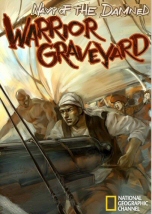
Recent archaeological sites in England offer a whole new perspective on the life and death of the seafarers and marines who built the British Empire in the 18th and 19th centuries. The bones of sailors reveal surprising and shocking facts. Apparently not only seasoned men but also half children did their service in the Royal Navy; according to the investigations, the youngest were no older than 13 years. A forensic archaeologist studies the injuries on bones discovered at the site of an battle and suggests how these people may have died. Three-hundred-and-fifty skeletons, exhumed from Royal Navy graveyards from the age of Nelson's Navy, are throwing an extraordinary new light on how these sailors lived, fought, outwitted their enemy, and, from the oldest to youngest, suffered for victory. These men were the beating heart of the most victorious fleet in history and never have so many of these sailors' remains been available for forensic investigation. Six remarkable stories stand out: the child sailor, the top man, the American gunner, the freed slave, the marine and the victim of the sailor's most dreaded disease: syphilis. Broken bones, amputations, injuries from blows with a saber or cutlass, sexually transmitted diseases, but also malnutrition - the list of causes of death is long. There is definitely no tale of seafaring romance. These fighters and sailors sailed the globe as cannon fodder, conquered an empire for the crown, and were themselves forgotten. No longer just bones in a box, the men of Nelson's Navy are back from the dead.
Curiosity over the man calling himself a messiah makes Waco the center of a media circus. FBI negotiation and rescue teams clash over the use of force. The negotiating team established contact with Koresh inside the compound. Communication over the next 51 days included telephone exchanges with various FBI negotiators. Koresh himself had been seriously injured by a gunshot. As the standoff continued, he and his closest male associates negotiated delays, so that he could possibly write religious documents, which he said he needed to complete before his surrender. Koresh's conversations with the negotiators were dense and they also included biblical imagery. The FBI negotiators treated the situation as a hostage crisis.
The world waits as Koresh makes new promise of surrender but the FBI's controversial tactics turn the compound into an apocalyptic scene. U.S. Attorney General Janet Reno approved recommendations of FBI officials to proceed with a final advance in which the Branch Davidians would be removed from the Mount Carmel Center by force. In an attempt to flush Koresh out of the stronghold, the FBI resorted to pumping CS gas into the compound with the aid of an M728 Combat Engineer Vehicle, which was equipped with a battering ram. In the course of the advance, the Mount Carmel Center caught fire under circumstances that remain disputed. Barricaded inside the building, 79 Branch Davidians perished in the ensuing blaze; 21 of these victims were children under the age of 16. Koresh, then 33, died of a gunshot wound to the head during the course of the fire. It is unknown whether he committed suicide or if he was killed.










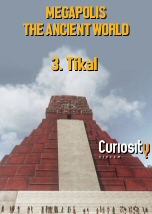




This episode shows its extraordinary pyramid-temples, designed with human power alone. Thanks to new technologies, the ancient Mayan city is revealed there, entirely reconstituted in 3D synthetic images.