














Last Watched

"Lion"  Sort by

Deserts

   2007    Nature
Around 30% of the land's surface is desert, the most varied of our ecosystems despite the lack of rain. Unravel the secrets of desert survival and experience the ephemeral nature of this dynamic environment. Watch Saharan sandstorms nearly a mile high and desert rivers that run for a single day. In the Gobi Desert, rare Bactrian camels get moisture from the snow. In the Atacama, guanacos survive by licking dew off cactus spines. In the USA, the brief blooming of Death Valley triggers a plague of locusts 65km wide and 160km long. A unique aerial voyage over the Namibian desert reveals elephants on a long trek for food and desert lions searching for wandering oryx.
Series: Planet Earth
Walking with Cavemen: Savage Family

   2003    History
One and a half million years ago, a new breed of ape-man walks the land. In southern Africa, Homo Ergaster has taken the next step to becoming human. They have long, modern looking noses, which cool air as they breathe. Their hairless bodies, with millions of tiny sweat glands, mean they don't pant anymore to control their temperature - they sweat. And, above all, they have big brains - nearly two-thirds the size of ours.
Series: Walking with Cavemen

Walking with Cavemen: The Survivors

   2003    History
Nearly half a million years ago, the most advanced human yet roams Europe. Strong and powerful, Homo heidelbergensis are fierce hunters, use sophisticated tools and live in close-knit family groups. Over 200,000 years they become split into two populations by extremes of weather and environment and evolve separately into two very different species. In the North are the Neanderthals, whose physical power and resilience is the key to surviving in ice age Northern Europe. About 140,000 years ago, Africa is in the grip of a devastating drought, and something remarkable has happened to the descendants of heidelbergensis who live there. The combination of environment and chance has bred in them a unique ability that will change the course of human history. It will be this small band of southern survivors, perhaps numbering just a few tens of thousands, who will come to dominate the world and be known as Homo sapiens.
Series: Walking with Cavemen

Penguin Shores

   2005    Nature
A dramatic journey along the coasts of South America, from the Falklands to the tropical Galapagos. The cold currents create rich fisheries, and support such diverse marine life as dolphins, killer whales, sea lions and albatross. But the most biquitous creatures are the penguins, which inhabit surprising locations - lush forest, arid desert and even equatorial areas.
Series: Wild South America

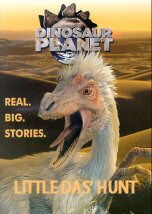
Little Das Hunt

   2003    Science
SETTING: 72 million years ago, near present-day Montana. As a young male daspletosaurus, it's Das' job to herd unsuspecting prey towards the rest of the pack. But he's easily distracted and ruins several hunts getting him in deep trouble with his mother, the pack leader. When a volcano threatens, the dinosaurs are unprepared.
Series: Dinosaur Planet

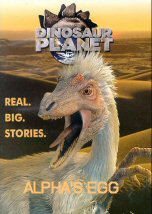
Alpha Egg

   2003    Science
SETTING: 80 million years ago in the South American forests of Patagonia. The world is a very dangerous place for tiny hatchlings like Alpha, a female saltasaur. Follow Alpha along the road of her growth years, from before her birth through asolescence and on to adulthood, as she learns how to survive and beat the odds.
Series: Dinosaur Planet
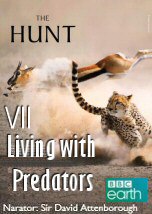
The Hunt

The Hunt

2015  Nature
Dangerous knowledge

Dangerous knowledge

2007  Science
The Story of Maths

The Story of Maths

2008  Science
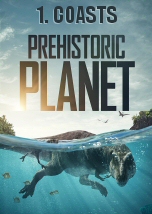
Prehistoric Planet

Prehistoric Planet

2022  Science
Racism: A History

Racism: A History

2007  Culture
Worst Ex Ever

Worst Ex Ever

2024  Culture
Zeitgeist

Zeitgeist

2007  Culture