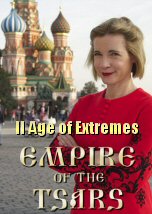
Lucy Worsley continues her journey through Russia in the footsteps of the Romanovs, the most powerful royal dynasty in modern European history. In this episode she examines the extraordinary reign of Catherine the Great, and the traumatic conflict with napoleonic France that provides the setting for the novel War and Peace. At the magnificent palace of Peterhof near St Petersburg, Lucy charts the meteoric rise of Catherine the Great, who seized the Russian throne from her husband Peter III in 1762 and became the most powerful woman in the world. Catherine was a woman of huge passions - for art, for her adopted country (she was German by birth) and for her many lovers. Catherine expanded her empire through military victories overseas, while at home she encouraged education and introduced smallpox inoculation to Russia. But Catherine struggled to introduce deeper reforms, and the institution of serfdom remained largely unchanged. Lucy explains how this injustice fuelled a violent rebellion. Nevertheless, Catherine left Russia more powerful on the world stage than ever. But all she had achieved looked set to be undone when Napoleon invaded Russia in 1812. Lucy relives the pivotal battle of Borodino, when the Russian army finally confronted the French forces; the traumatic destruction of Moscow; and, under Catherine's grandson Alexander, the eventual victory over the French that provided the Romanov dynasty with its most glorious hour.
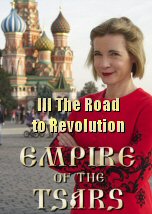
The years 1825-1918 were bloody and traumatic, a period when four tsars tried - and failed - to deal with the growing pressure for constitutional reform and revolution. In 1861, millions of enslaved serfs were freed by the Tsar-Liberator, Alexander II. But Alexander paid the ultimate penalty for opening the Pandora's box of reform when he was later blown up by terrorists on the streets of St Petersburg. Elsewhere, there was repression, denial, war and - in the case of the last tsar, Nicholas II - a fatalistic belief in the power of God, with Nicholas's faith in the notorious holy man Rasputin being a major part in his undoing. Lucy Worsley also details the chilling murder of Nicholas and his family in 1918, and asks whether all of this horror have been avoided.
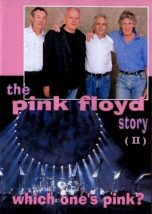
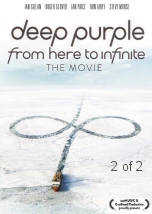
A band that has spanned 40 years pioneering everything from underground rock to the stadium extravaganza, a band that has survived tragedy and shunned celebrity and wrestled publicly with both it's success and it's audience. There have been five members of the band three of which have lead the band in different decades and that's why the question still remains, which one is pink? This film examines the band and it's history in order to discover how they became so successful.
Having explained the science behind global warming, and addressed the arguments of the climate change sceptics earlier in the series, Dr Iain Stewart concludes the series by looking at the biggest challenge now facing climate scientists - Just how can they predict exactly what changes global warming will bring? It's a journey that takes him from early attempts to model the climate system with dishpans, to supercomputers, and to the frontline of climate research today: Greenland. Most worryingly he discovers that scientists are becoming increasingly concerned that their models are actually underestimating the speed of changes already underway.
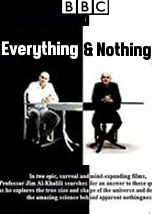
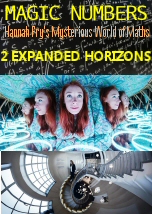
Dr Hannah Fry travels down the fastest zip wire in the world to learn more about Newton's ideas on gravity. His discoveries revealed the movement of the planets was regular and predictable. James Clerk Maxwell unified the ideas of electricity and magnetism, and explained what light was. As if that wasn't enough, he also predicted the existence of radio waves. His tools of the trade were nothing more than pure mathematics. All strong evidence for maths being discovered. But in the 19th century, maths is turned on its head when new types of geometry are invented. No longer is the kind of geometry we learned in school the final say on the subject. If maths is more like a game, albeit a complicated one, where we can change the rules, surely this points to maths being something we invent - a product of the human mind. To try and answer this question, Hannah travels to Halle in Germany on the trail of perhaps one of the greatest mathematicians of the 20th century, Georg Cantor. He showed that infinity, far from being infinitely big, actually comes in different sizes, some bigger than others. This increasingly weird world is feeling more and more like something we've invented. But if that's the case, why is maths so uncannily good at predicting the world around us? Invented or discovered, this question just got a lot harder to answer.
Three weeks before the official launch date of the new album 'inFinite' of rock legend Deep Purple CineStar presents the accompanying film 'From Here To InFinite' on the big screen. The exclusive cinema premiere of the film, which offers captivating insights into the genesis of the upcoming studio album, took place on March 16,, 2017. In addition, fans can hear for the first time and world-exclusive three songs from this new album.










Catherine expanded her empire through military victories overseas, while at home she encouraged education and introduced smallpox inoculation to Russia. But Catherine struggled to introduce deeper reforms, and the institution of serfdom remained largely unchanged. Lucy explains how this injustice fuelled a violent rebellion. Nevertheless, Catherine left Russia more powerful on the world stage than ever. But all she had achieved looked set to be undone when Napoleon invaded Russia in 1812. Lucy relives the pivotal battle of Borodino, when the Russian army finally confronted the French forces; the traumatic destruction of Moscow; and, under Catherine's grandson Alexander, the eventual victory over the French that provided the Romanov dynasty with its most glorious hour.