








Last Watched

"Ara"  Sort by

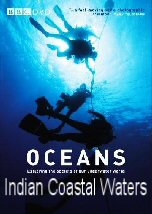
The Indian Ocean Coastal Waters

   2009    Nature
The tropical Indian Ocean is home to the Spice Islands. Characterised by beautiful sandy beaches, fringing coral reefs and coastal mangrove forests, this is a vibrant nursery area for marine life, such as whale sharks, crabs, seahorses and a great variety of fish. The coastal areas are where humans have the most direct impact on the ocean's resources.
Series: Oceans
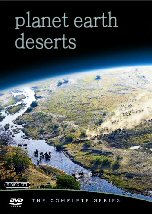
Deserts

   2007    Nature
Around 30% of the land's surface is desert, the most varied of our ecosystems despite the lack of rain. Unravel the secrets of desert survival and experience the ephemeral nature of this dynamic environment. Watch Saharan sandstorms nearly a mile high and desert rivers that run for a single day. In the Gobi Desert, rare Bactrian camels get moisture from the snow. In the Atacama, guanacos survive by licking dew off cactus spines. In the USA, the brief blooming of Death Valley triggers a plague of locusts 65km wide and 160km long. A unique aerial voyage over the Namibian desert reveals elephants on a long trek for food and desert lions searching for wandering oryx.
Series: Planet Earth

The Jungles

   2006    Nature
Jungles cover roughly three per cent of our planet yet contain 50 per cent of the world's species. High-definition cameras enable unprecedented views of animals living on the dark jungle floor. In the Ngogo forest the largest chimpanzee group in the world defends its territory from neighbouring groups. Other jungle specialists include parasitic fungi which infiltrate an insect host, feed on it, and then burst out of its body.
Series: Planet Earth

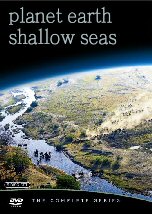
Shallow Seas

   2007    Nature
A humpback whale mother and calf embark on an epic journey from tropical coral paradises to storm ravaged polar seas. Newly discovered coral reefs in Indonesia reveal head-butting pygmy seahorses, flashing 'electric' clams and bands of sea kraits, 30-strong, which hunt in packs. Elsewhere plagues of sea urchins fell forests of giant kelp. Huge bull fur seals attack king penguins, who despite their weight disadvantage, put up a spirited defence.
Series: Planet Earth

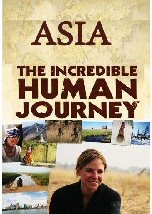
The Incredible Human Journey: Asia

   2009    History
The journey continues into Asia, the world's greatest land mass, in a quest to discover how early hunter-gatherers managed to survive in one of the most inhospitable places on earth - the Arctic region of Northern Siberia. Alice also explores what may have occurred during human migration to produce Chinese physical characteristics, and considers a controversial claim about Chinese evolution: that the Chinese do not share the same African ancestry as other peoples.
Series: The Incredible Human Journey

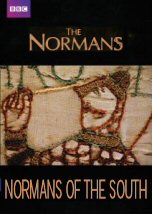
The Normans: Normans of the South

   2010    History
Professor Robert Bartlett explores the impact of the Normans on southern Europe and the Middle East. The Normans spread south in the 11th century, winning control of southern Italy and the island of Sicily. There they created their most prosperous kingdom, where Christianity and Islam co-existed in relative harmony and mutual tolerance. It became a great centre of medieval culture and learning. But events in the Middle East provoked the more aggressive side of the Norman character. In 1095, the Normans enthusiastically answered the Pope's call for holy war against Islam and joined the first crusade. They lay siege to Jerusalem and eventually helped win back the holy city from the muslims. This bloody conquest left a deep rift between Christianity and Islam which is still being felt to this day.
Walking with Dinosaurs

Walking with Dinosaurs

2025  Science
The Gene Code

The Gene Code

2011  Science
Walking with Cavemen

Walking with Cavemen

2003  History
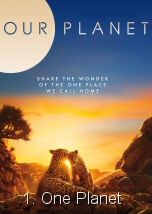
Our Planet

Our Planet

2019  Nature
Hidden Kingdoms

Hidden Kingdoms

2014  Nature
The Germanic Tribes

The Germanic Tribes

2007  History
Ancient Apocalypse

Ancient Apocalypse

2024  History